ฝากข้อความ
หากคุณสนใจในผลิตภัณฑ์ของเราและต้องการทราบรายละเอียดเพิ่มเติม โปรดฝากข้อความไว้ที่นี่ เราจะตอบกลับคุณโดยเร็วที่สุด

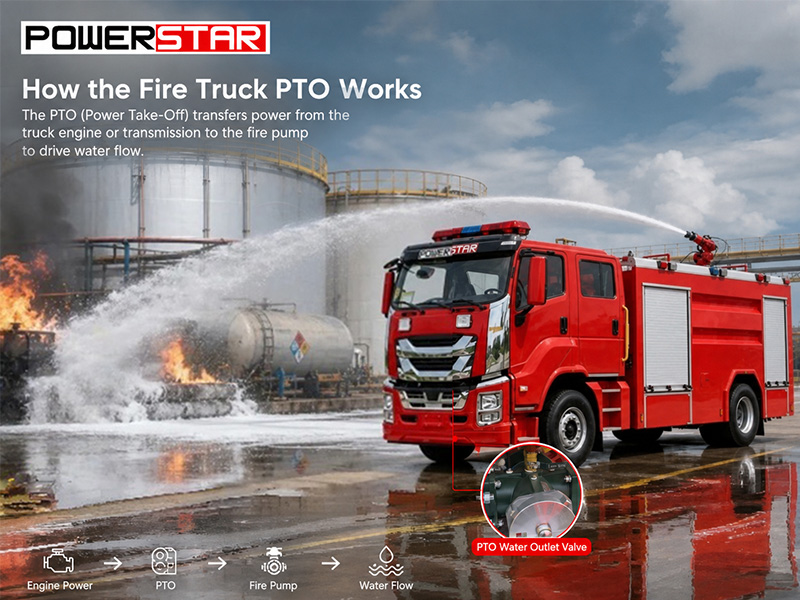
PTO (Power Take-Off) ของรถดับเพลิงคืออุปกรณ์ส่งกำลังที่ถ่ายโอนกำลังจากเครื่องยนต์ไปยังปั๊มดับเพลิง เมื่อเจ้าหน้าที่ดับเพลิงเปิดใช้งาน PTO กำลังกลจากเครื่องยนต์จะถูกส่งผ่านระบบส่งกำลังและ PTO ไปยังปั๊มดับเพลิง — นี่คือหลักการทำงานพื้นฐานของวิธีที่ รถดับเพลิง ที่มีระบบ PTO ทำงาน — ทำให้ปั๊มสามารถจ่ายน้ำแรงดันสูง อัตราการไหลสูง หรือโฟมได้โดยไม่จำเป็นต้องใช้เครื่องยนต์เสริมแยกต่างหาก
รถดับเพลิงสมัยใหม่มักใช้ระบบ PTO แบบติดตั้งด้านข้าง หรือระบบ PTO แบบรับกำลังเต็มรูปแบบ ระบบเหล่านี้ให้กำลังส่งออกที่เสถียร ใช้งานสะดวก และมีค่าบำรุงรักษาต่ำ ทำให้เป็นส่วนประกอบสำคัญของระบบดับเพลิงของรถดับเพลิง
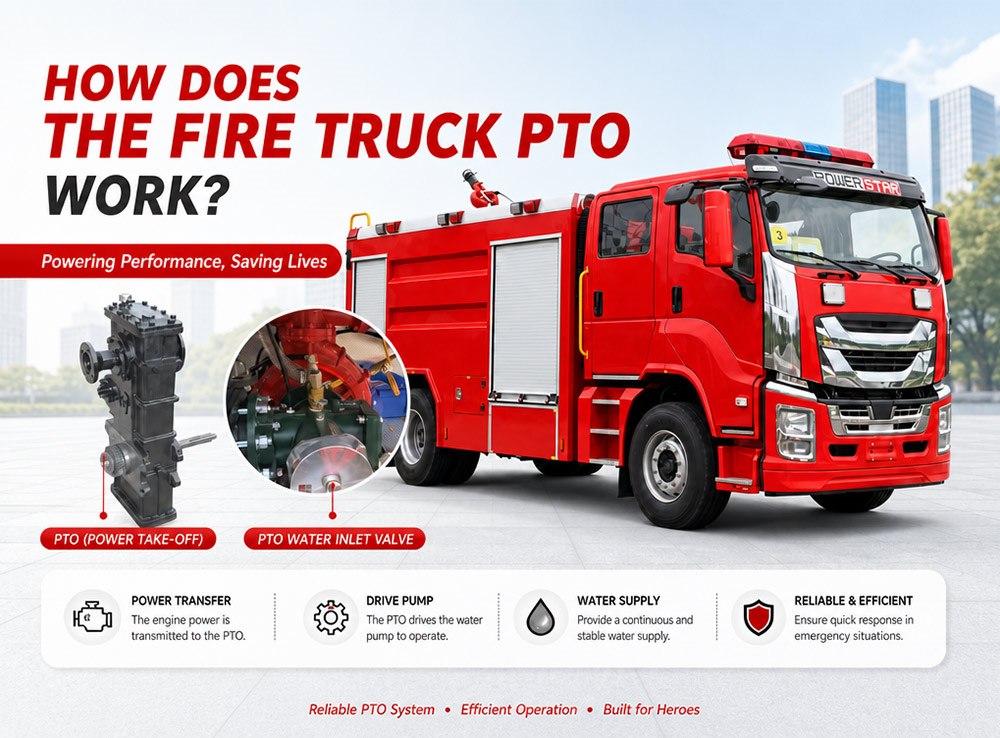
PTO (Power Take-Off) เป็นส่วนประกอบสำคัญในระบบกำลังของรถดับเพลิง เป็นอุปกรณ์ส่งกำลังแบบเฟืองที่ติดตั้งอยู่ระหว่างเครื่องยนต์และระบบส่งกำลัง ออกแบบมาเพื่อ "แยก" ส่วนหนึ่งของกำลังกลจากเครื่องยนต์หรือระบบส่งกำลังของรถไปยังปั๊มดับเพลิงหรืออุปกรณ์เสริมอื่น ๆ โดยไม่ส่งผลกระทบต่อความสามารถในการขับขี่ปกติของรถ
เดิมทีเครื่องยนต์ของรถดับเพลิงมีหน้าที่เพียงขับเคลื่อนล้อเท่านั้น อย่างไรก็ตาม เมื่อรถดับเพลิงเดินทางถึงจุดเกิดเหตุ ล้อไม่จำเป็นต้องใช้กำลังอีกต่อไป ขณะที่ปั๊มดับเพลิงต้องใช้กำลังเพื่อดูดและเพิ่มแรงดันน้ำ PTO คืออุปกรณ์ที่ทำหน้าที่เป็น "สวิตช์เปลี่ยนกำลัง" นี้
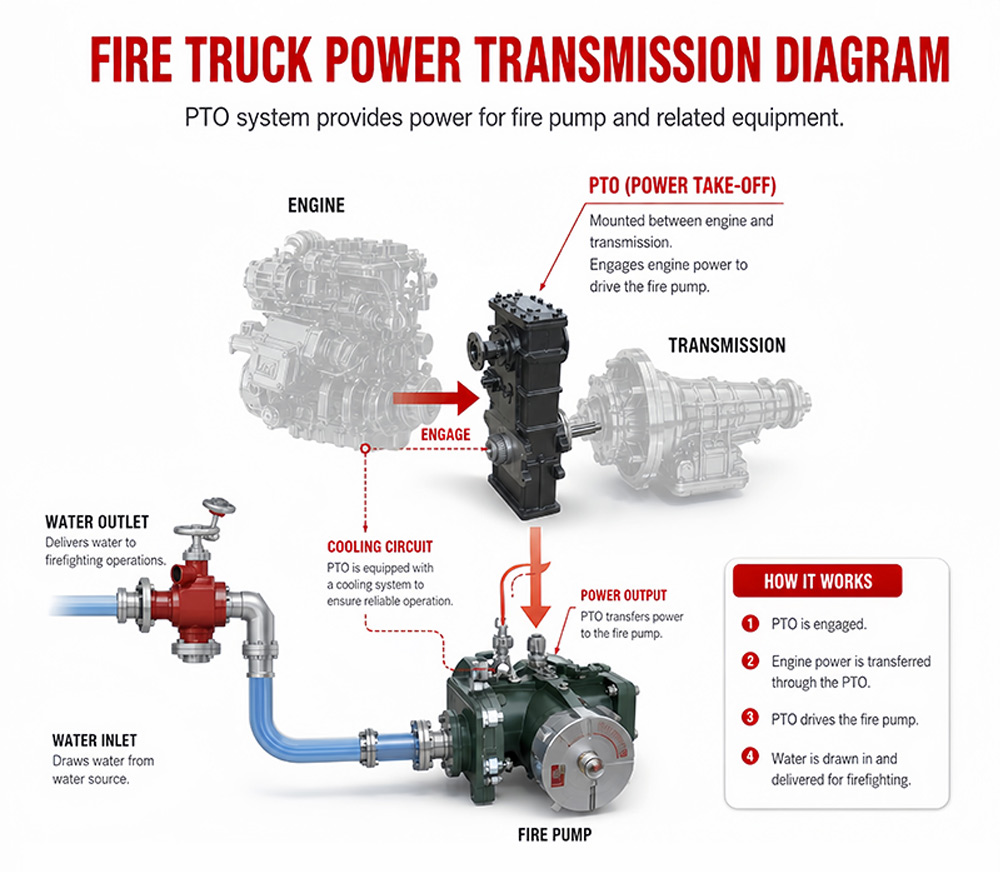
Power Take-Off (PTO) มีความหมายตามตัวอักษรว่า "อุปกรณ์ส่งกำลังออก"
ในรถดับเพลิง หมายถึงการดึงกำลังหมุนจากล้อช่วยแรงของเครื่องยนต์หรือเฟืองระบบส่งกำลังผ่านการขบกันของเฟือง และส่งต่อไปยังปั๊มดับเพลิงหรืออุปกรณ์เสริมอื่น ๆ
ชื่อของมันอธิบายหน้าที่:
เครื่องยนต์ = แหล่งกำลัง
PTO = ตัวกระจายกำลัง
ปั๊มดับเพลิง = จุดใช้กำลัง
ดังนั้น PTO จึงเป็นสะพานที่เชื่อมระหว่าง "แหล่งกำลัง" และ "ระบบดับเพลิง"
เหตุผลหลักที่รถดับเพลิงต้องติดตั้ง PTO คือ การปฏิบัติงานดับเพลิงต้องการกำลังส่งออกที่ต่อเนื่อง เสถียร และมีกำลังสูง ซึ่งไม่สามารถพึ่งพาสถานะการขับเคลื่อนของรถได้
เหตุผลหลัก:
1. ให้กำลังสำหรับการดับเพลิงอย่างต่อเนื่อง
ปั๊มดับเพลิงจำเป็นต้องทำงานเป็นเวลานานระหว่างการปฏิบัติการดับเพลิง PTO ช่วยให้เครื่องยนต์ขับเคลื่อนปั๊มดับเพลิงได้อย่างต่อเนื่องที่รอบเดินเบาหรือรอบเครื่องคงที่ เพื่อให้มั่นใจว่าแรงดันน้ำและอัตราการไหลมีความเสถียร
2. เพิ่มประสิทธิภาพการใช้กำลัง
หากไม่มี PTO จะต้องใช้เครื่องยนต์เสริมแยกต่างหากเพื่อขับเคลื่อนปั๊มดับเพลิง ซึ่งจะเพิ่ม:
ต้นทุน
ความซับซ้อนในการบำรุงรักษา
ความเสี่ยงต่อการขัดข้อง
การใช้พื้นที่ติดตั้ง
PTO ใช้กำลังจากเครื่องยนต์ของรถโดยตรง ช่วยเพิ่มประสิทธิภาพโดยรวม
3. รองรับระบบดับเพลิงหลายรูปแบบ
รถดับเพลิงอุตสาหกรรมสมัยใหม่อาจมีไม่เพียงแต่ปั๊มน้ำเท่านั้น แต่ยังรวมถึง:
ระบบโฟม
ระบบผงเคมีแห้ง
ระบบน้ำแรงดันสูง
หัวฉีดน้ำดับเพลิงควบคุมระยะไกล
หากไม่มี PTO จะมีเพียงสองทางเลือก:
ติดตั้งเครื่องยนต์แยกต่างหากเพื่อขับเคลื่อนปั๊ม → เพิ่มน้ำหนัก ต้นทุน จุดบำรุงรักษา และใช้พื้นที่
ให้ปั๊มเชื่อมต่อกับระบบส่งกำลังอย่างถาวร → ปั๊มหยุดทำงานเมื่อรถหยุด ไม่สามารถสูบน้ำในพื้นที่ปฏิบัติงานได้
PTO แก้ปัญหาทั้งสองอย่างได้พร้อมกัน:
| โหมด | สถานะ PTO | ปลายทางของกำลัง | ผลลัพธ์ |
| โหมดขับขี่ | ปลดการทำงาน | ส่งกำลังทั้งหมดไปยังล้อ | การขับขี่ปกติ |
| โหมดดับเพลิง | ทำงาน | ส่งกำลังทั้งหมดไปยังปั๊มดับเพลิง | สูบน้ำขณะจอดอยู่กับที่ |
PTO เป็นระบบ "การกระจายและแปลงกำลัง" ที่เปลี่ยนกำลังขับเคลื่อนของรถให้เป็นกำลังสำหรับการปฏิบัติงานดับเพลิง
จากมุมมองด้านวิศวกรรม เส้นทางกำลังทั้งหมดคือ:
เครื่องยนต์ → ระบบส่งกำลัง → PTO → เพลาขับ → ปั๊มดับเพลิง → ระบบหัวฉีดน้ำ/สายดับเพลิง
หลักการทำงานของ PTO สามารถสรุปได้เป็นสามขั้นตอนสำคัญ: การถ่ายกำลัง การเชื่อมต่อการทำงาน และการส่งกำลัง
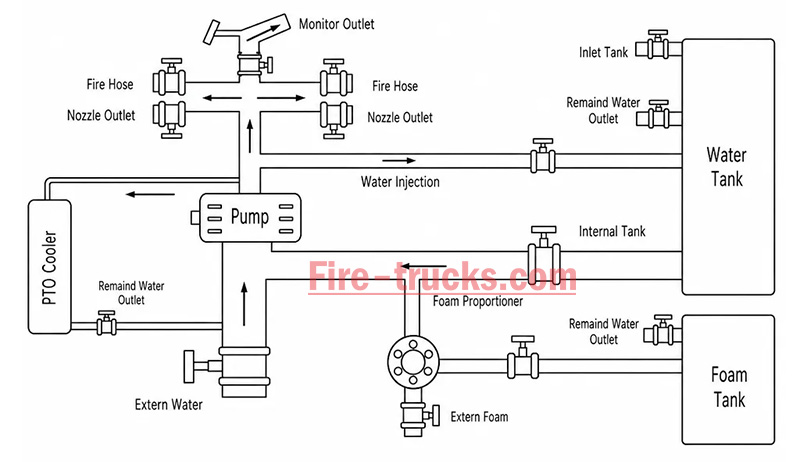
PTO ดึงกำลังจากเครื่องยนต์ โดยวิธีการถ่ายกำลังจะแตกต่างกันไปตามตำแหน่งการติดตั้ง:
| ประเภท PTO | ตำแหน่งติดตั้ง | แหล่งกำลัง | ลักษณะเฉพาะ |
| PTO ติดตั้งด้านข้าง | ด้านข้างระบบส่งกำลัง | เฟืองเพลารองของระบบส่งกำลัง | โครงสร้างเรียบง่าย กำลังต่ำกว่า (≤50% ของกำลังเครื่องยนต์) |
| PTO แบบแซนด์วิช | ระหว่างเครื่องยนต์และระบบส่งกำลัง | ล้อตุนกำลังของเครื่องยนต์ | ส่งกำลังเต็มรูปแบบ เป็นการติดตั้งที่ใช้กันอย่างแพร่หลาย |
| PTO แบบเพลาแยก | ระหว่างระบบส่งกำลังและเพลาขับ | เพลาส่งออกของระบบส่งกำลัง | กำลังสูง รองรับการสูบน้ำขณะขับเคลื่อน |
หลังจากคนขับกดสวิตช์ PTO ในห้องโดยสาร กลไกการเข้าทำงานจะเริ่มทำงาน:
| วิธีการเข้าทำงาน | หลักการทำงาน | การใช้งานทั่วไป |
| การควบคุมโซลินอยด์ไฟฟ้า | สัญญาณไฟฟ้าจะกระตุ้นโซลินอยด์เพื่อดันตะเกียบเปลี่ยนเกียร์ | ใช้กันอย่างแพร่หลายในรถดับเพลิงสมัยใหม่ |
| การควบคุมด้วยลม | อากาศอัดจะดันลูกสูบ ทำให้ตะเกียบทำงาน | รถดับเพลิงขนาดใหญ่ |
| สายเคเบิลแบบแมนนวล | สายเคเบิลกลไกดึงตะเกียบโดยตรง | รถรุ่นเก่า |
ลำดับการทำงาน:
กดสวิตช์ PTO → โซลินอยด์/กระบอกสูบทำงาน → ตะเกียบเปลี่ยนเกียร์ดันเฟืองเลื่อน → เฟืองขบกับมู่เล่หรือเฟืองเกียร์ส่งกำลัง → เชื่อมต่อกำลัง
หลังจากเพลาส่งออก PTO เริ่มหมุน กำลังจะถูกส่งผ่านเพลาขับไปยังปั๊มน้ำดับเพลิง:
เพลาส่งออก PTO หมุน → เพลาขับ → เพลารับกำลังของปั๊มน้ำดับเพลิง → ใบพัดปั๊มหมุน → น้ำถูกเพิ่มแรงดันและส่งออก
| ขั้นตอน | การทำงาน | ผลลัพธ์ |
|---|---|---|
| ขั้นตอนที่ 1 | เครื่องยนต์สตาร์ท รถอยู่ในรอบเดินเบาหรือกำลังขับเคลื่อน | เครื่องยนต์ทำงาน แต่ PTO ยังไม่เข้าทำงาน |
| ขั้นตอนที่ 2 | มาถึงจุดเกิดเหตุ คนขับกดสวิตช์ PTO | ตัดกำลังการขับเคลื่อน (ในบางรุ่น) เกียร์ PTO เริ่มทำงาน |
| ขั้นตอนที่ 3 | PTO สร้างการเชื่อมต่อกำลังกับระบบส่งกำลัง | กำลังจากระบบส่งกำลังถูกส่งต่อไปยังเพลาส่งออก PTO |
| ขั้นตอนที่ 4 | เพลาขับส่งกำลังไปยังปั๊มน้ำดับเพลิง | ปั๊มน้ำดับเพลิงเริ่มรับกำลังกลอย่างต่อเนื่อง |
| ขั้นตอนที่ 5 | ใบพัดปั๊มน้ำดับเพลิงหมุนด้วยความเร็วสูง | ดูดน้ำ → เพิ่มแรงดัน → ส่งไปยังท่อจ่ายน้ำ → การดับเพลิง |
| ขั้นตอนที่ 6 | ระบบเข้าสู่รอบต่อนาทีที่สมดุล | เอาต์พุตคงที่ สามารถปรับแรงดัน อัตราการไหล และรูปแบบการฉีดได้ |
ระบบ PTO ของรถดับเพลิงเป็นห่วงโซ่การส่งกำลังที่สมบูรณ์ ประกอบด้วยชิ้นส่วนหลายส่วนที่ทำงานร่วมกันเพื่อถ่ายโอนกำลังจากเครื่องยนต์ไปยังปั๊มน้ำดับเพลิง ระบบนี้สามารถแบ่งออกเป็นหกส่วนประกอบหลัก:
เครื่องยนต์เป็นแหล่งกำลังของระบบ PTO และเป็นหัวใจของรถดับเพลิงทั้งคัน
หน้าที่: สร้างกำลังหมุนดิบเพื่อขับฟลายวีลหรือเพลาข้อเหวี่ยง
กำลังส่งออก: โดยทั่วไป 300–600 HP (ขึ้นอยู่กับรุ่นแชสซีและการกำหนดค่า)
ความสัมพันธ์กับ PTO: PTO ดึงกำลังจากฟลายวีลหรือเพลาข้อเหวี่ยงของเครื่องยนต์ — เป็นจุดเริ่มต้นของการส่งกำลัง
ลักษณะสำคัญ: รอบเครื่องยนต์ (RPM) มีผลโดยตรงต่อความเร็วขาออกของ PTO และความสามารถในการจ่ายน้ำของปั๊มน้ำดับเพลิง รถดับเพลิงมักติดตั้งเครื่องยนต์ดีเซลกำลังสูง ซึ่งไม่เพียงขับเคลื่อนตัวรถเท่านั้น แต่ยังมีกำลังสำรองเพียงพอสำหรับปั๊มน้ำดับเพลิง หลังจาก PTO ทำงาน ผู้ควบคุมสามารถปรับแรงดันการจ่ายน้ำของปั๊มได้โดยการปรับรอบเครื่องยนต์ (RPM)
ระบบส่งกำลังมีหน้าที่รับผิดชอบในการส่งกำลังและปรับความเร็วให้เหมาะสม
หน้าที่: รับกำลังจากเครื่องยนต์และปรับความเร็วกับแรงบิดผ่านการผสมผสานของชุดเกียร์ต่าง ๆ
ความสัมพันธ์กับ PTO: PTO แบบติดตั้งด้านข้างจะดึงกำลังจากเฟืองภายในระบบส่งกำลัง ส่วน PTO แบบแซนด์วิชติดตั้งอยู่ด้านหน้าของระบบส่งกำลัง
ลักษณะสำคัญ: ตำแหน่งเกียร์ของระบบส่งกำลังไม่มีผลต่อความเร็วขาออกของ PTO — PTO ทำงานแยกจากการเลือกเกียร์
ตำแหน่งรับกำลังของ PTO สองแบบ:
ช่องรับกำลังด้านข้างของระบบส่งกำลัง: PTO ติดตั้งที่ด้านข้างของระบบส่งกำลัง โดยดึงกำลังจากเฟืองเพลารองหรือเพลากลาง พบได้ทั่วไปในรถดับเพลิงขนาดกลาง
ช่องรับกำลังส่วนท้ายของระบบส่งกำลัง (แซนด์วิช): PTO ติดตั้งระหว่างเครื่องยนต์และระบบส่งกำลัง โดยดึงกำลังโดยตรงจากฟลายวีล ทำให้สามารถส่งกำลังได้เต็มประสิทธิภาพ
PTO เป็นแกนหลักของระบบทั้งหมด มีหน้าที่ "ดึง" กำลังจากเครื่องยนต์และส่งต่อไปยังปั๊มน้ำดับเพลิง
หน้าที่: ดึงกำลังจากเครื่องยนต์หรือระบบส่งกำลัง และแปลงให้เป็นความเร็วกับแรงบิดที่เหมาะสมสำหรับปั๊มน้ำดับเพลิง
ตำแหน่งติดตั้ง: ด้านข้างระบบส่งกำลัง (ติดตั้งด้านข้าง) หรือระหว่างเครื่องยนต์กับระบบส่งกำลัง (แซนด์วิช)
ลักษณะสำคัญ: กำหนดประสิทธิภาพการส่งกำลัง การปรับความเร็วให้เหมาะสม และความสะดวกในการใช้งาน
เพลาขับคือ "สะพานส่งกำลัง" ที่เชื่อมต่อระหว่าง PTO และปั๊มน้ำดับเพลิง
หน้าที่: ส่งผ่านกำลังหมุนจากเพลาขาออกของ PTO ไปยังทางเข้าของปั๊มน้ำดับเพลิง
โครงสร้าง:โดยทั่วไปประกอบด้วยท่อเพลากลวงโลหะ ข้อต่ออเนกประสงค์ และข้อต่อแบบร่องฟัน
ลักษณะสำคัญ:ต้องจัดแนวอย่างแม่นยำเพื่อหลีกเลี่ยงการสั่นสะเทือน ข้อต่ออเนกประสงค์ช่วยให้ชดเชยมุมได้
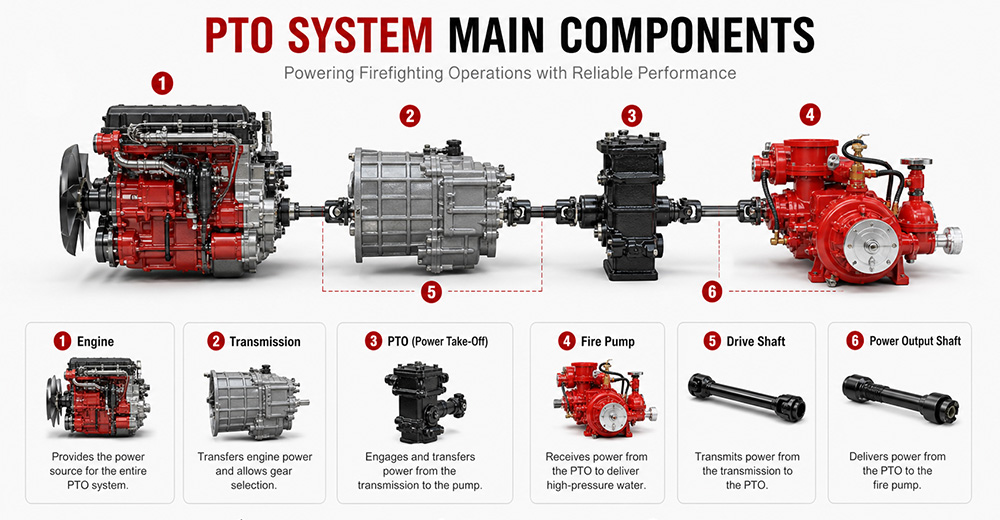
ปั๊มดับเพลิงเป็นโหลดสุดท้ายของระบบ PTO มีหน้าที่เปลี่ยนพลังงานกลเป็นพลังงานแรงดันน้ำ
ฟังก์ชัน:รับกำลังหมุนจาก PTO ขับใบพัดให้หมุน ดูดน้ำเข้า และจ่ายน้ำออกด้วยแรงดันสูง
ประเภท:ปั๊มหอยโข่ง (แบบขั้นเดียว แบบสองขั้น หรือแบบหลายขั้น)
อัตราการไหลทั่วไป:20 ลิตร/วินาที – 180 ลิตร/วินาที (1,200 – 6,000 ลิตร/นาที)
แรงดันทั่วไป:1.0 – 2.5 MPa (10 – 25 บาร์)
ระบบควบคุม PTO เป็น "ศูนย์บัญชาการ" ระหว่างผู้ขับขี่กับระบบ PTO มีหน้าที่ควบคุมการเข้าใช้งาน การปลดใช้งาน การป้องกันความปลอดภัย และการแสดงสถานะ
ฟังก์ชัน:ควบคุมการเข้าใช้งานและการปลดใช้งาน PTO ตรวจสอบสถานะระบบ และให้การป้องกันด้านความปลอดภัย
ตำแหน่งการใช้งาน:ภายในห้องโดยสาร (การควบคุมหลัก) และแผงปั๊ม (การควบคุมเสริม)
วิธีการควบคุม:สายเคเบิลแบบแมนนวล โซลินอยด์ไฟฟ้า ระบบนิวแมติก
ฟังก์ชันควบคุมเฉพาะ:
(1) การควบคุมการเข้าใช้งาน PTO
ผู้ปฏิบัติงานกดสวิตช์ PTO (โซลินอยด์ไฟฟ้า/ระบบนิวแมติก) หรือดึงคันโยก (แบบแมนนวล) ในห้องโดยสาร ระบบควบคุมจะส่งสัญญาณเพื่อให้เฟืองภายในของ PTO เข้าประกบกับแหล่งกำลัง หลังจากยืนยันการเข้าใช้งานสำเร็จ ไฟแสดงสถานะจะสว่างขึ้น ทำให้ผู้ปฏิบัติงานสามารถเพิ่มรอบเครื่องยนต์ได้
(2) การควบคุมการปลดใช้งาน PTO
ผู้ปฏิบัติงานกดสวิตช์อีกครั้งหรือรีเซ็ตคันโยก ระบบควบคุมจะตัดสัญญาณ และเฟือง PTO จะปลดออก หลังจากยืนยันการปลดใช้งาน ไฟแสดงสถานะจะดับลง
| ประเภท PTO | ตำแหน่งติดตั้ง | แหล่งกำลัง | กำลังส่งออก | การใช้งานทั่วไป |
| PTO แบบแซนด์วิช | ระหว่างเครื่องยนต์และระบบส่งกำลัง | ฟลายวีลของเครื่องยนต์ | กำลังเต็มรูปแบบ (≥90%) | รถดับเพลิงแบบสูบน้ำ รถดับเพลิงกระเช้า |
| PTO แบบเพลาผ่า | เพลาขับกลางแชสซี | เพลาส่งกำลังออกของระบบส่งกำลัง | กำลังเต็ม | รถดูดสูญญากาศขนาดใหญ่, รถดับเพลิงสนามบิน |
| PTO ติดตั้งด้านข้าง | ด้านข้างของระบบส่งกำลัง | เฟืองระบบส่งกำลัง | กำลังบางส่วน (ต่ำกว่า) | รถฉีดน้ำ, รถดูดสูญญากาศขนาดเล็ก |
PTO แบบแซนด์วิช
ข้อดี:เอาต์พุตกำลังเต็ม (≥90%) รองรับ "การสูบขณะขับเคลื่อน" (การทำงานสองฟังก์ชัน), ประสิทธิภาพการส่งกำลังสูง, หล่อลื่นได้ง่าย
ข้อเสีย:ต้นทุนสูงกว่า, ติดตั้งซับซ้อน, ต้องดัดแปลงจุดเชื่อมต่อระหว่างเครื่องยนต์กับระบบส่งกำลัง
PTO แบบเพลาผ่า
ข้อดี:เอาต์พุตกำลังเต็ม, ไม่ต้องใช้พื้นที่เพิ่มเติม, ความน่าเชื่อถือสูง, สมดุลไดนามิกดี, สามารถใช้แทนเครื่องยนต์เสริมเพื่อขับปั๊มขนาดใหญ่
ข้อเสีย:ต้องตัดเพลาขับเดิม, การเลือกตำแหน่งติดตั้งต้องคำนึงถึงมุมเพลาขับและการชดเชยความยาว
PTO ติดตั้งด้านข้าง
ข้อดี:ต้นทุนต่ำ, ติดตั้งง่าย, สามารถดึงกำลังโดยตรงจากด้านข้างของระบบส่งกำลัง
ข้อเสีย:มีเฉพาะกำลังบางส่วน, แรงบิดขาออกต่ำกว่า, ไม่สามารถขับปั๊มดับเพลิงกำลังสูงได้, ส่วนใหญ่ใช้กับอุปกรณ์ความเร็วต่ำและกำลังต่ำ
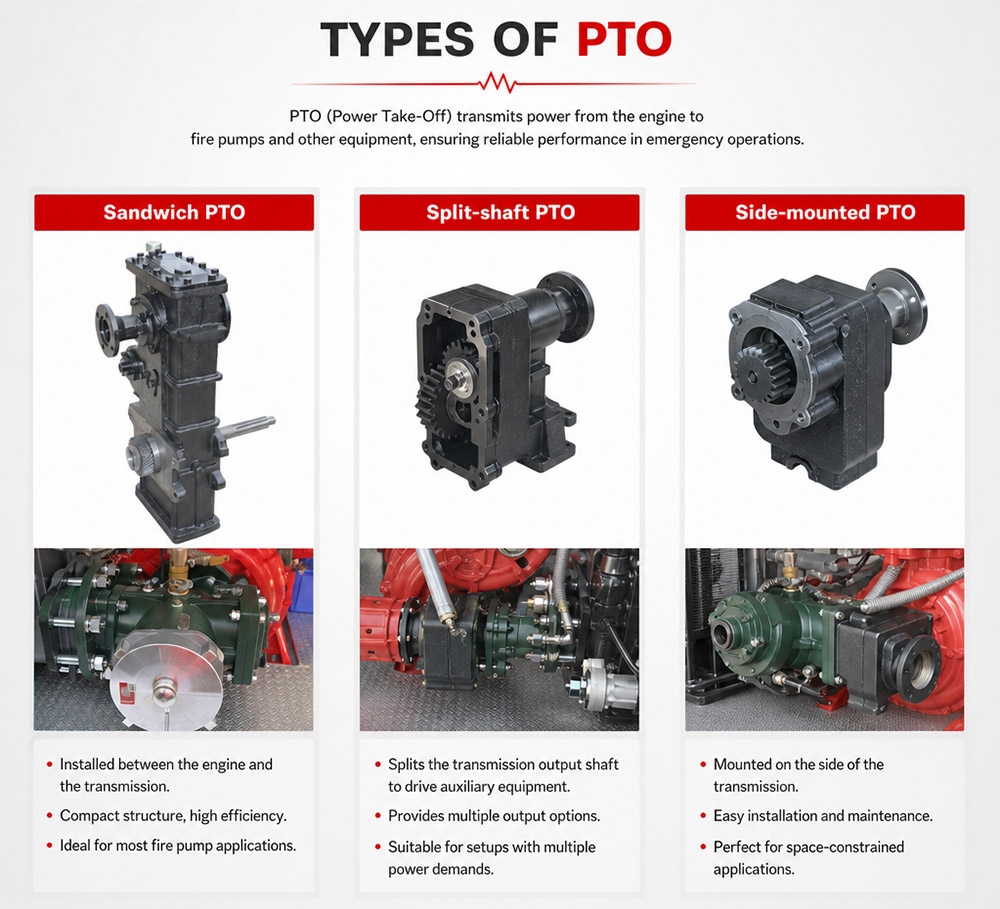
กระบวนการเป็นไปตามห่วงโซ่การส่งกำลังเชิงกลที่ชัดเจน:
เครื่องยนต์ → PTO → เพลาขับ → ปั๊มดับเพลิง → การหมุนของใบพัด → การดูด → การเพิ่มแรงดัน → ปืนฉีดน้ำดับเพลิง
| ปัจจัย | บทบาท |
|---|---|
| คุณลักษณะของปั๊มหอยโข่ง | เมื่อความเร็วรอบของใบพัดคงที่ แรงดันจ่ายออกจะคงที่ตามธรรมชาติ |
| การเชื่อมต่อ PTO แบบแข็ง | ไม่มีการลื่นไถลหรือการสูญเสียกำลัง ช่วยให้กำลังขาเข้ามีความต่อเนื่องและคงที่ |
| ตัวควบคุมแรงดัน | ตรวจจับการเปลี่ยนแปลงของอัตราการไหลโดยอัตโนมัติและปรับรอบเครื่องยนต์เพื่อรักษาแรงดันที่ตั้งไว้ |
| วาล์วระบายแรงดัน | ทำการบายพาสโดยอัตโนมัติเมื่อแรงดันเกินขีดจำกัด เพื่อป้องกันความเสียหายของอุปกรณ์ |
① ความเร็วของปั๊มถูกกำหนดโดยรอบเครื่องยนต์
ความเร็วใบพัดของปั๊มดับเพลิง = รอบเครื่องยนต์ × อัตราทด PTO อัตราทด PTO ถูกกำหนดไว้คงที่ (เช่น 1.75:1) ดังนั้นความเร็วของปั๊มจะเปลี่ยนแปลงโดยตรงตามรอบเครื่องยนต์
สูตรการคำนวณ:
รอบเครื่องยนต์ × อัตราทด PTO = ความเร็วปั๊ม (RPM)
② ความสัมพันธ์ทางกายภาพระหว่างแรงดันและความเร็ว
แรงดันที่สร้างโดยปั๊มหอยโข่งเป็นสัดส่วนกับกำลังสองของความเร็วใบพัด กฎทางกายภาพนี้หมายความว่าการเปลี่ยนแปลงของ RPM เพียงเล็กน้อยทำให้เกิดความผันผวนของแรงดันอย่างมีนัยสำคัญ
ความเร็วเพิ่มขึ้น → แรงเหวี่ยงหนีศูนย์กลางเพิ่มขึ้น → แรงดันทางจ่ายเพิ่มขึ้น
ความเร็วลดลง → แรงเหวี่ยงหนีศูนย์กลางลดลง → แรงดันทางจ่ายลดลง
1. PTO ไม่ทำงาน
สาเหตุที่เป็นไปได้:แรงดันอากาศต่ำ (ประเภทนิวแมติก), โซลินอยด์ขัดข้อง, สายเคเบิลเสียหรือติดขัด, เงื่อนไขอินเตอร์ล็อกไม่ครบ (ไม่ได้ดึงเบรกมือ, ระบบส่งกำลังไม่ได้อยู่ในตำแหน่งเกียร์ว่าง)
วิธีแก้ไข:ตรวจสอบแรงดันระบบอากาศ (ต้อง ≥0.6 MPa); ทดสอบโซลินอยด์; ตรวจสอบสายเคเบิล; ยืนยันว่าได้ดึงเบรกมือและระบบส่งกำลังอยู่ในตำแหน่งเกียร์ว่าง
2. PTO ทำงานแต่ปั๊มไม่ทำงาน
สาเหตุที่เป็นไปได้:คลัตช์ PTO ขัดข้อง, เพลาขับหักหรือร่องสปลายน์สึกหรอ, เฟืองภายในเสียหาย
วิธีแก้ไข:ตรวจสอบการทำงานของคลัตช์ PTO; ตรวจสอบเพลาขับว่าหักหรือจุดเชื่อมต่อหลวมหรือไม่; ถอดแยกและตรวจสอบเฟืองภายใน
3. PTO มีเสียงผิดปกติ
สาเหตุที่เป็นไปได้:การขบกันของเฟืองไม่ดีหรือสึกหรอ, ลูกปืนสึกหรอ, การหล่อลื่นไม่เพียงพอหรือน้ำมันหล่อลื่นเสื่อมสภาพ, PTO ไม่ได้ปลดออกจนสุด
วิธีแก้ไข:ตรวจสอบระยะห่างของเฟืองและการสึกของฟันเฟือง; ตรวจสอบลูกปืน; เปลี่ยนเป็นสารหล่อลื่นที่เหมาะสม; ยืนยันว่า PTO ปลดออกจนสุด
4. PTO มีน้ำมันรั่ว
สาเหตุที่เป็นไปได้:ซีลสึกหรอหรือเสื่อมสภาพ, ตัวเรือนแตกร้าว, สลักเกลียวยึดหลวม
วิธีแก้ไข:เปลี่ยนซีล (O-rings, ซีลน้ำมัน); ตรวจสอบตัวเรือนว่ามีรอยแตกร้าวหรือไม่; ขันสลักเกลียวยึดให้แน่น
5. PTO ร้อนเกินไป
สาเหตุที่เป็นไปได้:การทำงานภายใต้ภาระสูงเป็นเวลานาน, น้ำมันหล่อลื่นไม่เพียงพอหรือเสื่อมสภาพ, ระบบระบายความร้อนขัดข้อง
วิธีแก้ไข:ลดภาระโหลดหรือหยุดการทำงานเพื่อระบายความร้อน เปลี่ยนเป็นสารหล่อลื่นที่ผ่านการรับรอง ตรวจสอบท่อระบายความร้อน
6. PTO มีกำลังไม่เพียงพอ
สาเหตุที่เป็นไปได้:การเลือกอัตราทด PTO ไม่เหมาะสม รอบเครื่องยนต์ตั้งไว้ต่ำเกินไป คลัตช์ลื่นไถล
วิธีแก้ไข:ยืนยันว่าอัตราทด PTO ตรงกับปั๊มดับเพลิง เพิ่มรอบเครื่องยนต์ให้อยู่ในช่วงการทำงานตามพิกัด ตรวจสอบคลัตช์ว่ามีการลื่นไถลหรือไม่
Q1. PTO บนรถดับเพลิงหมายถึงอะไร?
PTO ย่อมาจาก Power Take-Off เป็นระบบกลไกที่ถ่ายโอนกำลังจากเครื่องยนต์ผ่านระบบส่งกำลังของรถไปยังปั๊มดับเพลิง กล่าวง่าย ๆ คือ PTO ช่วยให้เครื่องยนต์ของรถดับเพลิงสามารถขับเคลื่อนระบบสูบน้ำ เพื่อส่งน้ำแรงดันสูงหรือโฟมสำหรับการดับเพลิงโดยไม่จำเป็นต้องใช้เครื่องยนต์แยกต่างหาก PTO เป็นส่วนประกอบสำคัญในรถดับเพลิงสำหรับภาคอุตสาหกรรมและเทศบาล
Q2. ทำไมรถดับเพลิงจึงต้องใช้ PTO?
รถดับเพลิงจำเป็นต้องใช้ PTO เพราะช่วยให้เครื่องยนต์หลักของรถสามารถขับปั๊มดับเพลิงได้อย่างมีประสิทธิภาพ หากไม่มี PTO ปั๊มดับเพลิงจะต้องใช้เครื่องยนต์แยก ซึ่งจะเพิ่มต้นทุน น้ำหนัก และความซับซ้อนในการบำรุงรักษา ระบบ PTO เป็นวิธีที่กะทัดรัด เชื่อถือได้ และประหยัดเชื้อเพลิงในการทำให้มีน้ำหรือโฟมจ่ายอย่างต่อเนื่องระหว่างการดับเพลิง
Q3. รถดับเพลิงสามารถทำงานโดยไม่มี PTO ได้หรือไม่?
รถดับเพลิงสมัยใหม่ส่วนใหญ่ไม่สามารถใช้งานระบบสูบน้ำได้หากไม่มี PTO เนื่องจาก PTO มีหน้าที่ถ่ายโอนกำลังเครื่องยนต์ไปยังปั๊มดับเพลิง อย่างไรก็ตาม รถดับเพลิงเฉพาะทางบางประเภทอาจใช้เครื่องยนต์เสริมอิสระเพื่อขับปั๊ม การออกแบบดังกล่าวพบได้น้อยกว่าเนื่องจากมีต้นทุนสูงกว่า ต้องบำรุงรักษามากกว่า และมีประสิทธิภาพต่ำกว่าเมื่อเทียบกับระบบที่ใช้ PTO
Q4. PTO และปั๊มดับเพลิงแตกต่างกันอย่างไร?
PTO เป็นอุปกรณ์ส่งผ่านกำลัง ส่วนปั๊มดับเพลิงเป็นระบบสูบน้ำหรือโฟม PTO ส่งกำลังกลจากเครื่องยนต์ไปยังปั๊ม และปั๊มดับเพลิงจะเปลี่ยนกำลังนั้นเป็นแรงดันไฮดรอลิกเพื่อเคลื่อนย้ายน้ำหรือโฟม กล่าวโดยสรุป PTO คือ "ตัวเชื่อมต่อแหล่งกำลัง" และปั๊มดับเพลิงคือ "อุปกรณ์ส่งออกสำหรับการดับเพลิง"
Q5. PTO ของรถดับเพลิงสามารถให้กำลังได้เท่าใด?
กำลังขาออกของ PTO รถดับเพลิงขึ้นอยู่กับการออกแบบรถและระบบส่งกำลัง โดยทั่วไป ระบบ PTO สามารถให้กำลังกลได้ตั้งแต่ 50 kW จนถึงมากกว่า 300 kW รถดับเพลิงสำหรับงานอุตสาหกรรมหนักและสนามบินมักใช้ระบบ PTO ความจุสูงที่รองรับปั๊มดับเพลิงอัตราการไหลสูงและการทำงานแรงดันสูงอย่างต่อเนื่อง
Q6. PTO สำหรับรถดับเพลิงมีกี่ประเภท?
ระบบ PTO สำหรับรถดับเพลิงมีหลายประเภท ได้แก่ PTO ติดตั้งด้านข้าง PTO ติดตั้งด้านหลัง PTO แบบเพลาร่วมแยก และ PTO แบบกำลังเต็ม PTO ติดตั้งด้านข้างมักใช้ในรถดับเพลิงมาตรฐาน ขณะที่ระบบ PTO แบบเพลาร่วมแยกและแบบกำลังเต็มใช้ในรถดับเพลิงอุตสาหกรรมและสนามบินที่ต้องการกำลังสูงกว่าและการทำงานต่อเนื่อง
Q7. คุณดูแลรักษา PTO ของรถดับเพลิงอย่างไร?
การบำรุงรักษา PTO ประกอบด้วยการตรวจสอบระดับน้ำมันหล่อลื่นเป็นประจำ ตรวจหารอยรั่ว ขันสลักยึดให้แน่น และตรวจสอบการจัดแนวของเพลาขับให้ถูกต้อง ผู้ปฏิบัติงานควรทดสอบฟังก์ชันการเข้าและปลด PTO อย่างสม่ำเสมอ การบำรุงรักษาเชิงป้องกันเป็นสิ่งสำคัญเพื่อหลีกเลี่ยงความร้อนสูงเกินไป การสึกหรอทางกล และการขัดข้องที่ไม่คาดคิดระหว่างการปฏิบัติการฉุกเฉิน
Q8. อะไรเป็นสาเหตุให้ PTO ของรถดับเพลิงเสีย?
สาเหตุทั่วไปของความขัดข้องของ PTO ได้แก่ การหล่อลื่นไม่เพียงพอ เฟืองสึกหรอ การจัดแนวเพลาขับไม่ถูกต้อง ความร้อนสูงเกินไป และการใช้งานที่ไม่ถูกต้องโดยผู้ขับขี่ ความขัดข้องของระบบควบคุมไฟฟ้าหรือไฮดรอลิกอาจทำให้ PTO ไม่สามารถเข้าทำงานได้เช่นกัน การบำรุงรักษาเป็นประจำและขั้นตอนการใช้งานที่ถูกต้องช่วยลดความเสี่ยงของความเสียหายของ PTO ได้อย่างมาก
Q9. PTO แบบใดดีที่สุดสำหรับรถดับเพลิงอุตสาหกรรม?
สำหรับรถดับเพลิงอุตสาหกรรม ตัวเลือกที่ดีที่สุดโดยทั่วไปคือระบบ PTO แบบเพลาร่วมแยกหรือ PTO แบบกำลังเต็ม ระบบเหล่านี้รองรับกำลังขาออกสูง การทำงานต่อเนื่อง และปั๊มดับเพลิงขนาดใหญ่ได้ นิยมใช้ในโรงงานปิโตรเคมี โรงกลั่นน้ำมัน สนามบิน และโรงงานอุตสาหกรรมขนาดใหญ่ที่ต้องการประสิทธิภาพการดับเพลิงที่เชื่อถือได้และใช้งานต่อเนื่องเป็นเวลานาน
Q10. ผู้ซื้อควรพิจารณาอะไรเมื่อเลือก PTO สำหรับรถดับเพลิง?
ผู้ซื้อควรพิจารณาความเข้ากันได้ของกำลังเครื่องยนต์ อัตราการไหลที่ต้องการของปั๊มดับเพลิง ประเภทรถ และสภาพแวดล้อมการทำงาน นอกจากนี้ควรประเมินความทนทานของ PTO ประสิทธิภาพการระบายความร้อน ความสะดวกในการบำรุงรักษา และความเข้ากันได้กับแชสซี สำหรับโครงการส่งออก ควรคำนึงถึงการปฏิบัติตามมาตรฐานสากลและข้อกำหนดท้องถิ่นเพื่อให้ได้รับการอนุมัติและมีความน่าเชื่อถือในการใช้งาน
PTO (Power Take-Off) เป็นระบบหลักที่ถ่ายโอนกำลังเครื่องยนต์ไปยังปั๊มดับเพลิง ซึ่งเป็นตัวกำหนดว่าระบบดับเพลิงทั้งหมดจะสามารถทำงานได้อย่างถูกต้องหรือไม่
ห่วงโซ่กำลังของรถดับเพลิงคือ: เครื่องยนต์ → ระบบส่งกำลัง → PTO → เพลาขับ → ปั๊มดับเพลิง → หัวฉีดน้ำดับเพลิง ทุกจุดที่อ่อนแอในห่วงโซ่นี้ส่งผลต่อประสิทธิภาพการดับเพลิงขั้นสุดท้าย
หน้าที่หลักของ PTO คือการให้กำลังกลที่มีเสถียรภาพและต่อเนื่อง ช่วยให้รถดับเพลิงสามารถจ่ายน้ำหรือโฟมได้อย่างมีประสิทธิภาพโดยไม่ต้องใช้เครื่องยนต์แยก
PTO แต่ละประเภท (ติดตั้งด้านข้าง ติดตั้งด้านหลัง แบบเพลาร่วมแยก แบบกำลังเต็ม) เหมาะกับรถดับเพลิงแต่ละระดับการใช้งาน รถดับเพลิงอุตสาหกรรมมักให้ความสำคัญกับระบบ PTO กำลังสูง
ประสิทธิภาพของ PTO ต้องตรงกับอัตราการไหลของปั๊มดับเพลิงและแชสซีรถ มิฉะนั้นอาจเกิดปัญหา เช่น กำลังไม่เพียงพอ แรงดันไม่เสถียร หรือระบบรับภาระเกิน
การบำรุงรักษาระบบ PTO อย่างสม่ำเสมอ (การหล่อลื่น การขันให้แน่น การตรวจสอบการจัดแนว) เป็นกุญแจสำคัญในการรับประกันการทำงานที่เชื่อถือได้ของรถดับเพลิง โดยเฉพาะในการใช้งานอุตสาหกรรมที่มีความเข้มข้นสูง
เมื่อซื้อรถดับเพลิงอุตสาหกรรม ผู้ซื้อไม่ควรพิจารณาเฉพาะราคาเท่านั้น กำลังของ PTO ความเสถียร ความเข้ากันได้ และการสนับสนุนหลังการขายล้วนเป็นปัจจัยสำคัญที่ต้องประเมิน
สำหรับสถานการณ์ความเสี่ยงสูง เช่น โรงงานปิโตรเคมี สนามบิน และนิคมอุตสาหกรรมขนาดใหญ่ แนะนำให้ใช้ระบบ PTO แบบกำลังเต็ม หรือ PTO แบบเพลาร่วมแยก เพื่อให้มั่นใจว่าสามารถทำงานได้อย่างต่อเนื่อง


คุณอาจสนใจข้อมูลต่อไปนี้
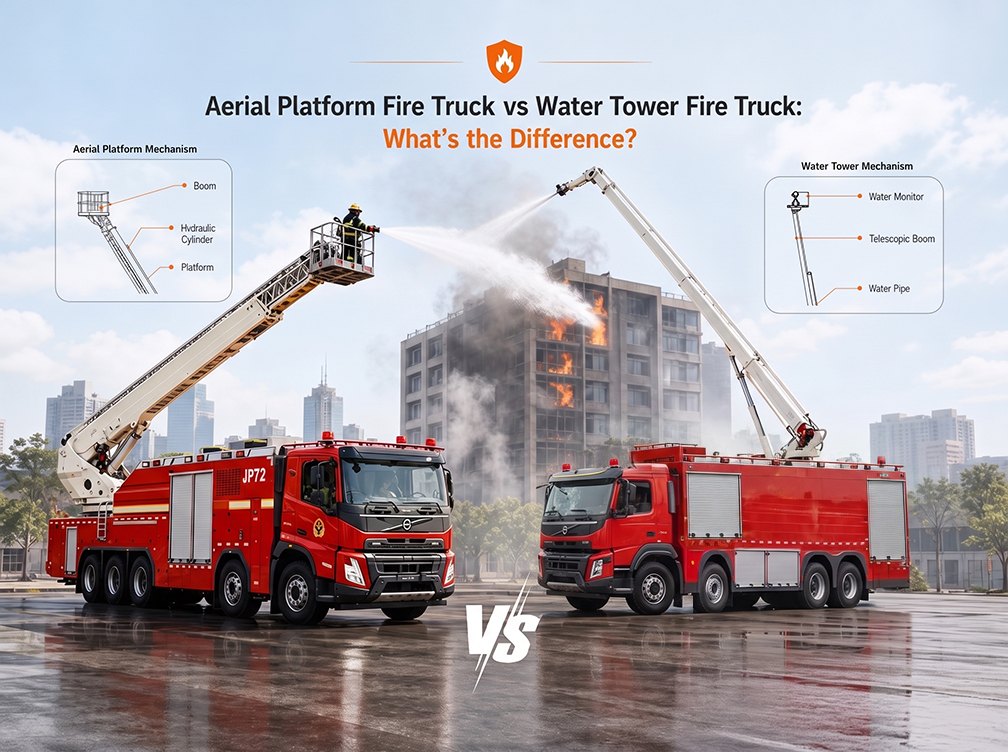
เมื่อพูดถึงการดับเพลิงในอาคารสูง โรงงานอุตสาหกรรม หรือคลังสินค้าขนาดใหญ่ รถดับเพลิงบันไดยกสูงเป็นสิ่งที่ขาดไม่ได้ แต่ในบรรดาอุปกรณ์ดับเพลิงแบบยกสูงหลายประเภท มีอยู่สองประเภทที่มักสร้างความสับสน:รถดับเพลิงแพลตฟอร์มยกสูงและรถดับเพลิงหอส่งน้ำแม้เมื่อมองครั้งแรกอาจดูคล้ายกัน—ทั้งสองประเภทมีแขนบูมไฮดรอลิกและได้รับการออกแบบสำหรับการดับเพลิงในพื้นที่สูง—แต่จริง ๆ แล้วมีภารกิจพื้นฐานที่แตกต่างกัน บทความนี้จะแยกแยะความแตกต่างสำคัญระหว่างยานพาหนะสองประเภทนี้ เพื่อช่วยให้ผู้เชี่ยวชาญด้านบริการดับเพลิง ผู้จัดการฝ่ายจัดซื้อ และผู้จัดจำหน่ายอุปกรณ์สามารถตัดสินใจได้อย่างมีข้อมูลโดยอิงจากความต้องการในการปฏิบัติงาน I. รถแพลตฟอร์มยกสูงคืออะไร? ตามมาตรฐานแห่งชาติจีน GB 7956.12-2015 ยานพาหนะทั้งสองประเภทอยู่ในหมวดหมู่ของยานพาหนะดับเพลิงทางอากาศ—ยานพาหนะที่ติดตั้งบูมยกสูง แท่นหมุน และอุปกรณ์ดับเพลิงสำหรับการปฏิบัติงานในระดับความสูง อย่างไรก็ตาม คำจำกัดความเฉพาะของแต่ละประเภทแสดงให้เห็นถึงความแตกต่างที่สำคัญ. รถดับเพลิงแพลตฟอร์มยกสูง รถดับเพลิงแพลตฟอร์มยกสูงติดตั้งบูมแบบพับได้หรือแบบพับร่วมกับยืดหดได้ แพลตฟอร์มสำหรับบุคลากร แท่นหมุน และอุปกรณ์ดับเพลิงคุณลักษณะสำคัญคือแพลตฟอร์มทำงาน (กระเช้า)ที่ปลายบูม ซึ่งนักดับเพลิงสามารถยืนเพื่อดำเนินการกู้ภัยและดับเพลิงได้. ลักษณะสำคัญ:• ติดตั้งแพลตฟอร์มที่สามารถรองรับ750 ปอนด์ถึงมากกว่า 1,500 ปอนด์ของบุคลากรและอุปกรณ์• ออกแบบมาสำหรับทั้งการกู้ภัยและการดับเพลิง—นักดับเพลิงสามารถปฏิบัติงานโดยตรงจากแพลตฟอร์ม• แพลตฟอร์มสามารถใช้งานร่วมกับอุปกรณ์ควบคุมการลดระดับ รอกไฮดรอลิก หรือรางเลื่อนช่วยเหลือผู้ประสบภัย• มีระยะเอื้อมในแนวนอนที่กว้างกว่าและช่วงการทำงานมากกว่ารถหอส่งน้ำ IIII. รถดับเพลิงหอส่งน้ำคืออะไร? รถดับเพลิงหอส่งน้ำติดตั้งบูมแบบพับได้หรือแบบพับร่วมกับยืดหดได้ แท่นหมุน และอุปกรณ์ดับเพลิง—โดยไม่มีแพลตฟอร์มสำหรับบุคลากรแต่จะติดตั้งหัวฉีดน้ำดับเพลิง (ปืนฉีดน้ำ) ที่ปลายบูม ซึ่งสามารถควบคุมจากระยะไกลบนพื้นดินได้. ลักษณะสำคัญ:•ไม่มีแพลตฟอร์มสำหรับบุคลากร—นักดับเพลิงปฏิบัติงานจากพื้นดินผ่านการควบคุมระยะไกล• มุ่งเน้นเฉพาะด้านการควบคุมเพลิงในพื้นที่สูงไม่ใช่การกู้ภัย• ให้อัตราการไหลของน้ำสูงเป็นพิเศษ—เกิน 2,000 แกลลอนต่อนาทีในรุ่นอุตสาหกรรมหลายรุ่น• ออกแบบมาสำหรับการป้องกันอัคคีภัยในภาคอุตสาหกรรมที่ไม่จำเป็นต้องมีความสามารถในการกู้ภัย III. การเปรียบเทียบแบบเคียงข้างกัน คุณลักษณะ รถดับเพลิงบันไดยกระดับแบบแพลตฟอร์ม รถดับเพลิงหอส่งน้ำ หน้าที่หลัก กู้ภัย + ดับเพลิง ดับเพลิงเท่านั้น อุปกรณ์ที่ปลายบูม แพลตฟอร์มทำงาน (กระเช้า) สำหรับบุคลากร หัวฉีดน้ำดับเพลิง (ปืนฉีดน้ำ) บุคลากรบนบูม ใช่—นักดับเพลิงสามารถปฏิบัติงานจากแพลตฟอร์มได้ ไม่—ควบคุมจากภาคพื้นดินผ่านรีโมตคอนโทรล ความสามารถในการกู้ภัย สูง—สามารถอพยพผู้ติดอยู่ในอาคารได้ ไม่มี ความสามารถในการจ่ายน้ำ สูงสุด 1,500+ GPM 2,000+ GPM (รุ่นอุตสาหกรรม) ความสูงในการปฏิบัติงานทั่วไป 50–130 ฟุต 50–130 ฟุต ความจุของแพลตฟอร์ม/กระเช้า 750–1,500+ ปอนด์ ไม่เกี่ยวข้อง น้ำหนัก หนักกว่า (เช่น 36 ตันสำหรับรุ่น 54 ม.) เบากว่าเมื่อเทียบกัน เหมาะที่สุดสำหรับ การกู้ภัยอาคารสูงในเมือง หน่วยงานที่ต้องการรถอเนกประสงค์ พื้นที่อุตสาหกรรม การระงับอัคคีภัยขนาดใหญ่ Ⅳ. เมื่อใดควรเลือกใช้รถดับเพลิงบันไดยกระดับแบบแพลตฟอร์ม รถดับเพลิงบันไดยกระดับแบบแพลตฟอร์มคืออุปกรณ์ยานพาหนะทางอากาศอเนกประสงค์ขั้นสูงสุด—สามารถจัดการทั้...
รายละเอียด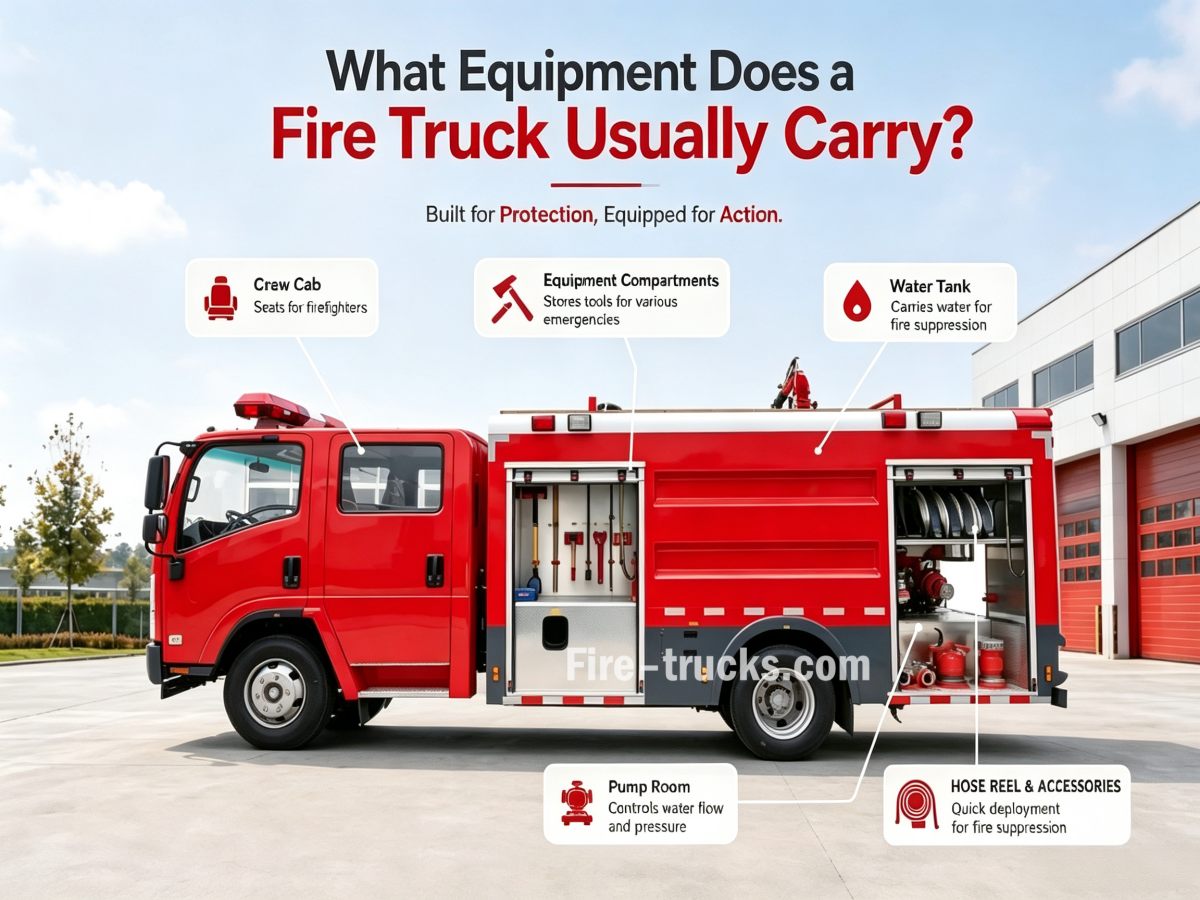
รถดับเพลิงโดยทั่วไปจะบรรทุกอุปกรณ์ดับเพลิง อุปกรณ์จ่ายน้ำ อุปกรณ์กู้ภัย และอุปกรณ์ป้องกันความปลอดภัย อุปกรณ์ทั่วไปประกอบด้วยเครื่องสูบน้ำดับเพลิง ถังน้ำ สายดับเพลิง หัวฉีดน้ำดับเพลิง ปืนฉีดน้ำดับเพลิง วาล์ว บันไดดับเพลิง เครื่องมือกู้ภัย อุปกรณ์ป้องกัน และอุปกรณ์สื่อสาร บทความนี้จะแยกวิเคราะห์อย่างเป็นระบบเกี่ยวกับการจำแนกประเภท หน้าที่ และข้อควรพิจารณาในการเลือกอุปกรณ์มาตรฐานของ รถดับเพลิง อุปกรณ์ ซึ่งช่วยให้ผู้เชี่ยวชาญด้านการจัดซื้อและผู้ใช้งานปลายทางมีความเข้าใจอย่างครบถ้วนเกี่ยวกับการกำหนดค่าของรถดับเพลิง I. การจำแนกประเภทอุปกรณ์ของรถดับเพลิง 1. อุปกรณ์ดับเพลิง— เครื่องมือหลักสำหรับการควบคุมเพลิงโดยตรง รวมถึงหัวฉีดน้ำดับเพลิง ปืนฉีดน้ำดับเพลิง สายดับเพลิง อุปกรณ์แยกน้ำ และข้อต่อแปลง 2. อุปกรณ์กู้ภัยและเจาะเปิดทาง— เครื่องมือสำหรับสร้างเส้นทางเข้าถึงเพื่อปฏิบัติการกู้ภัยและดับเพลิง รวมถึงเครื่องมือกู้ภัยไฮดรอลิก ขวานดับเพลิง เหล็กงัด ชะแลง เลื่อยตัด และเลื่อยโซ่ 3. อุปกรณ์กู้ภัยและช่วยชีวิต— อุปกรณ์สำหรับการค้นหา การเคลื่อนย้าย และการปกป้องบุคลากร รวมถึงเปลสนาม เชือกกู้ภัย ตะขอนิรภัย อุปกรณ์ควบคุมการลง เครื่องช่วยหายใจแบบมีถังอากาศในตัว (SCBA) และถังอากาศสำรอง 4. อุปกรณ์ระบายควันและอุปกรณ์ส่องสว่าง— อุปกรณ์สำหรับปรับปรุงสภาพพื้นที่เกิดเหตุเพลิงไหม้ รวมถึงเครื่องดูดควัน หอไฟส่องสว่างเคลื่อนที่ และไฟค้นหาแบบพกพาความเข้มสูง 5. อุปกรณ์ป้องกันส่วนบุคคล (PPE)— อุปกรณ์สำหรับปกป้องความปลอดภัยของนักดับเพลิง รวมถึงหมวก ชุดป้องกันการดับเพลิงโครงสร้าง ถุงมือ รองเท้าบูท และเข็มขัดนิรภัย 6. อุปกรณ์สื่อสารและสำรวจพื้นที่— อุปกรณ์สำหรับรวบรวมข้อมูลในพื้นที่เกิดเหตุเพลิงไหม้และประสานงานการควบคุมสั่งการ รวมถึงวิทยุสื่อสารสองทาง กล้องถ่ายภาพความร้อน และเครื่องตรวจจับก๊าซพิษ II. อุปกรณ์ดับเพลิงบนรถดับเพลิง 1. เครื่องสูบน้ำดับเพลิง เครื่องสูบน้ำดับเพลิงเป็นแหล่งพลังงานสำหรับการปฏิบัติการดับเพลิงทั้งหมด โดยจะเพิ่มแรงดันน้ำด้วยระบบกลไก ทำให้น้ำมีพลังงานจลน์เพียงพอสำหรับกระบวนการทั้งหมดตั้งแต่ "การดูดน้ำ → การเพิ่มแรงดัน → การส่งน้ำ → การจ่ายน้ำ" ข้อมูลจำเพาะทั่วไปของเครื่องสูบน้ำดับเพลิง: •เครื่องสูบน้ำดับเพลิงแรงดันมาตรฐาน (ชนิด CB10/30):อัตราการไหล ≥30 ลิตร/วินาที แรงดันพิกัด 1.0MPa ติดตั้งด้านท้ายรถ เหมาะสำหรับรถบรรทุกน้ำมาตรฐานและรถดับเพลิงโฟม ตอบสนองความต้องการจ่ายน้ำสำหรับการดับเพลิงในเมืองและภาคอุตสาหกรรมส่วนใหญ่ •เครื่องสูบน้ำดับเพลิงแรงดันปานกลาง/สูง:อัตราการไหลแรงดันต่ำ 30 ลิตร/วินาที ที่ 1.0MPa อัตราการไหลแรงดันสูง 20 ลิตร/วินาที ที่ 2.0MPa ติดตั้งด้านท้ายรถ การออกแบบแบบแรงดันคู่รองรับทั้งการจ่ายน้ำปริมาณมาก (แรงดันต่ำ) และการส่งน้ำระยะไกล/อาคารสูง (แรงดันสูง) ด้วยเครื่องสูบเดียว เหมาะอย่างยิ่งสำหรับรถดับเพลิงหลักในเมืองและสถานการณ์ดับเพลิงอาคารสูง •เครื่องสูบน้ำดับเพลิงแรงดันสูง:อัตราการไหล 10-15 ลิตร/วินาที แรงดันสูงสุด 4.0MPa หรือสูงกว่า ติดตั้งด้านท้ายรถหรือกึ่งกลางรถ ใช้ในระบบละอองน้ำแรงดันสูง พบได้ทั่วไปในรถดับเพลิงสนามบินและยานพาหนะอุตสาหกรรมเฉพาะทาง เส้นทางการไหลของระบบน้ำทั้งหมด: ถังน้ำ / แหล่งน้ำธรรมชาติ → เครื่องสูบน้ำดับเพลิง (ส่วนหลัก) → ช่องจ่ายน้ำ → อุปกรณ์แยกน้ำ → สายดับเพลิง → หัวฉีดน้ำ / ปืนฉีดน้ำ 2. ปืนฉีดน้ำดับเพลิง ปืนฉีดน้ำดับเพลิงเป็นอุปกรณ์จ่ายน้ำปริมาณมากที่ติดตั้งอยู่บนหลังคาหรือแท่นของรถดับเพลิง ออกแบบมาสำหรับควบคุมเพลิงขนาดใหญ...
รายละเอียด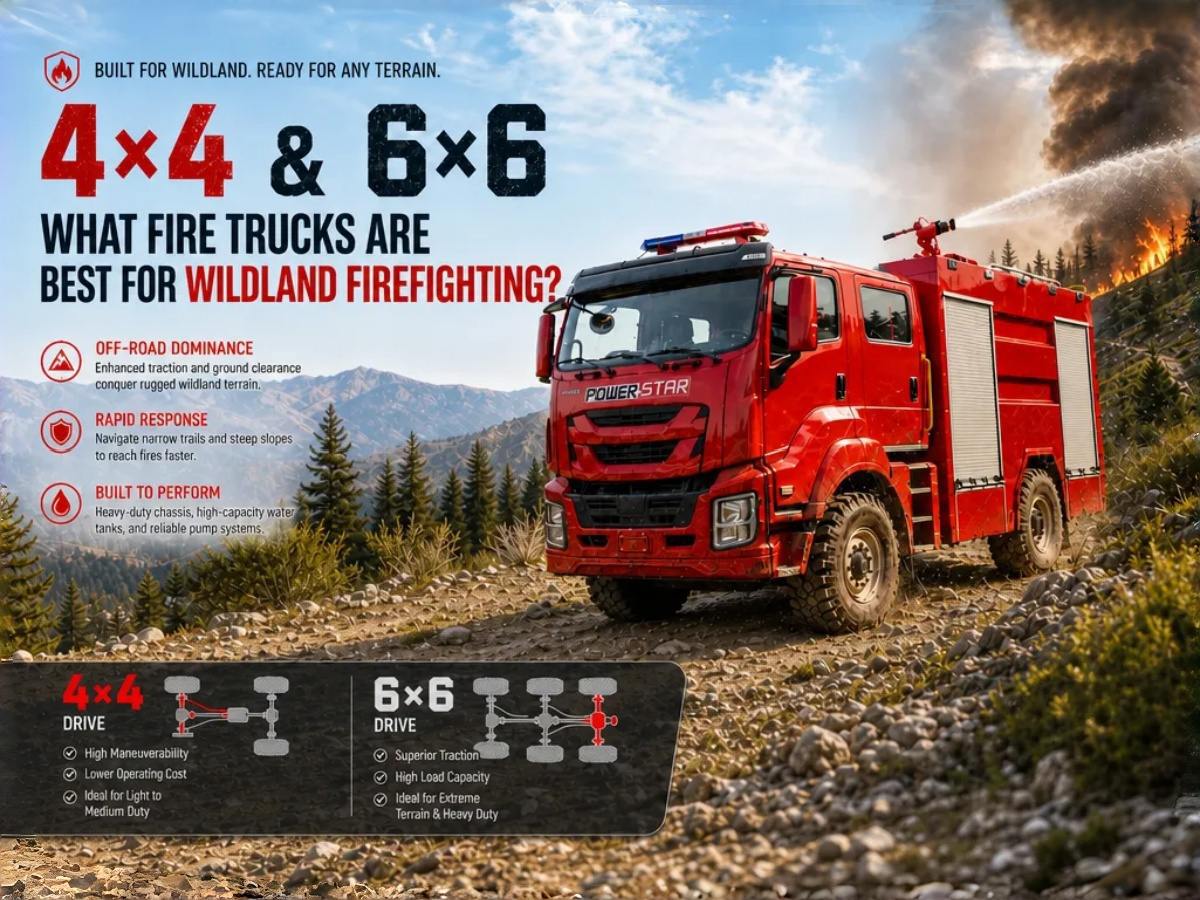
การดับไฟป่านำเสนอความท้าทายที่แตกต่างจากการดับเพลิงในอาคารอย่างพื้นฐาน ในป่าห่างไกล ทุ่งหญ้า และภูมิประเทศภูเขา รถดับเพลิงต้องเดินทางผ่านเส้นทางแคบ ไต่ทางลาดชัน และปฏิบัติงานห่างไกลจากหัวจ่ายน้ำหรือแหล่งน้ำ การเลือกรถดับเพลิงที่เหมาะสมเป็นการตัดสินใจเชิงกลยุทธ์ที่ส่งผลโดยตรงต่อเวลาตอบสนอง ความปลอดภัยของทีมงาน และประสิทธิภาพในการควบคุมไฟ บทความนี้นำเสนอการวิเคราะห์อย่างครอบคลุมเกี่ยวกับประเภทของรถดับเพลิงที่เหมาะสมที่สุดสำหรับการดับไฟป่า คุณสมบัติหลัก และวิธีการเลือก เพื่อช่วยให้คุณตัดสินใจได้อย่างถูกต้องตามความต้องการในการปฏิบัติงานเฉพาะของคุณ คำตอบแบบรวดเร็ว ไฟป่ามีลักษณะเด่นคือพื้นที่ไฟไหม้ขนาดใหญ่ ภูมิประเทศซับซ้อน แหล่งน้ำจำกัด และสภาพถนนไม่ดี ดังนั้นจึงไม่มีรถดับเพลิงเพียงประเภทเดียวที่สามารถรับมือกับสถานการณ์ไฟป่าทุกรูปแบบได้ โดยทั่วไป การดับไฟป่ามักใช้รถดับเพลิงประเภทต่อไปนี้เป็นหลัก: • รถดับเพลิงไฟป่าขนาดเบา: สำหรับเข้าถึงถนนในป่าและตอบสนองอย่างรวดเร็ว• รถดับเพลิงไฟป่าระบบขับเคลื่อน 4×4 สำหรับภูมิประเทศภูเขาและเนินเขา• รถดับเพลิงไฟป่าระบบ 6×6: สำหรับไฟป่าขนาดใหญ่และการปฏิบัติงานต่อเนื่อง• รถบรรทุกน้ำ: สำหรับการจ่ายน้ำอย่างต่อเนื่องและการสนับสนุน• รถดับเพลิงโฟม: สำหรับสถานที่น้ำมัน อุปกรณ์ป่าไม้ หรือเพลิงไหม้พิเศษ• รถกู้ภัย: สำหรับการสื่อสาร แสงสว่าง การเจาะเปิด และการสนับสนุนด้านโลจิสติกส์ I. เหตุใดไฟป่าจึงต้องใช้รถดับเพลิงเฉพาะทาง? ไฟป่าแตกต่างจากเพลิงไหม้อาคารอย่างพื้นฐานในหลายด้านที่สำคัญ: ลักษณะสำคัญของไฟป่า:• พื้นที่ไฟไหม้ขนาดใหญ่ครอบคลุมพื้นที่หลายเฮกตาร์• ทิศทางลมเปลี่ยนแปลงอย่างรวดเร็ว• ภูมิประเทศซับซ้อนและขรุขระ• การเข้าถึงหัวจ่ายน้ำหรือแหล่งน้ำมีจำกัดหรือไม่มีเลย• ถนนป่าแคบและไม่ได้ลาดยาง• สภาพการสื่อสารที่ยากลำบาก รถดับเพลิงมาตรฐานในเขตเมืองโดยทั่วไปไม่เหมาะสำหรับการดับไฟป่าด้วยเหตุผลดังต่อไปนี้: •ขาดระบบขับเคลื่อน 4×4 หรือขับเคลื่อนทุกล้อสำหรับถนนภูเขาที่ไม่ได้ลาดยางและทางลาดชัน;•ขนาดที่ใหญ่กว่าและระยะห่างจากพื้นต่ำทำให้มีโอกาสติดหล่มบนเส้นทางป่าแคบและพื้นที่ดินอ่อน;•เครื่องสูบน้ำในเมืองให้ความสำคัญกับอัตราการไหลสูงที่แรงดันปานกลาง ขณะที่การปฏิบัติงานในพื้นที่ป่าต้องใช้แรงดันสูงผ่านสายส่งน้ำระยะไกลโดยมีน้ำจำกัด ซึ่งเป็นแนวทางที่แตกต่างโดยพื้นฐาน II. ประเภททั่วไปของรถดับเพลิงสำหรับไฟป่า ประเภทของรถดับเพลิง คุณลักษณะสำคัญ สถานการณ์ที่เหมาะสม รถดับเพลิงไฟป่าขนาดเบา ความคล่องตัวสูง ขนาดกะทัดรัด การลาดตระเวนป่า การเข้าจู่โจมระยะแรก รถดับเพลิงไฟป่า 4x4 ความสามารถในการขับขี่นอกถนนสูง ภูมิประเทศภูเขาและเนินเขา รถดับเพลิงไฟป่า 6x6 ความจุน้ำขนาดใหญ่ ความทนทานในการปฏิบัติงานยาวนาน ไฟป่าขนาดใหญ่ รถบรรทุกน้ำ การจ่ายน้ำอย่างต่อเนื่อง การสนับสนุนด้านโลจิสติกส์ การส่งต่อน้ำ รถดับเพลิงโฟม การดับเพลิงเฉพาะทาง คลังน้ำมันในป่า พื้นที่อุปกรณ์ รถกู้ภัย การขนส่งอุปกรณ์ ปฏิบัติการกู้ภัยแบบครบวงจร III. รถดับเพลิงป่าต้องมีคุณสมบัติด้านประสิทธิภาพหลักอะไรบ้าง? 1. ความสามารถในการขับขี่แบบออฟโรด รถดับเพลิงป่าจำเป็นต้องมีสมรรถนะการขับขี่แบบออฟโรดที่แข็งแกร่งเพื่อปฏิบัติงานได้อย่างมีประสิทธิภาพในภูมิประเทศที่ท้าทาย: รูปแบบระบบขับเคลื่อน:• ระบบขับเคลื่อน 4×4 เป็นมาตรฐานขั้นต่ำสำหรับการปฏิบัติงานในพื้นที่ป่าส่วนใหญ่ ให้แรงยึดเกาะบนดินร่วน กรวด และทางลาดชัน• ระบบขับเคลื่อน 6×6 ให้แรงยึดเกาะและความสามารถในการบรรทุกที่เพิ่มขึ้นสำหรับยานพาหนะขนาดใหญ่ที่ทำงา...
รายละเอียด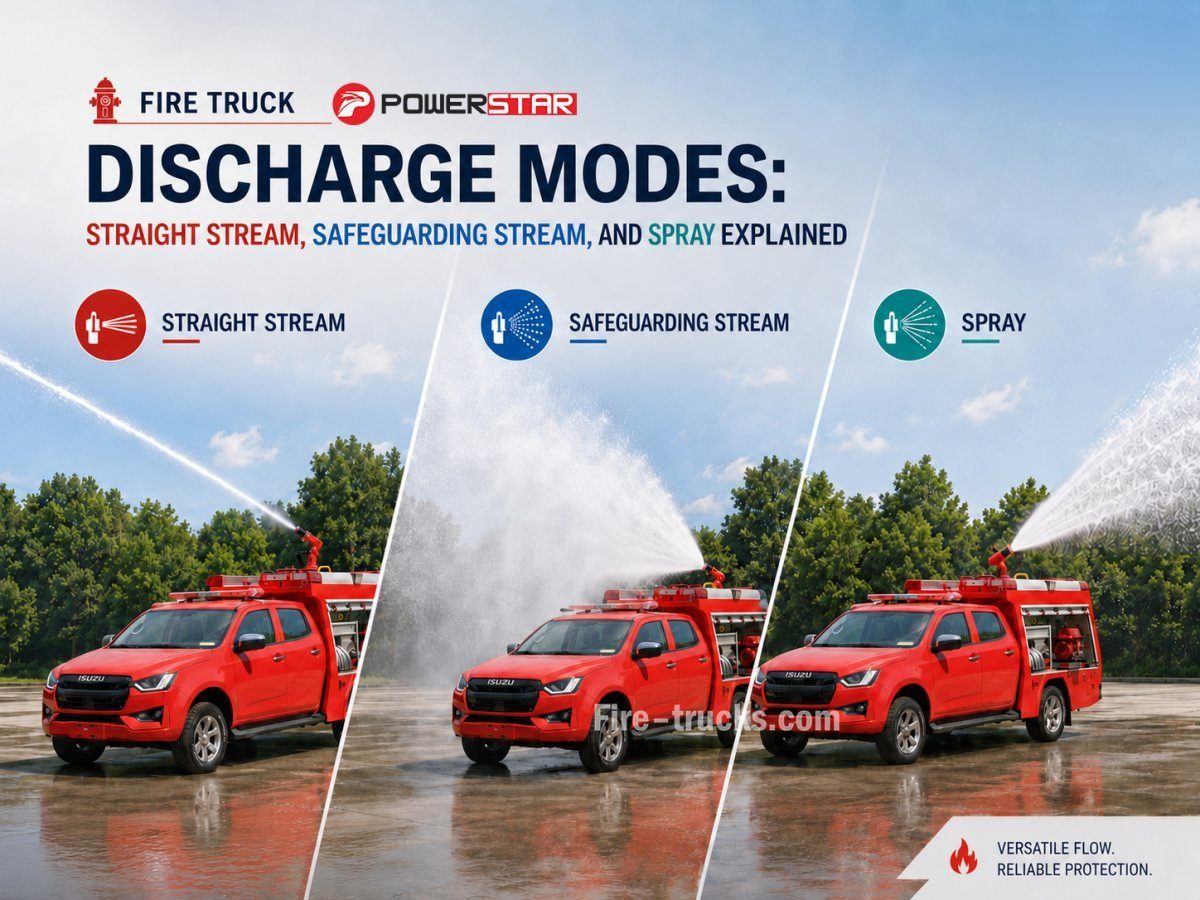
ในการปฏิบัติการดับเพลิง การเลือกโหมดการปล่อยน้ำโดยตรงจะกำหนดประสิทธิภาพการดับไฟ ความปลอดภัยในการปฏิบัติงาน และประสิทธิผลในการควบคุมเพลิงโดยตรง คนส่วนใหญ่ไม่ทราบว่า รถดับเพลิง หัวฉีดสามารถสลับระหว่างโหมดการปล่อยน้ำหลัก 3 รูปแบบ ได้แก่ ลำตรง ละอองน้ำ และลำน้ำป้องกัน รูปแบบต่าง ๆ มีความแตกต่างอย่างมากในด้านรูปแบบการไหล ระยะฉีด แรงกระแทก และพื้นที่ครอบคลุม โดยแต่ละรูปแบบเหมาะกับสถานการณ์เพลิงไหม้ที่แตกต่างกันโดยสิ้นเชิง บทความนี้อ้างอิงตามมาตรฐานการปฏิบัติการดับเพลิงระดับมืออาชีพ โดยวิเคราะห์หลักการ คุณลักษณะสำคัญ และสถานการณ์การใช้งานของโหมดการปล่อยน้ำทั้งสามรูปแบบอย่างครอบคลุม เพื่อช่วยให้ลูกค้าของเราสามารถเรียนรู้เทคนิคการปล่อยน้ำจากรถดับเพลิงอย่างเป็นระบบ I. เหตุใดรถดับเพลิงจึงต้องมีโหมดการปล่อยน้ำที่แตกต่างกัน? ลำตรง ละอองน้ำ และลำน้ำป้องกัน สอดคล้องกับกลไกการดับเพลิง 3 รูปแบบ ได้แก่ การดับด้วยแรงกระแทก การระเหยเพื่อทำให้ขาดอากาศ และการป้องกันรังสีความร้อน นักดับเพลิงต้องสลับใช้อย่างยืดหยุ่นตามสภาพพื้นที่ ดังนั้น เหตุใดจึงไม่สามารถใช้ลำน้ำเพียงรูปแบบเดียวตลอดเวลาได้? 1. ความหลากหลายของประเภทเพลิงไหม้จำเป็นต้องใช้รูปแบบของสารดับเพลิงที่แตกต่างกัน เพลิงไหม้แต่ละประเภทมีลักษณะการเผาไหม้ที่แตกต่างกัน ซึ่งเป็นตัวกำหนดวิธีการดับเพลิงที่เหมาะสม: • เพลิงไหม้วัสดุของแข็งประเภท A จำเป็นต้องใช้แรงกระแทกจากลำตรงเพื่อทำลายวัสดุที่กำลังลุกไหม้และส่งน้ำเข้าไปเพื่อระบายความร้อนภายใน; • เพลิงไหม้ของเหลวประเภท B ไม่สามารถใช้แรงกระแทกจากลำตรงได้ (เนื่องจากทำให้เกิดการกระเด็นและแพร่กระจายของไฟ) แต่ควรใช้ลำน้ำป้องกันหรือละอองน้ำเพื่อคลุมและเจือจาง; • เพลิงไหม้ไฟฟ้าที่มีกระแสไฟประเภท E สามารถใช้ได้เฉพาะละอองน้ำ เนื่องจากหยดน้ำขนาดเล็กไม่ก่อให้เกิดเส้นทางนำไฟฟ้าต่อเนื่อง; • เพลิงไหม้ในพื้นที่ปิดจำเป็นต้องใช้ละอองน้ำเพื่อเติมเต็มพื้นที่ทั้งหมด ทำให้เกิดการดับไฟผ่านการดูดซับความร้อนจากการระเหยและการทำให้ขาดอากาศ ไม่มีโหมดใดโหมดเดียวที่สามารถรองรับเพลิงไหม้ทุกประเภทได้ 2. ระยะต่าง ๆ ของเพลิงเดียวกันจำเป็นต้องใช้แนวทางทางยุทธวิธีที่แตกต่างกัน แม้จะเป็นเพลิงไหม้เดียวกัน แต่แต่ละระยะก็ต้องใช้โหมดการปล่อยน้ำที่แตกต่างกัน: • ในระยะเริ่มต้นที่ไฟรุนแรง จำเป็นต้องใช้ลำตรงเพื่อโจมตีจุดเกิดไฟจากระยะไกลและควบคุมไฟอย่างรวดเร็ว; • ระหว่างการรุกเข้าไป จำเป็นต้องใช้ลำน้ำป้องกันเพื่อสร้างม่านน้ำเป็นแนวกั้น ป้องกันรังสีความร้อนและคุ้มครองบุคลากร; • ก่อนเข้าสู่ห้อง จำเป็นต้องใช้ละอองน้ำเพื่อทำให้ควันและก๊าซเย็นลงและเจือจาง สร้างสภาพแวดล้อมที่เหมาะสมสำหรับการโจมตีภายใน โหมดเดียวไม่สามารถครอบคลุมความต้องการในการปฏิบัติงานตลอดกระบวนการดับเพลิงทั้งหมดได้ 3. ระยะฉีด พื้นที่ครอบคลุม และประสิทธิภาพการระบายความร้อนไม่สามารถทำได้พร้อมกันทั้งหมด ทั้งสามโหมดมีข้อดีและข้อเสียของตนเองใน 3 มิติสำคัญ: • ลำตรงมีระยะฉีดไกลที่สุด (สูงสุดมากกว่า 120 เมตร) แต่พื้นที่ครอบคลุมเล็ก เป็นลักษณะเฉพาะจุดเท่านั้น; • ละอองน้ำสามารถเติมเต็มพื้นที่และมีประสิทธิภาพการดูดซับความร้อนจากการระเหยสูงที่สุด แต่มีระยะฉีดสั้นที่สุด; • ลำน้ำป้องกันมีพื้นที่ครอบคลุมขนาดใหญ่ด้วยการกระจายแบบพัด แต่มีระยะฉีดสั้นกว่า เนื่องจากประเภทเพลิง ระยะของเพลิง และเป้าหมายทางยุทธวิธีมีความแตกต่างกัน จึงไม่มีรูปแบบลำน้ำใดรูปแบบเดียวที่เหมาะกับทุกสถานการณ์เพลิงไหม้ การผสมผสานและการสลับใช้ทั้งสามโหมดอย่างรวดเร็วคือความสามารถพื้นฐานในการปฏิบัติงานท...
รายละเอียด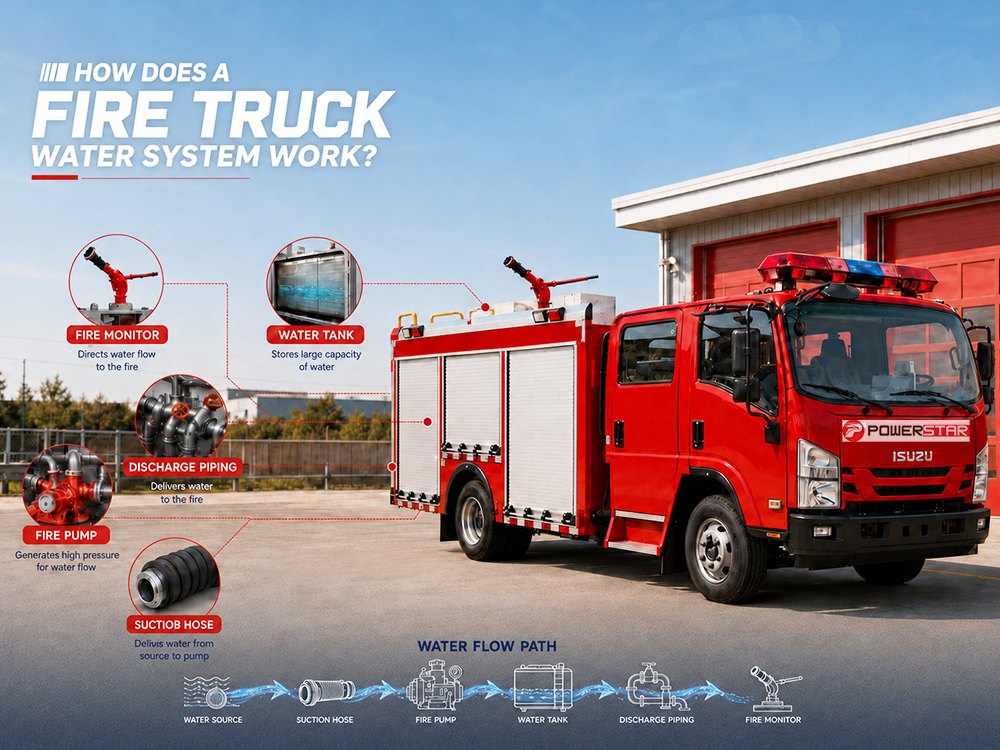
ระบบท่อส่งน้ำของรถดับเพลิงเป็นแกนหลักของการปฏิบัติการดับเพลิงทุกครั้ง ระบบนี้จะส่งน้ำจากถังหรือแหล่งน้ำภายนอกผ่านปั๊ม วาล์ว และท่ออย่างแม่นยำ เพื่อจ่ายน้ำแรงดันสูงหรือโฟมไปยังจุดเกิดเหตุ ไม่ว่าจะเป็นไฟไหม้อาคารสูงในใจกลางเมืองที่มีความหนาแน่น หรือไฟไหม้ถังเก็บปิโตรเคมีในเขตอุตสาหกรรมรถดับเพลิงระบบท่อส่งน้ำประกอบด้วยส่วนประกอบหลายชิ้นที่ทำงานร่วมกัน ได้แก่ ปั๊มดับเพลิง ถังน้ำ ท่อดูด ท่อจ่ายน้ำ วาล์ว ข้อต่อแยกทางน้ำ ข้อต่อรวมทางน้ำ ตะแกรงกรองน้ำ หัวฉีดน้ำดับเพลิง ข้อต่อสายดับเพลิง และอื่น ๆ เส้นทางการไหลของน้ำทั้งหมดคือ:ถังน้ำ → ท่อดูด → ตะแกรงกรองน้ำ → ปั๊มดับเพลิง → ระบบควบคุมแรงดัน → ท่อร่วมจ่ายน้ำ → วาล์ว → ข้อต่อแยกทางน้ำ → หัวฉีดน้ำดับเพลิง / ข้อต่อสายดับเพลิง → หัวฉีด บทความนี้อธิบายส่วนประกอบแต่ละส่วนของระบบท่อส่งน้ำ และวิธีที่ส่วนประกอบเหล่านี้ทำงานร่วมกันเพื่อจ่ายน้ำด้วยแรงดันและอัตราการไหลที่เหมาะสม I. ส่วนประกอบหลักของระบบท่อส่งน้ำ ถังน้ำ จัดเก็บแหล่งน้ำสำรองบนรถ ● ความจุ:โดยทั่วไป 2,000–12,000 ลิตร ● การจ่ายน้ำ:ส่งน้ำเข้าสู่ปั๊มผ่านท่อรับน้ำ ● คุณสมบัติ:มีแผ่นกั้นป้องกันน้ำกระเพื่อมเพื่อเพิ่มเสถียรภาพของรถ มีตะแกรงกรองเพื่อกรองสิ่งสกปรก และมีระบบเติมน้ำเพื่อดูดน้ำจากแหล่งน้ำธรรมชาติ ปั๊มดับเพลิง ปั๊มหอยโข่งที่ขับเคลื่อนโดยเครื่องยนต์ของรถผ่านระบบ PTO มีทั้งแบบขั้นเดียว/หลายขั้น ผลิตจากเหล็กหล่อหรือบรอนซ์ ●ระดับแรงดันมีค่ามาตรฐานให้เลือก 0.8 MPa, 1.0 MPa, 1.2 MPa และ 1.4 MPa ซึ่งสอดคล้องกับข้อกำหนดทั่วไปของงานดับเพลิง ●อัตราการไหลอยู่ในช่วง 1,200 ถึง 6,000 L/min โดยมีกราฟสมรรถนะที่ปรับให้เหมาะกับทั้งการทำงานแรงดันสูงและการจ่ายน้ำปริมาณมาก วาล์วและท่อ เครือข่ายท่อและวาล์วที่ควบคุมทิศทางและปริมาณการไหลของน้ำ ●วาล์วรับน้ำเชื่อมต่อปั๊มกับแหล่งน้ำภายนอก (หัวจ่ายน้ำดับเพลิงหรือจุดดูดน้ำ) ● วาล์วจากถังสู่ปั๊มช่วยให้ปั๊มดูดน้ำโดยตรงจากถังน้ำบนรถ ● วาล์วจ่ายน้ำควบคุมการไหลของน้ำไปยังสายดับเพลิงและหัวฉีด II. วิธีการทำงานของระบบท่อส่งน้ำของรถดับเพลิง ขั้นตอนที่ 1: การรับน้ำและการเติมน้ำเข้าระบบ น้ำจะเข้าสู่ระบบจากถังน้ำบนรถ หัวจ่ายน้ำดับเพลิง หรือแหล่งน้ำธรรมชาติ (ทะเลสาบ แม่น้ำ บ่อน้ำ) เมื่อต้องดูดน้ำจากแหล่งน้ำธรรมชาติ ระบบเติมน้ำ (ปั๊มสุญญากาศ) จะกำจัดอากาศออกจากท่อดูด ทำให้เกิดสุญญากาศซึ่งช่วยให้แรงดันบรรยากาศดันน้ำเข้าสู่ปั๊ม ตะแกรงกรองจะกรองสิ่งสกปรกเพื่อป้องกันปั๊ม และวาล์วกันกลับจะป้องกันการไหลย้อนกลับ ขั้นตอนที่ 2: การเพิ่มแรงดันของปั๊ม ปั๊มแรงเหวี่ยงขับเคลื่อนโดยเครื่องยนต์รถบรรทุกผ่านชุดส่งกำลัง (PTO) เมื่อน้ำเติมเต็มปั๊มแล้ว ใบพัดจะหมุนด้วยความเร็วสูง (1,500–2,500 RPM) แรงเหวี่ยงจะผลักน้ำออกด้านนอก ทำให้ความเร็วของน้ำเพิ่มขึ้น ตัวเรือนปั๊มจะเปลี่ยนความเร็วนี้ให้เป็นแรงดัน (โดยทั่วไป 0.8–1.2 MPa) ตัวควบคุมแรงดันแบบอิเล็กทรอนิกส์จะรักษาแรงดันที่ตั้งไว้โดยอัตโนมัติ ขณะที่วาล์วระบายแรงดันจะป้องกันแรงดันสูงเกินไป ขั้นตอนที่ 3: การจ่ายและการกระจายน้ำ น้ำที่มีแรงดันจะไหลจากปั๊มผ่านท่อร่วมจ่าย ซึ่งกระจายน้ำไปยังช่องทางออกหลายจุด วาล์วจะควบคุมการไหลไปยังแต่ละช่องทางออก ข้อต่อแยกทางน้ำจะแบ่งการไหลของน้ำออกเป็นสายท่อหลายสาย ทำให้นักดับเพลิงหลายคนสามารถเข้าดับไฟพร้อมกันได้ ข้อต่อรวมทางน้ำจะรวมน้ำจากสายส่งหลายสายเมื่อจำเป็นต้องเพิ่มอัตราการไหล น้ำจะถูกส่งผ่านหัวฉีดน้ำดับเพลิง (การดับเพลิงระยะไกลแบบปริมาณน้ำสูง) สายฉีดน้ำแบบมือถือ (การเข้าดับไฟโดยต...
รายละเอียด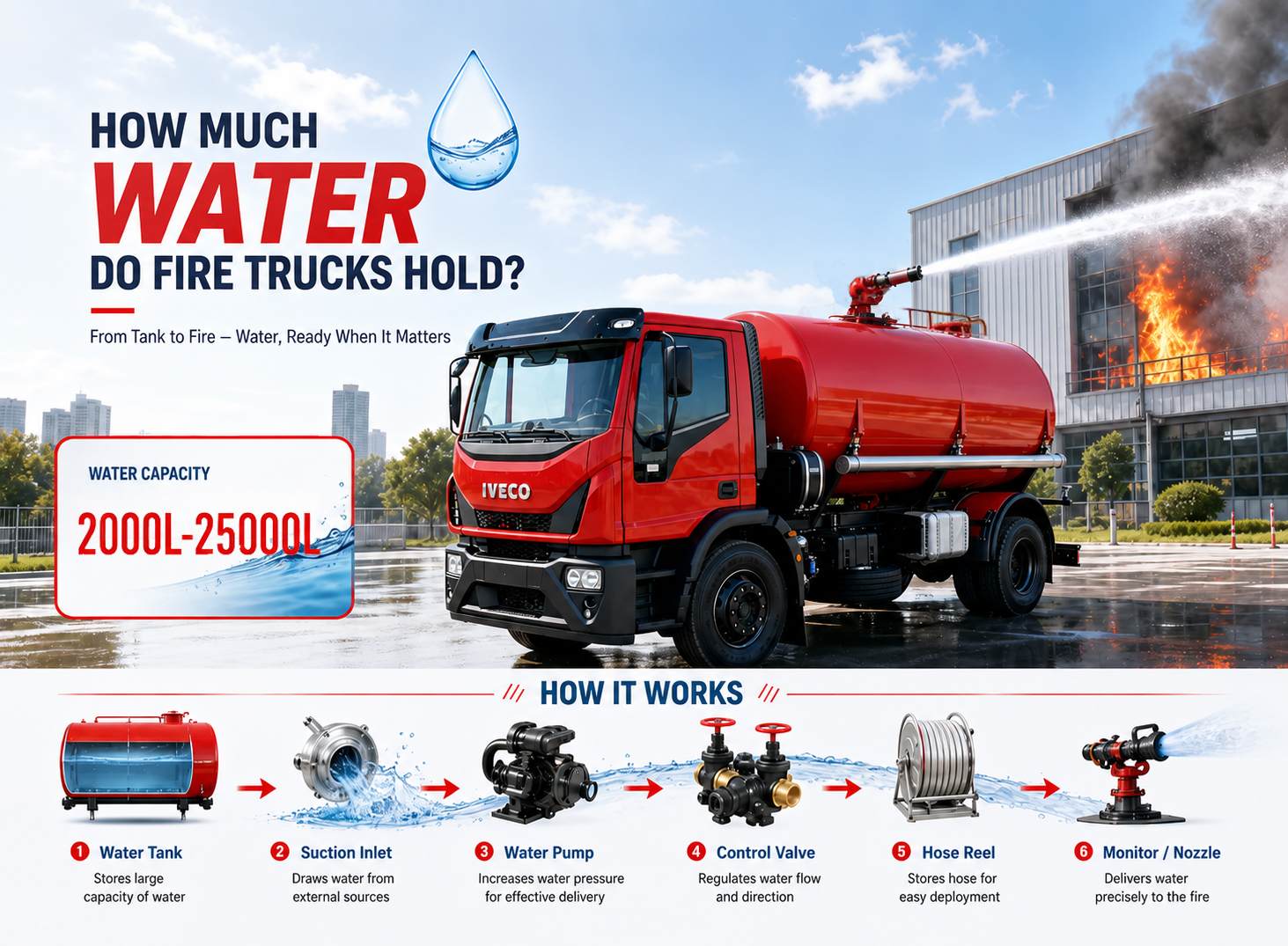
รถดับเพลิงสามารถบรรทุกน้ำได้เท่าไหร่? นี่เป็นหนึ่งในคำถามแรก ๆ ที่ลูกค้าของเราต้องพิจารณาเมื่อเลือกซื้อรถดับเพลิง ไม่มีตัวเลขตายตัวเพียงค่าเดียว — ขึ้นอยู่กับประเภทของรถ ความจุของแชสซี วัตถุประสงค์ในการออกแบบ และข้อกำหนดของแต่ละภูมิภาค โดยมีตั้งแต่รถขนาดเบาที่บรรจุน้ำได้ 2,000 ลิตร ไปจนถึงรถดับเพลิงอุตสาหกรรมที่บรรจุน้ำได้ 25,000 ลิตร แต่ถังน้ำที่ใหญ่กว่าไม่ได้หมายถึงประสิทธิภาพที่ดีกว่าเสมอไป;รถดับเพลิง ความจุถังน้ำของรถดับเพลิงต้องได้รับการจับคู่ให้เหมาะสมกับอัตราการไหลของปั๊ม อัตราการจ่ายน้ำของหัวฉีดน้ำ และความสามารถของแชสซี เพื่อให้ได้ผลลัพธ์ในการดับเพลิงที่มีประสิทธิภาพ บทความนี้เริ่มต้นด้วยพื้นฐานของความจุถังน้ำรถดับเพลิง วิเคราะห์ช่วงความจุที่ใช้เก็บน้ำทั่วไปสำหรับรถแต่ละประเภท ตรวจสอบปัจจัยสำคัญที่มีอิทธิพลต่อการออกแบบถัง และให้คำแนะนำในการเลือกซื้อที่นำไปใช้งานได้จริง ประเด็นสำคัญ: ความจุถังน้ำของรถดับเพลิงโดยทั่วไปอยู่ในช่วง 2,000 ถึง 25,000 ลิตร รถดับเพลิงแต่ละประเภทมีความจุถังน้ำแตกต่างกัน ถังน้ำที่ใหญ่กว่าไม่ได้หมายถึงความสามารถในการดับเพลิงที่ดีกว่า ความจุถังต้องเหมาะสมกับอัตราการไหลของปั๊ม อัตราการไหลของหัวฉีดน้ำ และความสามารถของแชสซี การดับเพลิงในภาคอุตสาหกรรมโดยทั่วไปต้องใช้ถังขนาดใหญ่ ขณะที่การดับเพลิงของเทศบาลให้ความสำคัญกับความคล่องตัว » I. รถดับเพลิงประเภทถังน้ำพื้นฐานสามประเภท รถดับเพลิงแบบสูบน้ำ:รถเหล่านี้เป็นรถดับเพลิงเทศบาลที่พบได้บ่อยที่สุด โดยหลักจะพึ่งพาหัวจ่ายน้ำดับเพลิงสำหรับแหล่งจ่ายน้ำ และบรรทุกน้ำบนรถประมาณ 1,900–3,800 ลิตรสำหรับการเข้าดับเพลิงระยะแรก หัวใจหลักของรถประเภทนี้คือปั๊ม ไม่ใช่ถังน้ำ — รถเหล่านี้ได้รับการออกแบบเพื่อจ่ายน้ำแรงดันสูงเมื่อเชื่อมต่อกับหัวจ่ายน้ำดับเพลิง รถบรรทุกน้ำ (รถส่งน้ำ):รถเหล่านี้ออกแบบมาเพื่อขนส่งน้ำปริมาณมากโดยเฉพาะ โดยมีความจุถังโดยทั่วไปมากกว่า 11,400 ลิตร มีบทบาทสำคัญในพื้นที่ชนบทและพื้นที่ห่างไกลซึ่งไม่มีหัวจ่ายน้ำดับเพลิง โดยขนส่งน้ำจากแหล่งน้ำไปยังจุดเกิดเหตุเพื่อให้รถสูบน้ำนำไปใช้งาน รถดับเพลิงแบบสูบน้ำ-บรรทุกน้ำ:รถเหล่านี้รวมฟังก์ชันการสูบน้ำและการขนส่งน้ำไว้ในคันเดียว สามารถทั้งจ่ายน้ำเพื่อดับเพลิงและจ่ายน้ำให้รถคันอื่นได้ ความจุถังโดยทั่วไปอยู่ในช่วง 5,700 ถึง 11,400 ลิตร ทำให้เป็นทางเลือกที่ยืดหยุ่นสำหรับหน่วยดับเพลิง » II. รถดับเพลิงประเภทต่าง ๆ สามารถบรรทุกน้ำได้เท่าไหร่? ประเภทรถดับเพลิง ความจุถังโดยทั่วไป การใช้งานหลัก รถดับเพลิงขนาดเบา 2,000–3,000 ลิตร การตอบสนองอย่างรวดเร็วในเมือง การเข้าดับเพลิงระยะแรก รถดับเพลิงสูบน้ำของเทศบาล 3,000–6,000 ลิตร การดับเพลิงของเทศบาล เพลิงไหม้อาคารโครงสร้าง รถดับเพลิงสูบน้ำขนาดกลาง 6,000–10,000 ลิตร งานผสมผสานระหว่างเขตเมืองและภาคอุตสาหกรรม รถดับเพลิงสูบน้ำขนาดหนัก 10,000–15,000 ลิตร การปฏิบัติการต่อเนื่อง การตอบสนองระยะไกล รถดับเพลิงอุตสาหกรรม 15,000–25,000 ลิตร การดับเพลิงในอุตสาหกรรมน้ำมัน เคมี และเหมืองแร่ » III. ระบบน้ำของรถดับเพลิงทำงานอย่างไร? รถดับเพลิงไม่ใช่เพียงถังเก็บน้ำเคลื่อนที่เท่านั้น — แต่เป็นระบบส่งน้ำครบวงจร น้ำที่เก็บอยู่ในถังต้องผ่านส่วนประกอบสำคัญหลายส่วนก่อนที่จะไปถึงจุดเกิดเหตุเพลิงไหม้ เส้นทางการไหลของน้ำทั้งหมดคือ: ถังน้ำ → ท่อรับน้ำ → ปั๊มดับเพลิง → ระบบควบคุมแรงดัน → ชุดท่อจ่ายน้ำ → หัวฉีดน้ำดับเพลิง/หัวฉีด/สายดับเพลิง ถังน้ำ ถังน้ำเป็นภาชนะจัดเก็บหลัก การออกแบบส่งผลโดยตรงต่อปริมาณน้ำที่ใช้งานได้และอายุ...
รายละเอียด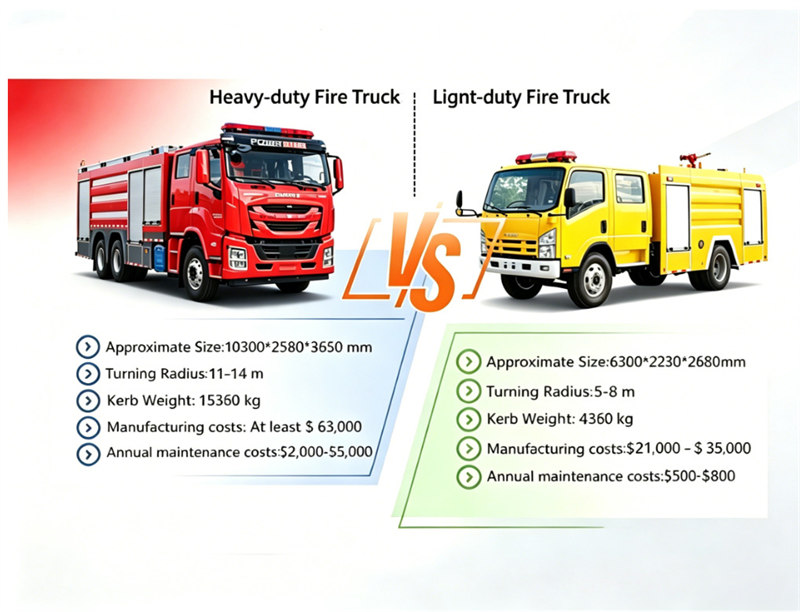
รถดับเพลิงกู้ภัยความต้องการแตกต่างกันอย่างมากระหว่างพื้นที่เขตมหานครกับชุมชนชนบทหรือเมืองขนาดเล็ก หน่วยดับเพลิงในเขตเมืองขนาดใหญ่ต้องพึ่งพารถดับเพลิงสำหรับงานหนักที่มีถังน้ำขนาดใหญ่ บันไดสำหรับอาคารสูง และการติดตั้งระดับอุตสาหกรรมเต็มรูปแบบ เพื่อรับมือกับไฟไหม้อาคารสูง เพลิงไหม้ในโรงงานอุตสาหกรรม และเหตุฉุกเฉินขนาดใหญ่ อย่างไรก็ตาม สำหรับเมืองขนาดเล็ก พื้นที่ชนบท หมู่บ้าน สถานีดับเพลิงในชุมชน และหน่วยดับเพลิงอาสาสมัคร รถดับเพลิงขนาดใหญ่มักกลายเป็นภาระมากกว่าข้อได้เปรียบ นี่คือเหตุผลที่รถดับเพลิงขนาดเบาได้กลายเป็นทางเลือกหลักและเป็นโซลูชันที่ใช้งานได้จริงที่สุดสำหรับหน่วยดับเพลิงในเมืองขนาดเล็กและพื้นที่ชนบททั่วโลก ด้วยการผสมผสานระหว่างขนาดกะทัดรัด ความคล่องตัวสูง ฟังก์ชันกู้ภัยพื้นฐานครบถ้วน และต้นทุนโดยรวมต่ำ จึงตอบโจทย์ความต้องการด้านการกู้ภัยและการป้องกันอัคคีภัยประจำวันของทีมดับเพลิงระดับชุมชนได้อย่างสมบูรณ์แบบ รถดับเพลิงขนาดเบาคือยานพาหนะดับเพลิงฉุกเฉินขนาดกะทัดรัด น้ำหนักเบา ที่ออกแบบมาโดยเฉพาะสำหรับสถานการณ์ดับเพลิงในชุมชน พื้นที่ชานเมือง และชนบท I. การเปรียบเทียบระหว่างรถดับเพลิงสำหรับงานหนักและรถดับเพลิงขนาดเบา: เพื่อให้เห็นภาพรวมของความแตกต่างระหว่างรถดับเพลิงสำหรับงานหนักและรถดับเพลิงขนาดเบาอย่างชัดเจน เราได้จัดทำตารางเปรียบเทียบโดยตรงซึ่งครอบคลุมตัวชี้วัดการใช้งานหลัก รุ่นขนาดใหญ่มีความยาวมากกว่า 10 เมตร มีรัศมีวงเลี้ยว 11–14 ม. และมีน้ำหนักตัวรถเปล่า 15 ตัน โดยมีต้นทุนการผลิตอย่างน้อย 63,000 ดอลลาร์สหรัฐ พร้อมค่าบำรุงรักษารายปี 2,000–5,000 ดอลลาร์สหรัฐ ในทางตรงกันข้าม รถดับเพลิงขนาดเบาขนาดกะทัดรัดลดขนาดลงเกือบครึ่งหนึ่ง มีน้ำหนักเพียง 4,360 กก. เริ่มต้นที่ 21,000 ดอลลาร์สหรัฐ และควบคุมค่าบำรุงรักษารายปีให้ต่ำกว่า 800 ดอลลาร์สหรัฐ มอบความคล่องตัวและความคุ้มค่าด้านงบประมาณที่ดีกว่ามากสำหรับสถานีดับเพลิงในชนบทและเมืองขนาดเล็ก Ⅱ.จุดเด่นสำคัญของรถดับเพลิงขนาดเบา: 1.การออกแบบน้ำหนักเบาแต่รองรับน้ำหนักบรรทุกสูง น้ำหนักรวมตัวรถเมื่อบรรทุกเต็มที่ยังคงต่ำกว่า 8,000 กก. ช่วยให้ตอบสนองเหตุฉุกเฉินได้รวดเร็วเป็นพิเศษ 2.มีตัวเลือกปรับแต่งระบบขับเคลื่อนสี่ล้อ เพื่อรับมือกับพื้นผิวถนนขรุขระและไม่เรียบซึ่งพบได้ทั่วไปในพื้นที่ห่างไกล 3.ยังคงมีฟังก์ชันการดับเพลิงครบทุกด้าน: a. ถังแยกอิสระสองถังสำหรับน้ำและโฟมดับเพลิง b. ห้องโดยสารแบบสองแถวเพื่อรองรับทีมเจ้าหน้าที่ดับเพลิงที่เข้าปฏิบัติงานครบทีม c. ชุดอุปกรณ์กู้ภัยและเครื่องมือดับเพลิงมาตรฐานที่ครบถ้วน d. อุปกรณ์เสริม เช่น ระบบไฟส่องสว่างในพื้นที่เกิดเหตุและอุปกรณ์ลากจูง 4.ระบบส่งกำลังออก (PTO) ทำหน้าที่เป็นระบบขับเคลื่อนหลักในการปฏิบัติงาน มีระบบควบคุมที่เข้าใจง่ายและการบำรุงรักษา รวมถึงการเปลี่ยนชิ้นส่วนที่เรียบง่าย ชิ้นส่วนหลักที่ทนทานช่วยลดค่าใช้จ่ายในการปฏิบัติงานฉุกเฉินระยะยาวสำหรับหน่วยดับเพลิงในชนบทและระดับตำบลได้อย่างมาก Ⅲ.รุ่นรถดับเพลิงขนาดเบาที่ได้รับความนิยมมากที่สุดมีดังต่อไปนี้: รุ่นแชสซี HOWO 1880 ระบบขับเคลื่อน พวงมาลัยขวา/พวงมาลัยซ้าย, 4x2/4x4 สามารถเลือกได้ กำลังเครื่องยนต์ 160 แรงม้า น้ำหนักตัวรถเปล่า 4350 กก. ความจุ ถังน้ำ 3 ลบ.ม. + ถังโฟม 1.5 ลบ.ม. ปั๊มดับเพลิง CB10/40 ปืนฉีดน้ำดับเพลิง PL48 ระยะการทำงาน 55 ม. รุ่นแชสซี ISUZU NPR 700P ระบบขับเคลื่อน พวงมาลัยขวา/พวงมาลัยซ้าย, 4x2/4x4 สามารถเลือกได้ กำลังเครื่องยนต์ 190 แรงม้า น้ำหนักตัวรถเปล่า 4450 กก...
รายละเอียด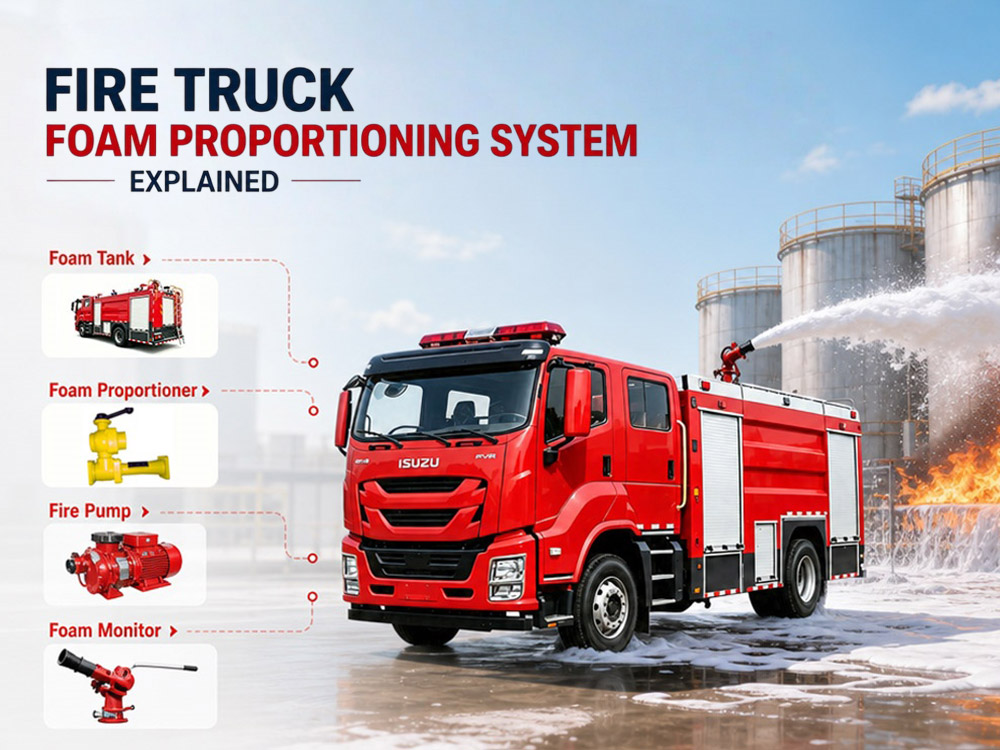
ระบบโฟมของรถดับเพลิงผสมน้ำกับสารเข้มข้นโฟมในอัตราส่วนที่แม่นยำ (1%, 3% หรือ 6%) เพื่อสร้างสารละลายโฟม จากนั้นสารละลายนี้จะถูกเพิ่มแรงดันด้วยเครื่องสูบน้ำดับเพลิงและขยายตัวด้วยอากาศผ่านหัวฉีดโฟม — นี่คือหลักการทำงานพื้นฐานของวิธีการที่รถดับเพลิงโฟมผสมโฟมและน้ำ — ซึ่งท้ายที่สุดจะผลิตชั้นโฟมที่มีความเสถียรปกคลุมพื้นผิวเชื้อเพลิง กระบวนการนี้เพิ่มประสิทธิภาพการดับเพลิงได้มากกว่า 50% พร้อมลดการสูญเสียสารเข้มข้นโฟมลง 30% » I. ทำไมรถดับเพลิงจึงต้องมีระบบโฟม? เมื่อเทียบกับการใช้น้ำเพียงอย่างเดียว โฟมมีข้อได้เปรียบหลัก 3 ประการ: 1. การแยกออกซิเจน— โฟมปกคลุมพื้นผิวที่กำลังลุกไหม้ ก่อให้เกิดสิ่งกีดขวางทางกายภาพที่หนาแน่น ซึ่งป้องกันไม่ให้ออกซิเจนเข้าถึงบริเวณการเผาไหม้ จึงช่วยระงับไฟ 2. การลดอุณหภูมิ— ปริมาณน้ำในสารละลายโฟมจะดูดซับความร้อนจำนวนมากเมื่อระเหย ทำให้อุณหภูมิของบริเวณที่กำลังไหม้ลดลงอย่างรวดเร็ว 3. การป้องกันการลุกไหม้ซ้ำ— ชั้นโฟมยังคงปกคลุมพื้นที่เกิดไฟแม้หลังจากดับไฟแล้ว ช่วยแยกออกซิเจนและไอระเหยของสารไวไฟได้อย่างมีประสิทธิภาพ ลดความเสี่ยงของการลุกไหม้ซ้ำอย่างมาก » II. หลักการทำงานพื้นฐานของระบบโฟม 1. ระบบผสมสัดส่วน:น้ำไหลผ่านอุปกรณ์กำหนดสัดส่วน → สร้างแรงดันลบ (ระบบแรงดันลบ) หรือใช้ปั๊มโฟม (ระบบแรงดันบวก) → ดูดสารเข้มข้นโฟมจากถังโฟม → ผสมตามอัตราส่วนที่ตั้งไว้ (1%, 3% หรือ 6%) → สารละลายโฟมไหลไปยังปั๊ม 2. การเพิ่มแรงดันด้วยปั๊ม:สารละลายโฟมเข้าสู่ปั๊มหอยโข่ง → เพิ่มแรงดันเป็น 0.8–1.2 MPa → ส่งผ่านท่อไปยังช่องจ่ายหรือหัวฉีดโฟม 3. การขยายตัวของโฟม:สารละลายโฟมที่มีแรงดันไหลผ่านหัวฉีดโฟมหรืออุปกรณ์เติมอากาศ → อากาศถูกดูดเข้าผสม → สารละลายขยายตัวเป็นโฟมสำเร็จรูป → ปกคลุมพื้นผิวเชื้อเพลิง → ตัดการเข้าถึงของออกซิเจนและระงับไฟ แนวคิดสำคัญ:สารเข้มข้นโฟม + น้ำ ไม่เท่ากับโฟมสำเร็จรูป สารละลายโฟมที่ผสมแล้วนั้นยังคงเป็นของเหลว — จำเป็นต้องรวมเข้ากับอากาศผ่านหัวฉีดโฟมจึงจะกลายเป็นโฟมดับเพลิงที่แท้จริง เมื่อสารละลายโฟมแรงดันสูงไหลผ่านหัวฉีดด้วยความเร็วสูง จะสร้างบริเวณแรงดันลบเฉพาะที่ซึ่งดึงอากาศเข้าไปอย่างรุนแรง อากาศและของเหลวจะชนกันและเกิดแรงเฉือนอย่างรุนแรงภายในหัวฉีด ทำให้แตกตัวเป็นฟองอากาศขนาดเล็กนับล้านฟองในทันที ซึ่งสะสมตัวกันเป็นโฟมสีขาว » III. รถดับเพลิงผสมโฟมและน้ำอย่างไร? กระบวนการผสมโฟมบนรถดับเพลิงประกอบด้วย 4 ขั้นตอนหลัก ตั้งแต่การจ่ายน้ำจนถึงการเกิดโฟมขั้นสุดท้าย ขั้นตอนที่ 1: เครื่องสูบน้ำดับเพลิงสร้างการไหลของน้ำ หลังจากสตาร์ทรถดับเพลิง เครื่องสูบน้ำดับเพลิงจะจ่ายพลังงานให้กับระบบโฟม แหล่งน้ำอาจมาจากถังน้ำบนรถ หัวจ่ายน้ำดับเพลิง แม่น้ำ ทะเลสาบ หรืออ่างเก็บน้ำ เครื่องสูบน้ำดับเพลิงมีหน้าที่สร้างแรงดันน้ำ จ่ายการไหลที่คงที่ และดันน้ำเข้าสู่ระบบผสมสัดส่วนโฟม ขั้นตอนที่ 2: สารเข้มข้นโฟมเข้าสู่ระบบ รถดับเพลิงติดตั้งถังโฟมแยกอิสระ (สเตนเลส 304, 200–2,000 ลิตร) เมื่อผู้ควบคุมเปิดใช้งานโหมดโฟม สารเข้มข้นโฟมจะเข้าสู่กระแสน้ำ ขั้นตอนที่ 3: สารเข้มข้นโฟมและน้ำถูกผสมในอัตราส่วนที่เหมาะสม ระบบผสมสัดส่วนโฟมจะควบคุมปริมาณสารเข้มข้นโฟมที่เติมอย่างแม่นยำตามอัตราส่วนที่ตั้งไว้ ตัวอย่างการคำนวณ:อัตราการไหลของเครื่องสูบน้ำดับเพลิงอยู่ที่ 60 L/s อัตราส่วนโฟมอยู่ที่ 3% ดังนั้น 60 × 3% = มีการเติมสารเข้มข้นโฟม 1.8 L/s ต่อวินาที ส่งผลให้อัตราการไหลของสารละลายโฟมอยู่ที่ 61.8 L/s อัตราส่วนการผสมและการใช้งานทั่วไป: อัตราส่วนการผสม สถานการณ์การใช้งาน 0.1%–0.3% สารท...
รายละเอียด
โปรดอ่านต่อ ติดตามข่าวสาร สมัครรับข้อมูล และเรายินดีรับฟังความคิดเห็นของคุณ

 รองรับเครือข่าย IPv6

 ไทย
ไทย English
 français
 Deutsch
 русский
 italiano
 español
 português
 Nederlands
 العربية
 日本語
日本語 한국의
한국의 Türkçe
 Melayu
 Tiếng Việt
 Indonesia
  中文
中文 қазақ
қазақ Filipino
 မြန်မာ
 српски