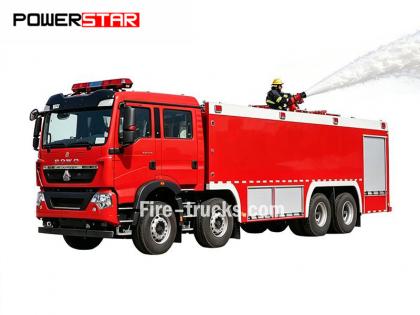
ฝากข้อความ
หากคุณสนใจในผลิตภัณฑ์ของเราและต้องการทราบรายละเอียดเพิ่มเติม โปรดฝากข้อความไว้ที่นี่ เราจะตอบกลับคุณโดยเร็วที่สุด

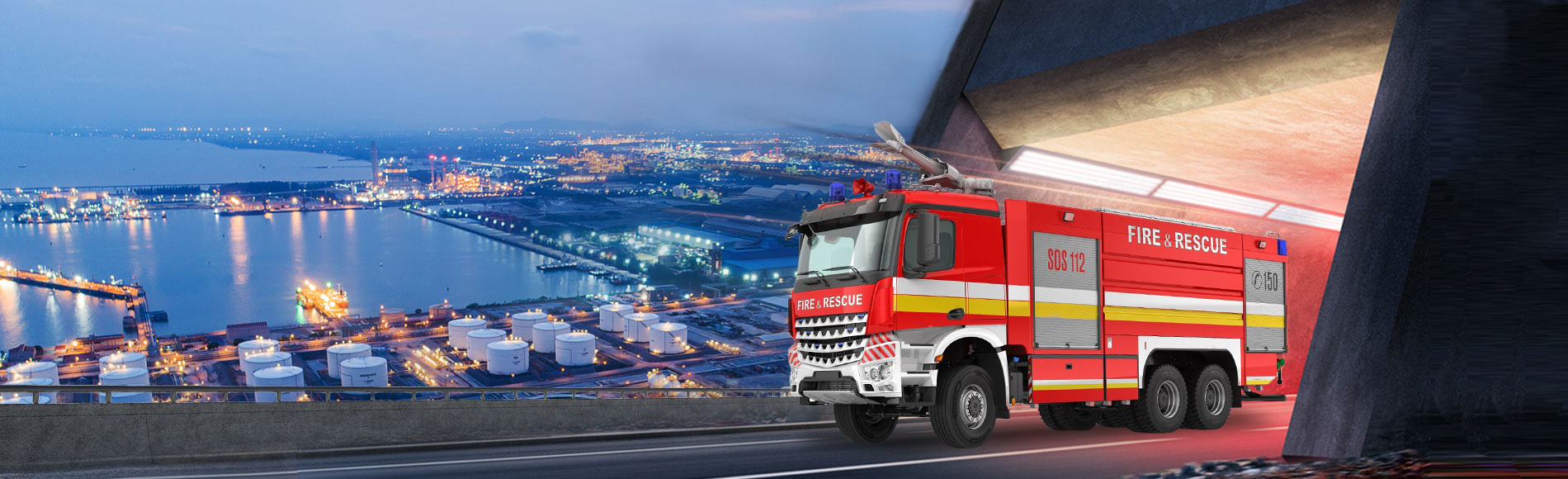
Choosing the right fire truck is a critical decision for any fire department, emergency rescue agency, or government procurement unit. Purchasers frequently face a key question: should they buy a standardized fire truck or invest in a custom build? Both options have advantages and limitations. The final choice depends on the fire department's actual operational needs, working environment, budget, equipment configuration requirements, and long-term maintenance plans.
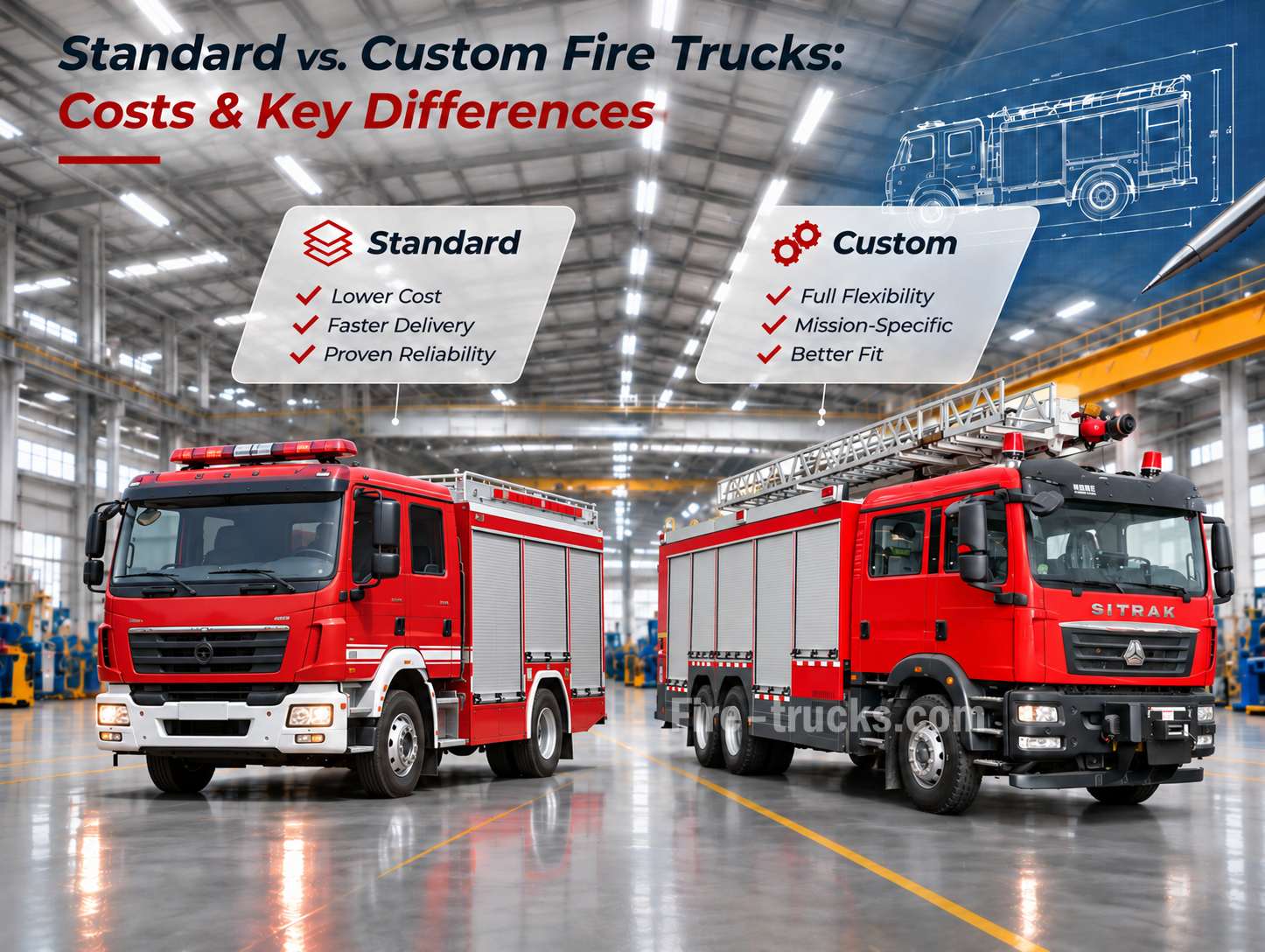
This article explains the main differences between standardized and custom fire trucks, compares their respective advantages, and outlines the key factors to consider before purchasing a fire truck.
Standardized fire trucks are pre-engineered models built to established configurations with limited customization options. They offer lower costs, faster delivery, and proven reliability. Custom fire trucks are designed from the ground up to meet a department's exact specifications, offering maximum flexibility and fit but requiring a higher upfront investment and significantly longer lead times. The right choice depends on whether your operational needs can be met by a proven design or require a unique solution.
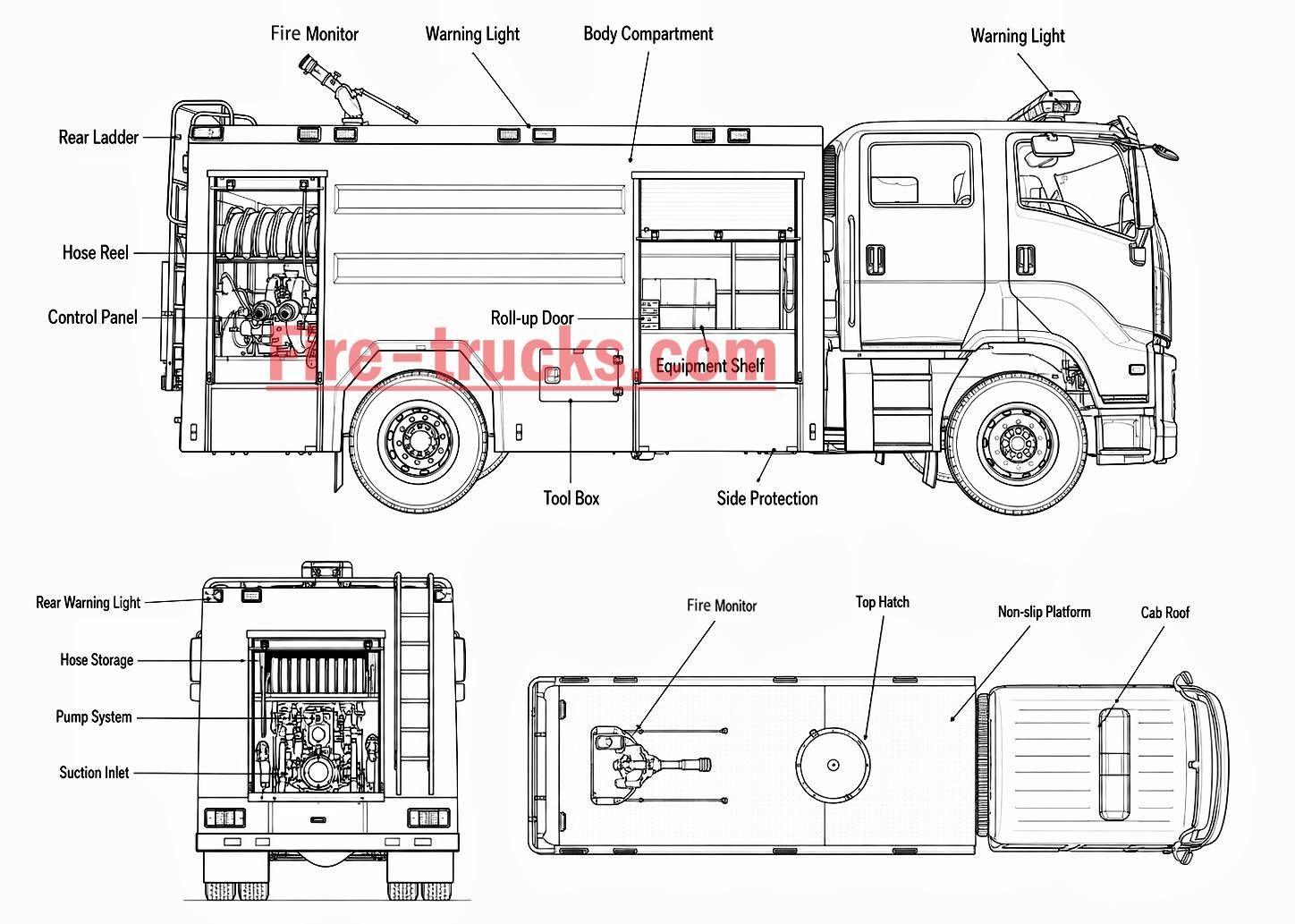
A standardized fire truck is built to proven, repeatable configurations using validated chassis, body structures, fire systems, and equipment layouts. It also offers a range of preset optional packages, with modifications typically limited to minor items such as paint colors, graphics, radio systems, and lighting.
Common standardized apparatus types include:
Pumpers
Tankers
Rescue trucks
Aerial ladder trucks
Mini pumpers
Quick attack vehicles
The main advantage of a standardized fire truck is that its design and configuration are relatively mature. Purchasers can directly select the appropriate model without needing to design every technical detail from scratch.
Key Advantages of Standardized Fire Trucks:
1. More Controllable Procurement Costs
Standardized configurations typically do not require extensive individual engineering work, which helps reduce upfront project costs and makes budget planning easier.
2. Faster Delivery
Pre-engineered designs shorten waiting times, which is crucial when a department faces an urgent vehicle shortage.
3. Simplified Maintenance and Training
For departments with multiple similar fire vehicles, uniform vehicle configurations help maintain consistency in equipment layout, operating procedures, and maintenance requirements.
4. Proven Reliability
The design has been tested across many departments, and its performance characteristics are well understood.
Potential Limitations of Standardized Fire Trucks:
Limited Customization: Departments must work within the available options, which may not perfectly fit unique needs.
Location-Specific Limitations: Communities with special needs—such as difficult terrain, atypical response requirements, or specialized equipment needs—may find that standard models cannot fully address their challenges.
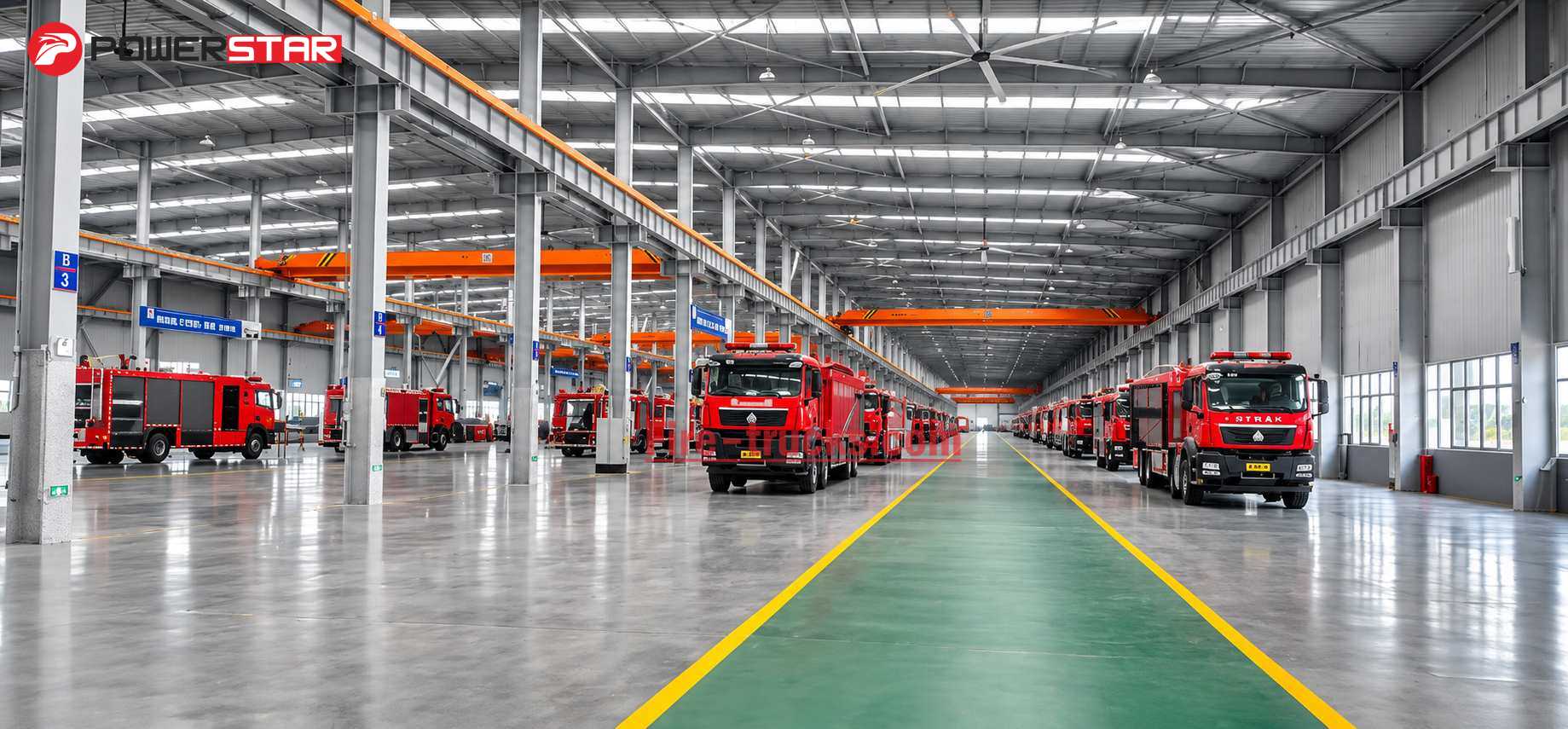
A custom fire truck is a vehicle designed or configured according to the specific operational needs of the purchasing unit. Unlike choosing from preset configurations only, purchasers can work with the manufacturer to determine the vehicle's technical parameters, layout, equipment, and functional configuration.
Depending on project requirements, customization may include:
Custom chassis or chassis configuration
Different engine and transmission options
Custom water tank capacity
Specialized fire pump systems
Custom equipment storage compartments
Specialized firefighting and rescue equipment
Different crew seating layouts
Professional lighting and electrical systems
Four-wheel drive configuration
Special vehicle dimensions to meet local road and fire station requirements
When to Choose Custom:
Choose a custom fire truck when facing unique operational needs, specific geographic or terrain challenges, the need to match an existing fleet, specialized rescue requirements, or very specific preferences.
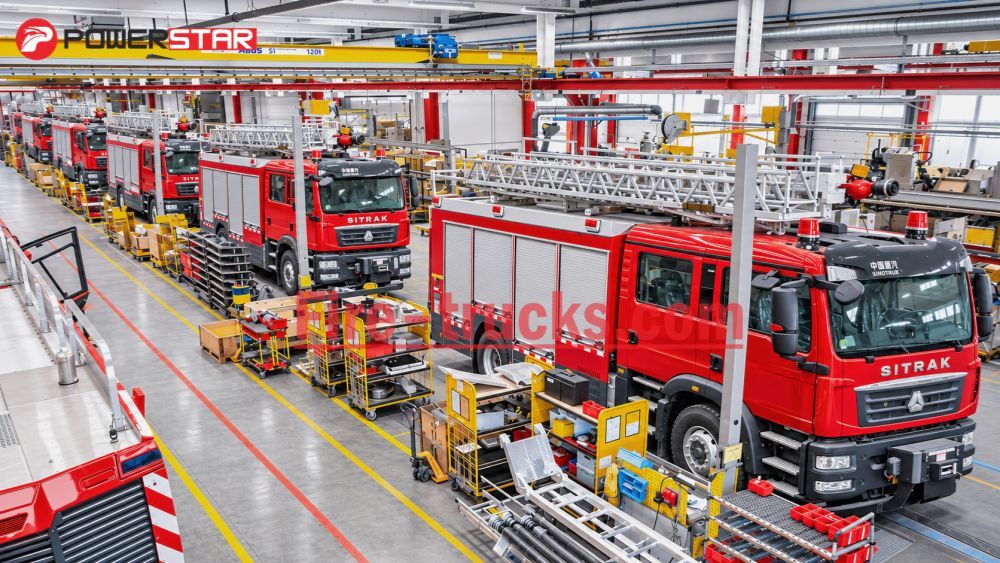
Key Advantages of Custom Fire Trucks:
1. Better Alignment with Actual Operational Needs
Custom vehicles can be designed based on the types of emergencies the fire department actually needs to handle. For example, industrial fire departments may require specialized foam firefighting systems, while wildland firefighting crews may place greater emphasis on four-wheel drive, larger ground clearance, and lightweight equipment storage solutions.
2. More Flexible Equipment Layout
Compartment sizes, storage locations, hose layouts, and equipment access methods can all be planned according to the fire department's actual operational procedures. This helps firefighters access needed equipment more efficiently during emergencies.
3. More Flexible Configuration Options
Depending on the manufacturer's engineering capabilities, purchasers can choose different chassis parameters, firefighting systems, water tank capacities, and supporting equipment.
4. Better Adaptation to Special Environments
Custom solutions can be optimized for narrow roads, steep terrain, industrial sites, remote areas, and special operating environments.
Potential Disadvantages of Custom Fire Trucks:
Higher Cost: Custom manufacturing requires higher initial procurement costs, and prices vary with the selected specifications.
Longer Lead Times: Due to varying project complexity, design approval and manufacturing cycles may also be longer.
Specialized Training: Because the vehicle is unique, operators and mechanics may require additional training.
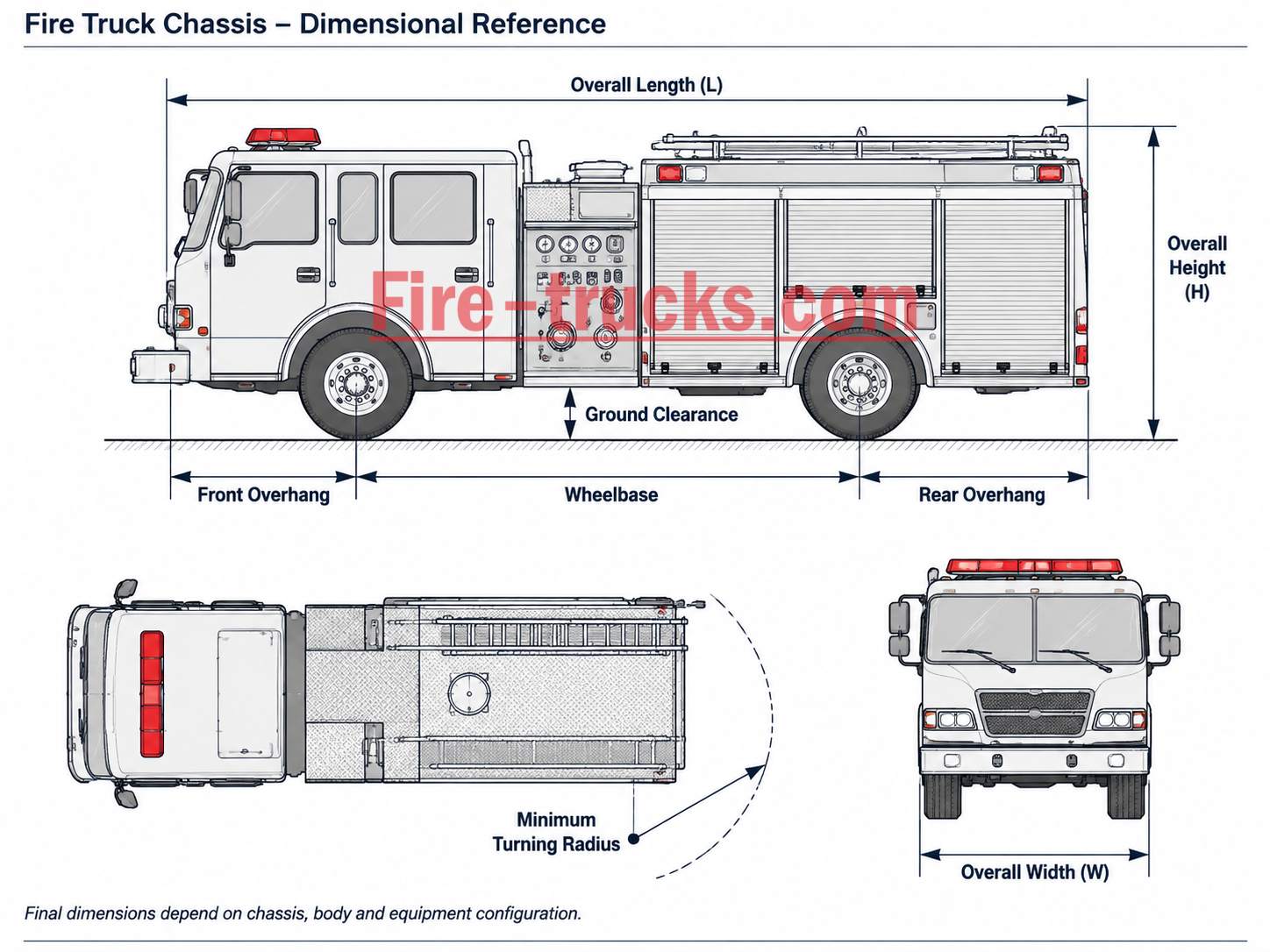
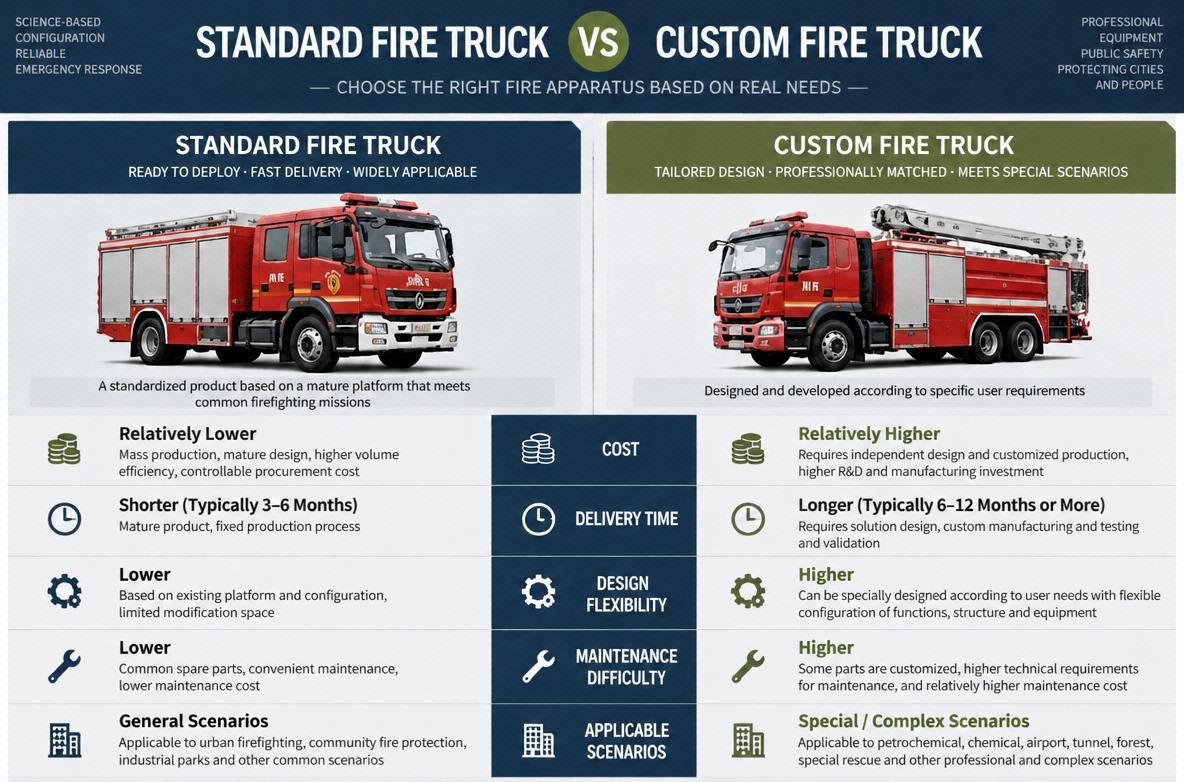
The following comparison can help purchasers determine which option better suits their needs.
| Comparison Item | Standardized Fire Truck | Custom Fire Truck |
|---|---|---|
| Design Approach | Proven standard configuration | Configured to customer needs |
| Initial Cost | Generally lower | Potentially higher |
| Design Flexibility | Limited to existing options | More flexible |
| Equipment Layout | Preset or modular | Designed around operational needs |
| Procurement Process | Generally simpler | Requires detailed planning |
| Delivery Time | Design phase may be shorter | Depends on customization complexity |
| Maintenance | Easier to standardize | Depends on component selection |
| Applicable Scenarios | Routine firefighting operations | Specialized operational needs |
(Actual costs, delivery times, and maintenance requirements also depend on the manufacturer, vehicle technical parameters, component supply conditions, and local after-sales service networks.)
Regardless of whether you choose a standardized or custom fire truck, the following technical and practical operational factors should be evaluated before placing an order.
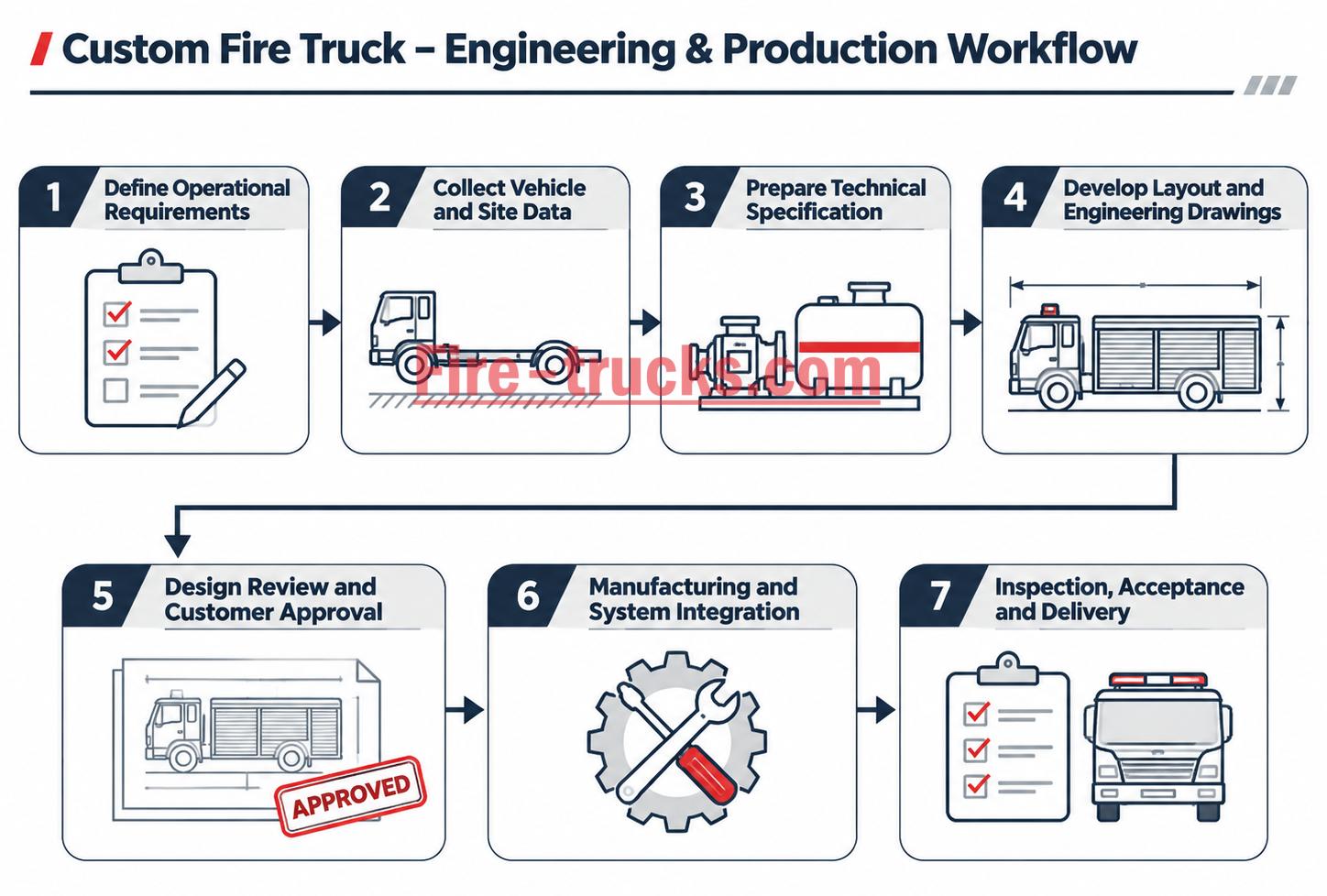
1. Operational Requirements
First, clearly define the vehicle's primary use. What types of incidents will the vehicle mainly respond to?
Residential and commercial building fires?
Industrial fires?
Forest and wildland fires?
Road traffic accidents?
Hazardous chemical incidents?
Technical rescue operations?
Different emergency scenarios require different vehicle configurations. For example, municipal departments prioritize water tank capacity and general equipment, while wildland firefighting prioritizes 4x4 capability and ground clearance.
2. Chassis and Vehicle Dimensions
The chassis is one of the most important components of a fire truck. Purchasers should focus on:
Gross Vehicle Weight Rating (GVWR)
Gross Axle Weight Rating (GAWR)
Engine power and torque
Transmission type
Wheelbase
Overall vehicle length and height
Ground clearance
Minimum turning radius
Driving road and terrain conditions
One important factor is the vehicle's fully loaded weight. If the vehicle exceeds its design weight range, it can lead to degraded handling, increased mechanical component loads, and safety risks.
3. Fire Pump and Water Tank Capacity
The fire pump and water tank directly affect the fire truck's actual operational capability. Before selecting a configuration, evaluate:
Fire pump flow rate
Operating pressure
Water tank capacity
Foam tank capacity
Fire pump drive method
Hose couplings and discharge outlets
Expected firefighting operation type
A larger water tank or higher pump flow rate does not necessarily mean a better vehicle. The correct configuration should align with the fire department's firefighting strategy, water supply conditions, vehicle weight limits, and actual operating environment.
4. Equipment Storage and Crew Safety
Equipment layout affects firefighters' efficiency during emergencies. Consider the storage needs for:
Fire hoses and nozzles
Self-contained breathing apparatus (SCBA)
Rescue tools
Hydraulic equipment
Fire ladders
Mobile lighting equipment
Generators
Personal protective equipment
Equipment compartments should provide safe and reliable storage space while remaining easily accessible to firefighters and maintaining reasonable weight distribution. Crew seating, seatbelts, cab entry and exit convenience, visibility, and equipment placement should also be considered during the design process.
5. Fire Truck Standards and Regulations
Before finalizing vehicle technical parameters, safety and regulatory compliance requirements must be considered. For example:
NFPA 1900: In the United States, NFPA 1900 covers ARFF vehicles, automotive fire apparatus, wildland fire apparatus, and ambulances. The current version officially listed by NFPA is the 2024 edition.
EN 1846: The European standard series primarily addresses the classification, safety, and performance requirements for fire and rescue vehicles.
Local Regulations: Vehicle registration, road operation requirements, emissions, safety equipment, and other regulations may vary by country and region.
Purchasers should confirm the applicable standards and versions with the relevant authorities before signing the procurement contract.
Choose a standardized fire truck if:
Your operational needs align with proven configurations.
Budget predictability is a priority.
You need to obtain the vehicle quickly.
Your fleet already contains similar models, simplifying training and parts.
Your terrain and response scenarios do not require special specifications.
Choose a custom fire truck if:
Your terrain, response protocols, or equipment needs cannot be met by standard models.
You need to match an existing fleet with specific configurations.
You have the budget and timeline to support a ground-up build.
Your community faces unique hazards that require custom solutions.
A practical middle ground: FIRE TRUCKS can provide semi-custom fire trucks that can be completed and delivered within the required timeframe, bridging the gap between standardized speed and custom flexibility. For departments that need more than a standard model but cannot accommodate a long custom lead time, this option is worth considering.
Q1: Is a custom fire truck always more expensive than a standardized fire truck?
A: Not necessarily. Custom fire trucks may require higher engineering and manufacturing costs, but the final price depends on the chassis, equipment, materials, and degree of customization. A well-planned custom solution may also avoid unnecessary features and equipment.
Q2: Which fire truck has a shorter delivery time?
A: Standardized configurations generally require less design and approval time. However, the actual delivery time also depends on manufacturing capacity, component supply, project complexity, and the manufacturer's production schedule.
Q3: What information should be provided to the manufacturer when purchasing a fire truck?
A: Purchasers should provide the vehicle's purpose, operating environment, chassis configuration requirements, fire pump and water tank parameters, equipment list, crew size, applicable standards, and destination country. The more detailed the requirements, the easier it is for the manufacturer to provide an accurate quotation.
Q4: Which fire truck is more suitable for municipal fire departments?
A: For municipal fire departments with routine firefighting needs, mature emergency response procedures, and standardized fleet management requirements, standardized fire trucks are usually a suitable choice. However, if the area served by the fire department has narrow roads, high-rise buildings, mountainous terrain, or special rescue needs, custom configurations may offer more advantages.
Q5: Are custom fire trucks suitable for industrial firefighting applications?
A: Yes. Custom fire trucks are generally very suitable for industrial firefighting, as different industrial facilities may have special firefighting needs. For example, chemical plants, refineries, power stations, and manufacturing plants may require specialized foam firefighting systems, high-flow fire pumps, large-capacity water or foam tanks, and specialized firefighting equipment.
Q6: Can purchasers customize only certain parts of a standardized fire truck?
A: Yes. Not every project requires a complete customization of the entire fire truck. Many fire truck manufacturers can provide partial customization services based on proven vehicle platforms. Purchasers can choose to modify specific components, such as water tank capacity, fire pump systems, equipment compartments, lighting systems, crew seating, or other accessories.
Choosing between a standardized fire truck and a custom fire truck requires comprehensive consideration of operational needs, technical parameters, safety standards, budget, and long-term maintenance plans. Standardized vehicles offer mature configurations and potentially simpler procurement processes; custom vehicles provide greater configuration flexibility for special firefighting operations.
As an experienced fire truck manufacturer, FIRE TRUCKS welcomes you to contact us to discuss your application scenarios, technical parameters, and custom fire truck solutions.


คุณอาจสนใจข้อมูลต่อไปนี้
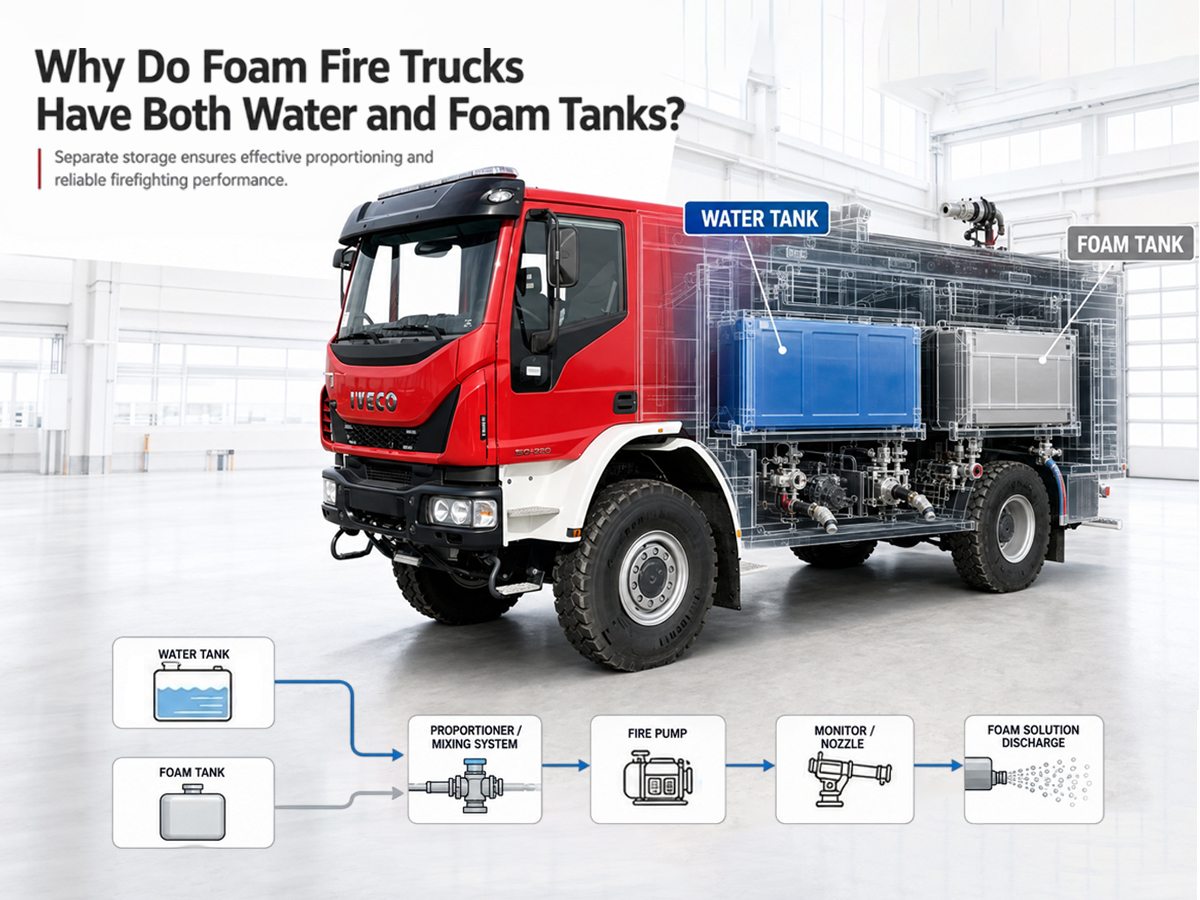
รถดับเพลิงแบบใช้โฟมประกอบด้วยถังบรรจุสารเข้มข้นโฟมโดยเฉพาะ ถังเก็บน้ำแยกต่างหาก และระบบผสมสารอย่างแม่นยำ โดยใช้ระบบผสมนี้ในการผสมสารเข้มข้นโฟมลงในกระแสน้ำในความเข้มข้นที่กำหนด โดยทั่วไปคือ 1%, 3% หรือ 6% ขึ้นอยู่กับชนิดของสารเข้มข้นโฟมและลักษณะการดับเพลิงถังคู่การออกแบบนี้ช่วยให้เจ้าหน้าที่ดับเพลิงสามารถใช้น้ำเพียงอย่างเดียวเมื่อไม่จำเป็นต้องใช้โฟม และเติมสารเข้มข้นของโฟมเฉพาะเมื่อจำเป็นเท่านั้น ซึ่งจะช่วยเพิ่มความยืดหยุ่นในการปฏิบัติงาน ช่วยควบคุมการใช้โฟม และช่วยให้สามารถปรับแต่งระบบดับเพลิงให้เหมาะสมกับอันตรายจากไฟไหม้ที่แตกต่างกันได้ หลักการทำงานพื้นฐานและเทคโนโลยีสำคัญของรถดับเพลิงโฟม โดยเฉพาะอย่างยิ่งเหตุผลที่รถดับเพลิงชนิดนี้มีทั้งถังน้ำและถังโฟม เป็นสิ่งที่ลูกค้าหลายรายให้ความสนใจ วันนี้เรามาเรียนรู้เกี่ยวกับเรื่องนี้กันเถอะ คำตอบโดยย่อ: รถดับเพลิงแบบใช้โฟมโดยทั่วไปจะใช้ถังน้ำและถังโฟมเข้มข้นแยกกัน เนื่องจากน้ำและโฟมเข้มข้นต้องใช้ในสัดส่วนที่แตกต่างกัน และมีจุดประสงค์เพื่อนำมาผสมกันระหว่างการใช้งาน ไม่ใช่เก็บไว้เป็นสารละลายผสมสำเร็จรูปเป็นเวลานาน ถังน้ำเป็นแหล่งจ่ายน้ำหลัก ในขณะที่ถังโฟมเก็บสารโฟมเข้มข้น ระบบควบคุมสัดส่วนจะควบคุมปริมาณโฟมเข้มข้นที่ผสมลงในกระแสน้ำ ทำให้รถสามารถสลับระหว่างโหมดดับเพลิงด้วยน้ำเปล่าและโหมดดับเพลิงด้วยโฟมได้ ฉัน. ส่วนประกอบหลักของรถดับเพลิงโฟมมีอะไรบ้าง? 1. ถังเก็บน้ำ โครงสร้างทนทานต่อการกัดกร่อน (เหล็กกล้าคาร์บอนเคลือบสารป้องกันการกัดกร่อนหรือเหล็กกล้าไร้สนิม) ความจุตั้งแต่ 4,000 ถึง 6,000 ลิตร มาพร้อมกับแผ่นกั้นเพื่อลดการกระเพื่อมของของเหลวขณะเคลื่อนที่ และฐานยึดแบบยืดหยุ่นเพื่อดูดซับการบิดตัวของตัวถังบนพื้นผิวขรุขระ 2. ถังบรรจุสารเข้มข้นสำหรับทำโฟม ผลิตจากสแตนเลสเพื่อทนต่อการกัดกร่อนทางเคมีจากสารเข้มข้นสำหรับทำโฟม โดยทั่วไปมีความจุ 500-2,000 ลิตร ขึ้นอยู่กับชนิดของสารเข้มข้นสำหรับทำโฟมและการออกแบบระบบ ถังอาจมีคุณสมบัติเพิ่มเติม เช่น ระบบหมุนเวียนหรือระบบกวน เพื่อช่วยรักษาสภาพของสารเข้มข้นในระหว่างการจัดเก็บ 3. ระบบผสมโฟม ระบบผสมที่ดึงสารเข้มข้นสำหรับทำโฟมจากแหล่งเฉพาะโฟมโดยการนำสารก่อโฟมใส่ลงในถังและผสมลงในกระแสน้ำในความเข้มข้นที่กำหนด การผสมอาจใช้เทคโนโลยีแรงดันสมดุล ปั๊ม หรือเวนทูรี ขึ้นอยู่กับสารก่อโฟมและรูปแบบการออกแบบระบบ 4. ปั๊มดับเพลิง ปั๊มดับเพลิงเป็นแหล่งพลังงานของระบบโฟมทั้งหมด ทำหน้าที่สูบน้ำจากถังเก็บน้ำและเพิ่มแรงดันให้ได้อัตราการไหลและแรงดันที่ต้องการสำหรับการดับเพลิง โดยทั่วไปปั๊มจะขับเคลื่อนด้วยระบบส่งกำลัง (PTO) ของรถหรือเครื่องยนต์อิสระ และต้องเข้ากันได้กับระบบผสมสารดับเพลิงเพื่อให้แน่ใจว่าการฉีดสารดับเพลิงเข้มข้นมีความแม่นยำในอัตราการไหลที่แตกต่างกัน การกำหนดค่าทั่วไป ได้แก่ ปั๊มแรงเหวี่ยงแบบขั้นตอนเดียวสำหรับการใช้งานมาตรฐาน และปั๊มหลายขั้นตอนสำหรับการใช้งานที่มีแรงดันสูง 5. มอนิเตอร์โฟม เครื่องพ่นโฟมจะส่งสารละลายโฟมที่พร้อมใช้งานไปยังแหล่งกำเนิดไฟด้วยอัตราการไหลและระยะการพ่นที่ควบคุมได้ ขึ้นอยู่กับการกำหนดค่าของรถ เครื่องพ่นอาจควบคุมด้วยตนเองหรือควบคุมจากระยะไกล และสามารถติดตั้งรูปแบบการไหลและการพ่นที่ปรับได้สำหรับการใช้งานดับเพลิงที่แตกต่างกัน 2.เหตุใดรถดับเพลิงชนิดใช้โฟมจึงใช้ถังน้ำและถังโฟมแยกกัน? เพื่อให้เข้าใจถึงการออกแบบหลักของรถดับเพลิงที่ใช้โฟม เราต้องตอบคำถามข้อนี้ก่อน: เหตุใดโดยปกติแล้วน้ำและสารเข้มข้นสำหรับทำโฟมจึงไม่ถูกจัดเก็บในรูปแบบสารละลายที่ผสมไว้ล่วงหน้...
รายละเอียด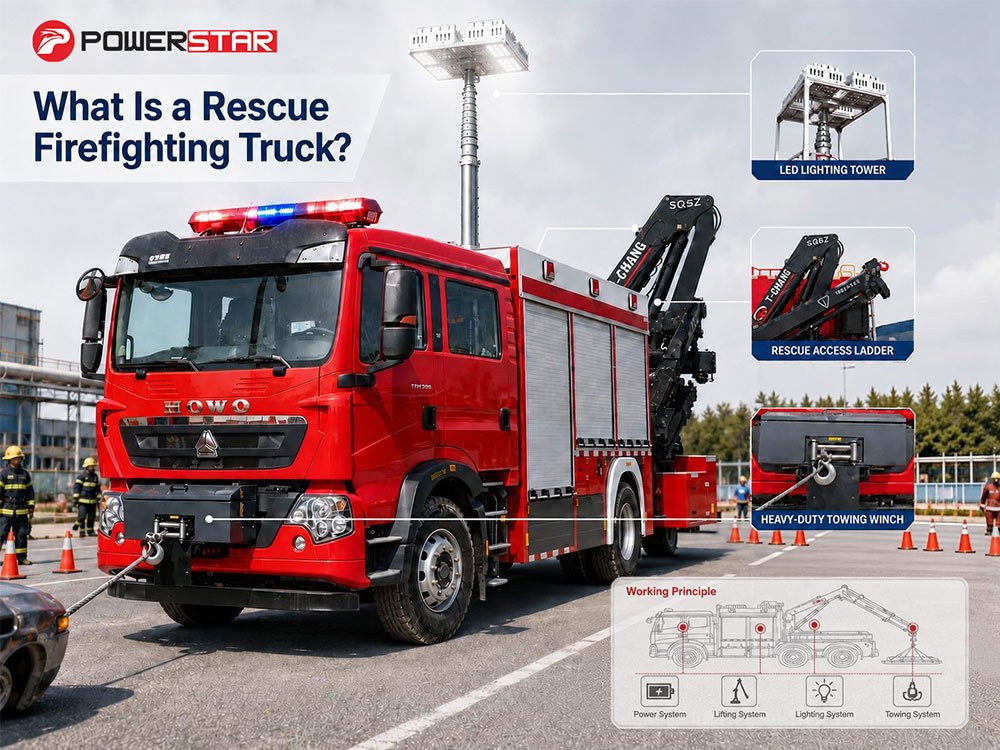
รถดับเพลิงกู้ภัยเป็นยานพาหนะฉุกเฉินเฉพาะทางที่ออกแบบมาเพื่อปฏิบัติภารกิจทั้งดับเพลิงและกู้ภัย แตกต่างจากรถดับเพลิงทั่วไปที่เน้นการดับเพลิงเป็นหลักรถดับเพลิงกู้ภัยผสมผสานอุปกรณ์ดับเพลิงเข้ากับเครื่องมือช่วยเหลือ เครื่องมือยกและเคลื่อนย้าย เครื่องมือตัดและถ่าง เครื่องกว้าน เครื่องกำเนิดไฟฟ้า และระบบไฟส่องสว่าง บทความนี้อธิบายว่ารถดับเพลิงกู้ภัยคืออะไร แตกต่างจากรถดับเพลิงประเภทอื่นอย่างไร มีอุปกรณ์อะไรบ้าง และจะถูกนำมาใช้งานเมื่อใด I. รถดับเพลิงกู้ภัยคืออะไร? รถดับเพลิงกู้ภัยเป็นยานพาหนะฉุกเฉินอเนกประสงค์ที่ผสมผสานความสามารถในการดับเพลิงเข้ากับอุปกรณ์กู้ภัยเฉพาะทาง โดยส่วนใหญ่ใช้เพื่อตอบสนองต่อเหตุฉุกเฉินอย่างครอบคลุมเมื่อเกิดเหตุการณ์ที่เกี่ยวข้องกับคน ยานพาหนะ อาคาร หรือโรงงานอุตสาหกรรม รถดับเพลิงกู้ภัยสามารถติดตั้งอุปกรณ์กู้ภัยและระบบดับเพลิงได้หลากหลายชนิด ขึ้นอยู่กับการกำหนดค่าของตัวรถ การเลือกอุปกรณ์จริงจะแตกต่างกันไปตามวัตถุประสงค์การใช้งานของรถ ตัวอย่างเช่น รถที่ออกแบบมาสำหรับการกู้ภัยในเมือง อาจมีรูปแบบการจัดวางอุปกรณ์ที่แตกต่างจากรถที่ออกแบบมาสำหรับการกู้ภัยในอุตสาหกรรม การรับมือกับแผ่นดินไหว หรือการกู้ซากจากอุบัติเหตุทางถนน II. รถดับเพลิงกู้ภัยบรรทุกอุปกรณ์อะไรบ้าง? อุปกรณ์ที่บรรทุกบนรถดับเพลิงกู้ภัยนั้นขึ้นอยู่กับการออกแบบของรถและวัตถุประสงค์การใช้งาน อย่างไรก็ตาม อุปกรณ์ในรถส่วนใหญ่สามารถแบ่งออกเป็นหมวดหมู่หลักๆ ได้หลายหมวด ได้แก่ อุปกรณ์ดับเพลิง เครื่องมือช่วยเหลือ อุปกรณ์ไฟฟ้า อุปกรณ์ให้แสงสว่าง อุปกรณ์ยกและลากจูง และอุปกรณ์ป้องกันส่วนบุคคล 1. อุปกรณ์ดับเพลิง อุปกรณ์ดับเพลิงอาจรวมถึงถังดับเพลิง สายดับเพลิง หัวฉีดดับเพลิง ปั๊มน้ำแบบพกพา ถังเก็บน้ำ ระบบดับเพลิงด้วยโฟม เครื่องฉีดน้ำดับเพลิง และเครื่องมือดับเพลิงอื่นๆ 2. เครื่องมือช่วยชีวิตระบบไฮดรอลิก เครื่องมือไฮดรอลิกสำหรับงานกู้ภัยมักใช้ในปฏิบัติการกู้ภัยจากอุบัติเหตุจราจรเพื่อตัด แยก หรือยกโครงสร้างรถที่เสียหาย อุปกรณ์ทั่วไปได้แก่ เครื่องตัดไฮดรอลิก เครื่องแยกไฮดรอลิก และกระบอกไฮดรอลิก 3. เครื่องกำเนิดไฟฟ้า เครื่องกำเนิดไฟฟ้าให้พลังงานไฟฟ้าสำหรับอุปกรณ์กู้ภัย อุปกรณ์ให้แสงสว่าง อุปกรณ์สื่อสาร และอุปกรณ์อื่นๆ เมื่อไม่มีแหล่งจ่ายไฟภายนอกในที่เกิดเหตุ 4. อุปกรณ์ให้แสงสว่าง ระบบไฟส่องสว่างฉุกเฉินช่วยให้เจ้าหน้าที่กู้ภัยปฏิบัติงานได้ในเวลากลางคืน ภายในอาคาร บนทางหลวง และในสภาพแสงน้อยอื่นๆ 5. เครื่องกว้านและอุปกรณ์ลากจูง รถดับเพลิงกู้ภัยบางคันสามารถติดตั้งรอกและอุปกรณ์ลากจูงเพื่อเคลื่อนย้ายยานพาหนะที่เสียหายหรือจัดการกับวัตถุหนักระหว่างปฏิบัติการกู้ภัยได้ III. รถดับเพลิงกู้ภัยเทียบกับรถดับเพลิงมาตรฐาน โดยทั่วไปแล้ว รถดับเพลิงมาตรฐานจะใช้สำหรับการดับเพลิงเป็นหลัก อาจติดตั้งปั๊มดับเพลิง ถังน้ำ ถังโฟม สายดับเพลิง หัวฉีดดับเพลิง และเครื่องฉีดน้ำดับเพลิงเพื่อดับและควบคุมไฟ ในทางตรงกันข้าม รถดับเพลิงกู้ภัยจะเน้นที่อุปกรณ์กู้ภัยมากกว่า ในขณะที่ยังคงความสามารถในการดับเพลิงไว้ด้วย คุณสมบัติ รถดับเพลิงกู้ภัย รถดับเพลิงมาตรฐาน วัตถุประสงค์หลัก กู้ภัย + ดับเพลิง การดับเพลิง เครื่องมือช่วยชีวิตระบบไฮดรอลิก อุปกรณ์ทั่วไป โดยปกติแล้วไม่ใช่อุปกรณ์หลัก ปั๊มดับเพลิง ขึ้นอยู่กับการตั้งค่า อุปกรณ์ทั่วไป ถังเก็บน้ำ ตัวเลือกเสริม / ขึ้นอยู่กับการตั้งค่า อุปกรณ์ทั่วไป เครื่องกำเนิดไฟฟ้า มีจำหน่ายทั่วไป ไม่จำเป็น ระบบไฟส่องสว่าง มีจำหน่ายทั่วไป ขึ้นอยู่กับการตั้งค่า วินช์ มักมีจำหน่...
รายละเอียด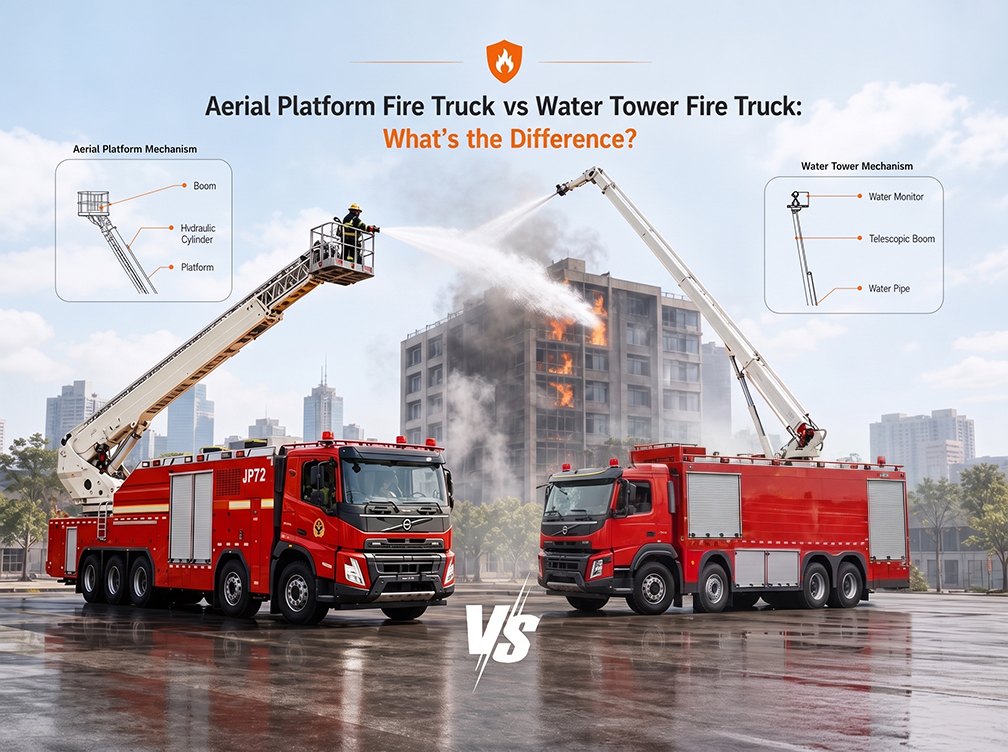
เมื่อพูดถึงการดับเพลิงในอาคารสูง โรงงานอุตสาหกรรม หรือคลังสินค้าขนาดใหญ่ รถดับเพลิงบันไดยกสูงเป็นสิ่งที่ขาดไม่ได้ แต่ในบรรดาอุปกรณ์ดับเพลิงแบบยกสูงหลายประเภท มีอยู่สองประเภทที่มักสร้างความสับสน:รถดับเพลิงแพลตฟอร์มยกสูงและรถดับเพลิงหอส่งน้ำแม้เมื่อมองครั้งแรกอาจดูคล้ายกัน—ทั้งสองประเภทมีแขนบูมไฮดรอลิกและได้รับการออกแบบสำหรับการดับเพลิงในพื้นที่สูง—แต่จริง ๆ แล้วมีภารกิจพื้นฐานที่แตกต่างกัน บทความนี้จะแยกแยะความแตกต่างสำคัญระหว่างยานพาหนะสองประเภทนี้ เพื่อช่วยให้ผู้เชี่ยวชาญด้านบริการดับเพลิง ผู้จัดการฝ่ายจัดซื้อ และผู้จัดจำหน่ายอุปกรณ์สามารถตัดสินใจได้อย่างมีข้อมูลโดยอิงจากความต้องการในการปฏิบัติงาน I. รถแพลตฟอร์มยกสูงคืออะไร? ตามมาตรฐานแห่งชาติจีน GB 7956.12-2015 ยานพาหนะทั้งสองประเภทอยู่ในหมวดหมู่ของยานพาหนะดับเพลิงทางอากาศ—ยานพาหนะที่ติดตั้งบูมยกสูง แท่นหมุน และอุปกรณ์ดับเพลิงสำหรับการปฏิบัติงานในระดับความสูง อย่างไรก็ตาม คำจำกัดความเฉพาะของแต่ละประเภทแสดงให้เห็นถึงความแตกต่างที่สำคัญ. รถดับเพลิงแพลตฟอร์มยกสูง รถดับเพลิงแพลตฟอร์มยกสูงติดตั้งบูมแบบพับได้หรือแบบพับร่วมกับยืดหดได้ แพลตฟอร์มสำหรับบุคลากร แท่นหมุน และอุปกรณ์ดับเพลิงคุณลักษณะสำคัญคือแพลตฟอร์มทำงาน (กระเช้า)ที่ปลายบูม ซึ่งนักดับเพลิงสามารถยืนเพื่อดำเนินการกู้ภัยและดับเพลิงได้. ลักษณะสำคัญ:• ติดตั้งแพลตฟอร์มที่สามารถรองรับ750 ปอนด์ถึงมากกว่า 1,500 ปอนด์ของบุคลากรและอุปกรณ์• ออกแบบมาสำหรับทั้งการกู้ภัยและการดับเพลิง—นักดับเพลิงสามารถปฏิบัติงานโดยตรงจากแพลตฟอร์ม• แพลตฟอร์มสามารถใช้งานร่วมกับอุปกรณ์ควบคุมการลดระดับ รอกไฮดรอลิก หรือรางเลื่อนช่วยเหลือผู้ประสบภัย• มีระยะเอื้อมในแนวนอนที่กว้างกว่าและช่วงการทำงานมากกว่ารถหอส่งน้ำ IIII. รถดับเพลิงหอส่งน้ำคืออะไร? รถดับเพลิงหอส่งน้ำติดตั้งบูมแบบพับได้หรือแบบพับร่วมกับยืดหดได้ แท่นหมุน และอุปกรณ์ดับเพลิง—โดยไม่มีแพลตฟอร์มสำหรับบุคลากรแต่จะติดตั้งหัวฉีดน้ำดับเพลิง (ปืนฉีดน้ำ) ที่ปลายบูม ซึ่งสามารถควบคุมจากระยะไกลบนพื้นดินได้. ลักษณะสำคัญ:•ไม่มีแพลตฟอร์มสำหรับบุคลากร—นักดับเพลิงปฏิบัติงานจากพื้นดินผ่านการควบคุมระยะไกล• มุ่งเน้นเฉพาะด้านการควบคุมเพลิงในพื้นที่สูงไม่ใช่การกู้ภัย• ให้อัตราการไหลของน้ำสูงเป็นพิเศษ—เกิน 2,000 แกลลอนต่อนาทีในรุ่นอุตสาหกรรมหลายรุ่น• ออกแบบมาสำหรับการป้องกันอัคคีภัยในภาคอุตสาหกรรมที่ไม่จำเป็นต้องมีความสามารถในการกู้ภัย III. การเปรียบเทียบแบบเคียงข้างกัน คุณลักษณะ รถดับเพลิงบันไดยกระดับแบบแพลตฟอร์ม รถดับเพลิงหอส่งน้ำ หน้าที่หลัก กู้ภัย + ดับเพลิง ดับเพลิงเท่านั้น อุปกรณ์ที่ปลายบูม แพลตฟอร์มทำงาน (กระเช้า) สำหรับบุคลากร หัวฉีดน้ำดับเพลิง (ปืนฉีดน้ำ) บุคลากรบนบูม ใช่—นักดับเพลิงสามารถปฏิบัติงานจากแพลตฟอร์มได้ ไม่—ควบคุมจากภาคพื้นดินผ่านรีโมตคอนโทรล ความสามารถในการกู้ภัย สูง—สามารถอพยพผู้ติดอยู่ในอาคารได้ ไม่มี ความสามารถในการจ่ายน้ำ สูงสุด 1,500+ GPM 2,000+ GPM (รุ่นอุตสาหกรรม) ความสูงในการปฏิบัติงานทั่วไป 50–130 ฟุต 50–130 ฟุต ความจุของแพลตฟอร์ม/กระเช้า 750–1,500+ ปอนด์ ไม่เกี่ยวข้อง น้ำหนัก หนักกว่า (เช่น 36 ตันสำหรับรุ่น 54 ม.) เบากว่าเมื่อเทียบกัน เหมาะที่สุดสำหรับ การกู้ภัยอาคารสูงในเมือง หน่วยงานที่ต้องการรถอเนกประสงค์ พื้นที่อุตสาหกรรม การระงับอัคคีภัยขนาดใหญ่ Ⅳ. เมื่อใดควรเลือกใช้รถดับเพลิงบันไดยกระดับแบบแพลตฟอร์ม รถดับเพลิงบันไดยกระดับแบบแพลตฟอร์มคืออุปกรณ์ยานพาหนะทางอากาศอเนกประสงค์ขั้นสูงสุด—สามารถจัดการทั้...
รายละเอียด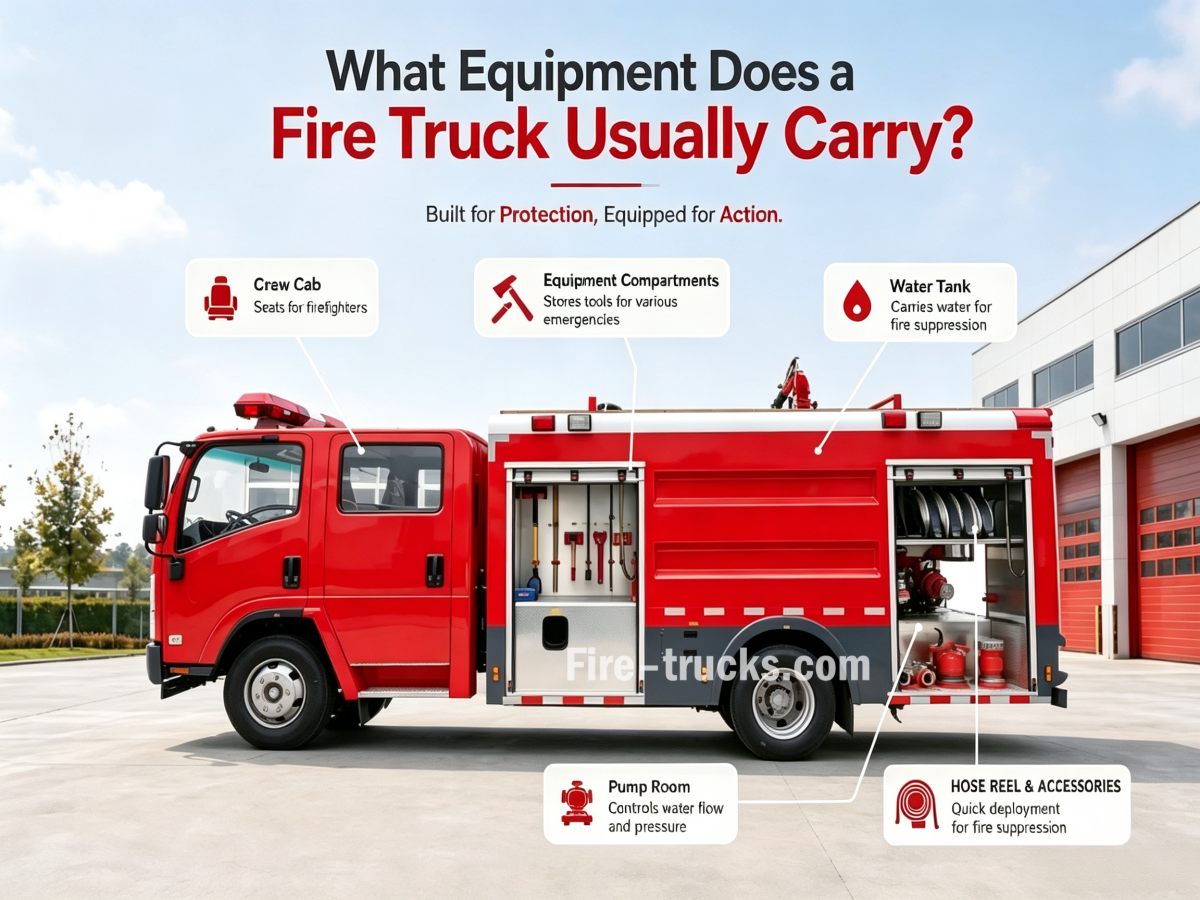
รถดับเพลิงโดยทั่วไปจะบรรทุกอุปกรณ์ดับเพลิง อุปกรณ์จ่ายน้ำ อุปกรณ์กู้ภัย และอุปกรณ์ป้องกันความปลอดภัย อุปกรณ์ทั่วไปประกอบด้วยเครื่องสูบน้ำดับเพลิง ถังน้ำ สายดับเพลิง หัวฉีดน้ำดับเพลิง ปืนฉีดน้ำดับเพลิง วาล์ว บันไดดับเพลิง เครื่องมือกู้ภัย อุปกรณ์ป้องกัน และอุปกรณ์สื่อสาร บทความนี้จะแยกวิเคราะห์อย่างเป็นระบบเกี่ยวกับการจำแนกประเภท หน้าที่ และข้อควรพิจารณาในการเลือกอุปกรณ์มาตรฐานของ รถดับเพลิง อุปกรณ์ ซึ่งช่วยให้ผู้เชี่ยวชาญด้านการจัดซื้อและผู้ใช้งานปลายทางมีความเข้าใจอย่างครบถ้วนเกี่ยวกับการกำหนดค่าของรถดับเพลิง I. การจำแนกประเภทอุปกรณ์ของรถดับเพลิง 1. อุปกรณ์ดับเพลิง— เครื่องมือหลักสำหรับการควบคุมเพลิงโดยตรง รวมถึงหัวฉีดน้ำดับเพลิง ปืนฉีดน้ำดับเพลิง สายดับเพลิง อุปกรณ์แยกน้ำ และข้อต่อแปลง 2. อุปกรณ์กู้ภัยและเจาะเปิดทาง— เครื่องมือสำหรับสร้างเส้นทางเข้าถึงเพื่อปฏิบัติการกู้ภัยและดับเพลิง รวมถึงเครื่องมือกู้ภัยไฮดรอลิก ขวานดับเพลิง เหล็กงัด ชะแลง เลื่อยตัด และเลื่อยโซ่ 3. อุปกรณ์กู้ภัยและช่วยชีวิต— อุปกรณ์สำหรับการค้นหา การเคลื่อนย้าย และการปกป้องบุคลากร รวมถึงเปลสนาม เชือกกู้ภัย ตะขอนิรภัย อุปกรณ์ควบคุมการลง เครื่องช่วยหายใจแบบมีถังอากาศในตัว (SCBA) และถังอากาศสำรอง 4. อุปกรณ์ระบายควันและอุปกรณ์ส่องสว่าง— อุปกรณ์สำหรับปรับปรุงสภาพพื้นที่เกิดเหตุเพลิงไหม้ รวมถึงเครื่องดูดควัน หอไฟส่องสว่างเคลื่อนที่ และไฟค้นหาแบบพกพาความเข้มสูง 5. อุปกรณ์ป้องกันส่วนบุคคล (PPE)— อุปกรณ์สำหรับปกป้องความปลอดภัยของนักดับเพลิง รวมถึงหมวก ชุดป้องกันการดับเพลิงโครงสร้าง ถุงมือ รองเท้าบูท และเข็มขัดนิรภัย 6. อุปกรณ์สื่อสารและสำรวจพื้นที่— อุปกรณ์สำหรับรวบรวมข้อมูลในพื้นที่เกิดเหตุเพลิงไหม้และประสานงานการควบคุมสั่งการ รวมถึงวิทยุสื่อสารสองทาง กล้องถ่ายภาพความร้อน และเครื่องตรวจจับก๊าซพิษ II. อุปกรณ์ดับเพลิงบนรถดับเพลิง 1. เครื่องสูบน้ำดับเพลิง เครื่องสูบน้ำดับเพลิงเป็นแหล่งพลังงานสำหรับการปฏิบัติการดับเพลิงทั้งหมด โดยจะเพิ่มแรงดันน้ำด้วยระบบกลไก ทำให้น้ำมีพลังงานจลน์เพียงพอสำหรับกระบวนการทั้งหมดตั้งแต่ "การดูดน้ำ → การเพิ่มแรงดัน → การส่งน้ำ → การจ่ายน้ำ" ข้อมูลจำเพาะทั่วไปของเครื่องสูบน้ำดับเพลิง: •เครื่องสูบน้ำดับเพลิงแรงดันมาตรฐาน (ชนิด CB10/30):อัตราการไหล ≥30 ลิตร/วินาที แรงดันพิกัด 1.0MPa ติดตั้งด้านท้ายรถ เหมาะสำหรับรถบรรทุกน้ำมาตรฐานและรถดับเพลิงโฟม ตอบสนองความต้องการจ่ายน้ำสำหรับการดับเพลิงในเมืองและภาคอุตสาหกรรมส่วนใหญ่ •เครื่องสูบน้ำดับเพลิงแรงดันปานกลาง/สูง:อัตราการไหลแรงดันต่ำ 30 ลิตร/วินาที ที่ 1.0MPa อัตราการไหลแรงดันสูง 20 ลิตร/วินาที ที่ 2.0MPa ติดตั้งด้านท้ายรถ การออกแบบแบบแรงดันคู่รองรับทั้งการจ่ายน้ำปริมาณมาก (แรงดันต่ำ) และการส่งน้ำระยะไกล/อาคารสูง (แรงดันสูง) ด้วยเครื่องสูบเดียว เหมาะอย่างยิ่งสำหรับรถดับเพลิงหลักในเมืองและสถานการณ์ดับเพลิงอาคารสูง •เครื่องสูบน้ำดับเพลิงแรงดันสูง:อัตราการไหล 10-15 ลิตร/วินาที แรงดันสูงสุด 4.0MPa หรือสูงกว่า ติดตั้งด้านท้ายรถหรือกึ่งกลางรถ ใช้ในระบบละอองน้ำแรงดันสูง พบได้ทั่วไปในรถดับเพลิงสนามบินและยานพาหนะอุตสาหกรรมเฉพาะทาง เส้นทางการไหลของระบบน้ำทั้งหมด: ถังน้ำ / แหล่งน้ำธรรมชาติ → เครื่องสูบน้ำดับเพลิง (ส่วนหลัก) → ช่องจ่ายน้ำ → อุปกรณ์แยกน้ำ → สายดับเพลิง → หัวฉีดน้ำ / ปืนฉีดน้ำ 2. ปืนฉีดน้ำดับเพลิง ปืนฉีดน้ำดับเพลิงเป็นอุปกรณ์จ่ายน้ำปริมาณมากที่ติดตั้งอยู่บนหลังคาหรือแท่นของรถดับเพลิง ออกแบบมาสำหรับควบคุมเพลิงขนาดใหญ...
รายละเอียด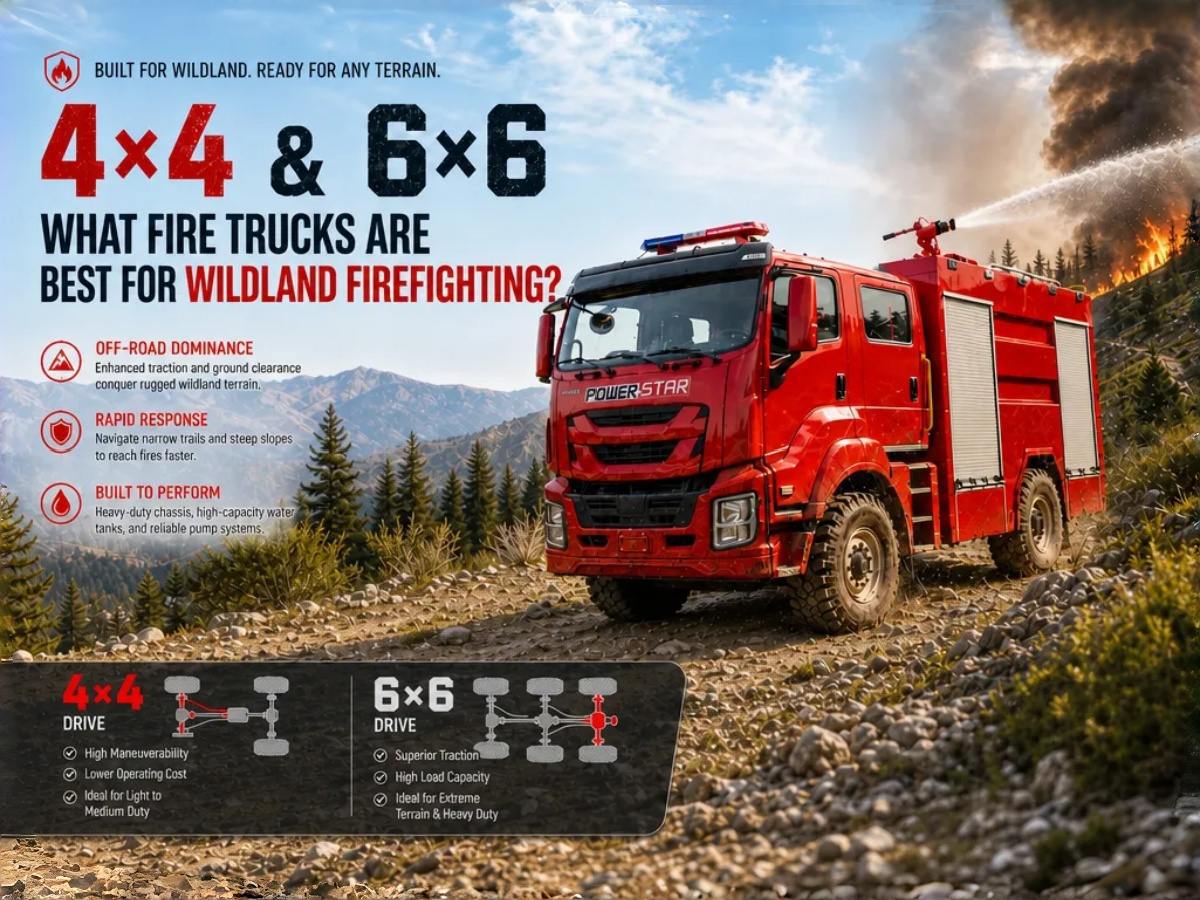
การดับไฟป่านำเสนอความท้าทายที่แตกต่างจากการดับเพลิงในอาคารอย่างพื้นฐาน ในป่าห่างไกล ทุ่งหญ้า และภูมิประเทศภูเขา รถดับเพลิงต้องเดินทางผ่านเส้นทางแคบ ไต่ทางลาดชัน และปฏิบัติงานห่างไกลจากหัวจ่ายน้ำหรือแหล่งน้ำ การเลือกรถดับเพลิงที่เหมาะสมเป็นการตัดสินใจเชิงกลยุทธ์ที่ส่งผลโดยตรงต่อเวลาตอบสนอง ความปลอดภัยของทีมงาน และประสิทธิภาพในการควบคุมไฟ บทความนี้นำเสนอการวิเคราะห์อย่างครอบคลุมเกี่ยวกับประเภทของรถดับเพลิงที่เหมาะสมที่สุดสำหรับการดับไฟป่า คุณสมบัติหลัก และวิธีการเลือก เพื่อช่วยให้คุณตัดสินใจได้อย่างถูกต้องตามความต้องการในการปฏิบัติงานเฉพาะของคุณ คำตอบแบบรวดเร็ว ไฟป่ามีลักษณะเด่นคือพื้นที่ไฟไหม้ขนาดใหญ่ ภูมิประเทศซับซ้อน แหล่งน้ำจำกัด และสภาพถนนไม่ดี ดังนั้นจึงไม่มีรถดับเพลิงเพียงประเภทเดียวที่สามารถรับมือกับสถานการณ์ไฟป่าทุกรูปแบบได้ โดยทั่วไป การดับไฟป่ามักใช้รถดับเพลิงประเภทต่อไปนี้เป็นหลัก: • รถดับเพลิงไฟป่าขนาดเบา: สำหรับเข้าถึงถนนในป่าและตอบสนองอย่างรวดเร็ว• รถดับเพลิงไฟป่าระบบขับเคลื่อน 4×4 สำหรับภูมิประเทศภูเขาและเนินเขา• รถดับเพลิงไฟป่าระบบ 6×6: สำหรับไฟป่าขนาดใหญ่และการปฏิบัติงานต่อเนื่อง• รถบรรทุกน้ำ: สำหรับการจ่ายน้ำอย่างต่อเนื่องและการสนับสนุน• รถดับเพลิงโฟม: สำหรับสถานที่น้ำมัน อุปกรณ์ป่าไม้ หรือเพลิงไหม้พิเศษ• รถกู้ภัย: สำหรับการสื่อสาร แสงสว่าง การเจาะเปิด และการสนับสนุนด้านโลจิสติกส์ I. เหตุใดไฟป่าจึงต้องใช้รถดับเพลิงเฉพาะทาง? ไฟป่าแตกต่างจากเพลิงไหม้อาคารอย่างพื้นฐานในหลายด้านที่สำคัญ: ลักษณะสำคัญของไฟป่า:• พื้นที่ไฟไหม้ขนาดใหญ่ครอบคลุมพื้นที่หลายเฮกตาร์• ทิศทางลมเปลี่ยนแปลงอย่างรวดเร็ว• ภูมิประเทศซับซ้อนและขรุขระ• การเข้าถึงหัวจ่ายน้ำหรือแหล่งน้ำมีจำกัดหรือไม่มีเลย• ถนนป่าแคบและไม่ได้ลาดยาง• สภาพการสื่อสารที่ยากลำบาก รถดับเพลิงมาตรฐานในเขตเมืองโดยทั่วไปไม่เหมาะสำหรับการดับไฟป่าด้วยเหตุผลดังต่อไปนี้: •ขาดระบบขับเคลื่อน 4×4 หรือขับเคลื่อนทุกล้อสำหรับถนนภูเขาที่ไม่ได้ลาดยางและทางลาดชัน;•ขนาดที่ใหญ่กว่าและระยะห่างจากพื้นต่ำทำให้มีโอกาสติดหล่มบนเส้นทางป่าแคบและพื้นที่ดินอ่อน;•เครื่องสูบน้ำในเมืองให้ความสำคัญกับอัตราการไหลสูงที่แรงดันปานกลาง ขณะที่การปฏิบัติงานในพื้นที่ป่าต้องใช้แรงดันสูงผ่านสายส่งน้ำระยะไกลโดยมีน้ำจำกัด ซึ่งเป็นแนวทางที่แตกต่างโดยพื้นฐาน II. ประเภททั่วไปของรถดับเพลิงสำหรับไฟป่า ประเภทของรถดับเพลิง คุณลักษณะสำคัญ สถานการณ์ที่เหมาะสม รถดับเพลิงไฟป่าขนาดเบา ความคล่องตัวสูง ขนาดกะทัดรัด การลาดตระเวนป่า การเข้าจู่โจมระยะแรก รถดับเพลิงไฟป่า 4x4 ความสามารถในการขับขี่นอกถนนสูง ภูมิประเทศภูเขาและเนินเขา รถดับเพลิงไฟป่า 6x6 ความจุน้ำขนาดใหญ่ ความทนทานในการปฏิบัติงานยาวนาน ไฟป่าขนาดใหญ่ รถบรรทุกน้ำ การจ่ายน้ำอย่างต่อเนื่อง การสนับสนุนด้านโลจิสติกส์ การส่งต่อน้ำ รถดับเพลิงโฟม การดับเพลิงเฉพาะทาง คลังน้ำมันในป่า พื้นที่อุปกรณ์ รถกู้ภัย การขนส่งอุปกรณ์ ปฏิบัติการกู้ภัยแบบครบวงจร III. รถดับเพลิงป่าต้องมีคุณสมบัติด้านประสิทธิภาพหลักอะไรบ้าง? 1. ความสามารถในการขับขี่แบบออฟโรด รถดับเพลิงป่าจำเป็นต้องมีสมรรถนะการขับขี่แบบออฟโรดที่แข็งแกร่งเพื่อปฏิบัติงานได้อย่างมีประสิทธิภาพในภูมิประเทศที่ท้าทาย: รูปแบบระบบขับเคลื่อน:• ระบบขับเคลื่อน 4×4 เป็นมาตรฐานขั้นต่ำสำหรับการปฏิบัติงานในพื้นที่ป่าส่วนใหญ่ ให้แรงยึดเกาะบนดินร่วน กรวด และทางลาดชัน• ระบบขับเคลื่อน 6×6 ให้แรงยึดเกาะและความสามารถในการบรรทุกที่เพิ่มขึ้นสำหรับยานพาหนะขนาดใหญ่ที่ทำงา...
รายละเอียด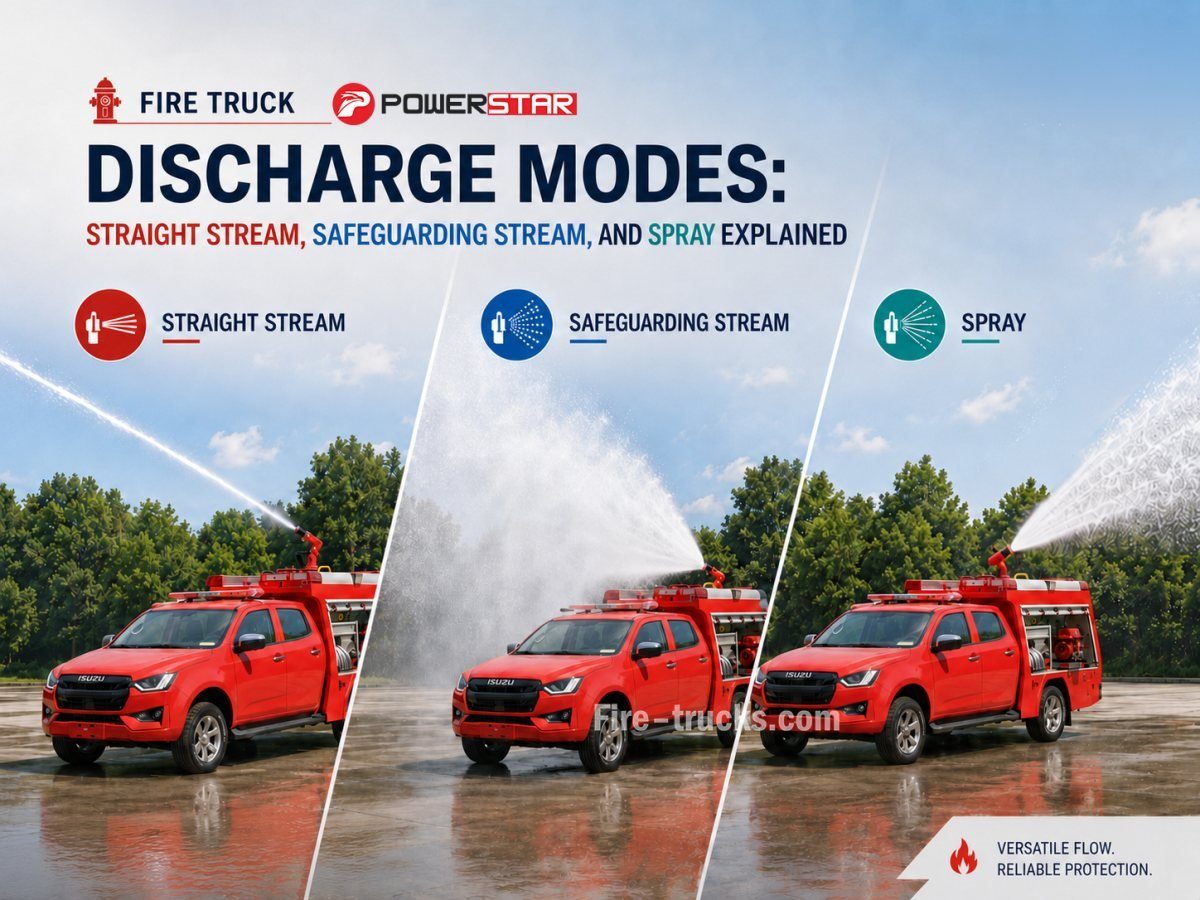
ในการปฏิบัติการดับเพลิง การเลือกโหมดการปล่อยน้ำโดยตรงจะกำหนดประสิทธิภาพการดับไฟ ความปลอดภัยในการปฏิบัติงาน และประสิทธิผลในการควบคุมเพลิงโดยตรง คนส่วนใหญ่ไม่ทราบว่า รถดับเพลิง หัวฉีดสามารถสลับระหว่างโหมดการปล่อยน้ำหลัก 3 รูปแบบ ได้แก่ ลำตรง ละอองน้ำ และลำน้ำป้องกัน รูปแบบต่าง ๆ มีความแตกต่างอย่างมากในด้านรูปแบบการไหล ระยะฉีด แรงกระแทก และพื้นที่ครอบคลุม โดยแต่ละรูปแบบเหมาะกับสถานการณ์เพลิงไหม้ที่แตกต่างกันโดยสิ้นเชิง บทความนี้อ้างอิงตามมาตรฐานการปฏิบัติการดับเพลิงระดับมืออาชีพ โดยวิเคราะห์หลักการ คุณลักษณะสำคัญ และสถานการณ์การใช้งานของโหมดการปล่อยน้ำทั้งสามรูปแบบอย่างครอบคลุม เพื่อช่วยให้ลูกค้าของเราสามารถเรียนรู้เทคนิคการปล่อยน้ำจากรถดับเพลิงอย่างเป็นระบบ I. เหตุใดรถดับเพลิงจึงต้องมีโหมดการปล่อยน้ำที่แตกต่างกัน? ลำตรง ละอองน้ำ และลำน้ำป้องกัน สอดคล้องกับกลไกการดับเพลิง 3 รูปแบบ ได้แก่ การดับด้วยแรงกระแทก การระเหยเพื่อทำให้ขาดอากาศ และการป้องกันรังสีความร้อน นักดับเพลิงต้องสลับใช้อย่างยืดหยุ่นตามสภาพพื้นที่ ดังนั้น เหตุใดจึงไม่สามารถใช้ลำน้ำเพียงรูปแบบเดียวตลอดเวลาได้? 1. ความหลากหลายของประเภทเพลิงไหม้จำเป็นต้องใช้รูปแบบของสารดับเพลิงที่แตกต่างกัน เพลิงไหม้แต่ละประเภทมีลักษณะการเผาไหม้ที่แตกต่างกัน ซึ่งเป็นตัวกำหนดวิธีการดับเพลิงที่เหมาะสม: • เพลิงไหม้วัสดุของแข็งประเภท A จำเป็นต้องใช้แรงกระแทกจากลำตรงเพื่อทำลายวัสดุที่กำลังลุกไหม้และส่งน้ำเข้าไปเพื่อระบายความร้อนภายใน; • เพลิงไหม้ของเหลวประเภท B ไม่สามารถใช้แรงกระแทกจากลำตรงได้ (เนื่องจากทำให้เกิดการกระเด็นและแพร่กระจายของไฟ) แต่ควรใช้ลำน้ำป้องกันหรือละอองน้ำเพื่อคลุมและเจือจาง; • เพลิงไหม้ไฟฟ้าที่มีกระแสไฟประเภท E สามารถใช้ได้เฉพาะละอองน้ำ เนื่องจากหยดน้ำขนาดเล็กไม่ก่อให้เกิดเส้นทางนำไฟฟ้าต่อเนื่อง; • เพลิงไหม้ในพื้นที่ปิดจำเป็นต้องใช้ละอองน้ำเพื่อเติมเต็มพื้นที่ทั้งหมด ทำให้เกิดการดับไฟผ่านการดูดซับความร้อนจากการระเหยและการทำให้ขาดอากาศ ไม่มีโหมดใดโหมดเดียวที่สามารถรองรับเพลิงไหม้ทุกประเภทได้ 2. ระยะต่าง ๆ ของเพลิงเดียวกันจำเป็นต้องใช้แนวทางทางยุทธวิธีที่แตกต่างกัน แม้จะเป็นเพลิงไหม้เดียวกัน แต่แต่ละระยะก็ต้องใช้โหมดการปล่อยน้ำที่แตกต่างกัน: • ในระยะเริ่มต้นที่ไฟรุนแรง จำเป็นต้องใช้ลำตรงเพื่อโจมตีจุดเกิดไฟจากระยะไกลและควบคุมไฟอย่างรวดเร็ว; • ระหว่างการรุกเข้าไป จำเป็นต้องใช้ลำน้ำป้องกันเพื่อสร้างม่านน้ำเป็นแนวกั้น ป้องกันรังสีความร้อนและคุ้มครองบุคลากร; • ก่อนเข้าสู่ห้อง จำเป็นต้องใช้ละอองน้ำเพื่อทำให้ควันและก๊าซเย็นลงและเจือจาง สร้างสภาพแวดล้อมที่เหมาะสมสำหรับการโจมตีภายใน โหมดเดียวไม่สามารถครอบคลุมความต้องการในการปฏิบัติงานตลอดกระบวนการดับเพลิงทั้งหมดได้ 3. ระยะฉีด พื้นที่ครอบคลุม และประสิทธิภาพการระบายความร้อนไม่สามารถทำได้พร้อมกันทั้งหมด ทั้งสามโหมดมีข้อดีและข้อเสียของตนเองใน 3 มิติสำคัญ: • ลำตรงมีระยะฉีดไกลที่สุด (สูงสุดมากกว่า 120 เมตร) แต่พื้นที่ครอบคลุมเล็ก เป็นลักษณะเฉพาะจุดเท่านั้น; • ละอองน้ำสามารถเติมเต็มพื้นที่และมีประสิทธิภาพการดูดซับความร้อนจากการระเหยสูงที่สุด แต่มีระยะฉีดสั้นที่สุด; • ลำน้ำป้องกันมีพื้นที่ครอบคลุมขนาดใหญ่ด้วยการกระจายแบบพัด แต่มีระยะฉีดสั้นกว่า เนื่องจากประเภทเพลิง ระยะของเพลิง และเป้าหมายทางยุทธวิธีมีความแตกต่างกัน จึงไม่มีรูปแบบลำน้ำใดรูปแบบเดียวที่เหมาะกับทุกสถานการณ์เพลิงไหม้ การผสมผสานและการสลับใช้ทั้งสามโหมดอย่างรวดเร็วคือความสามารถพื้นฐานในการปฏิบัติงานท...
รายละเอียด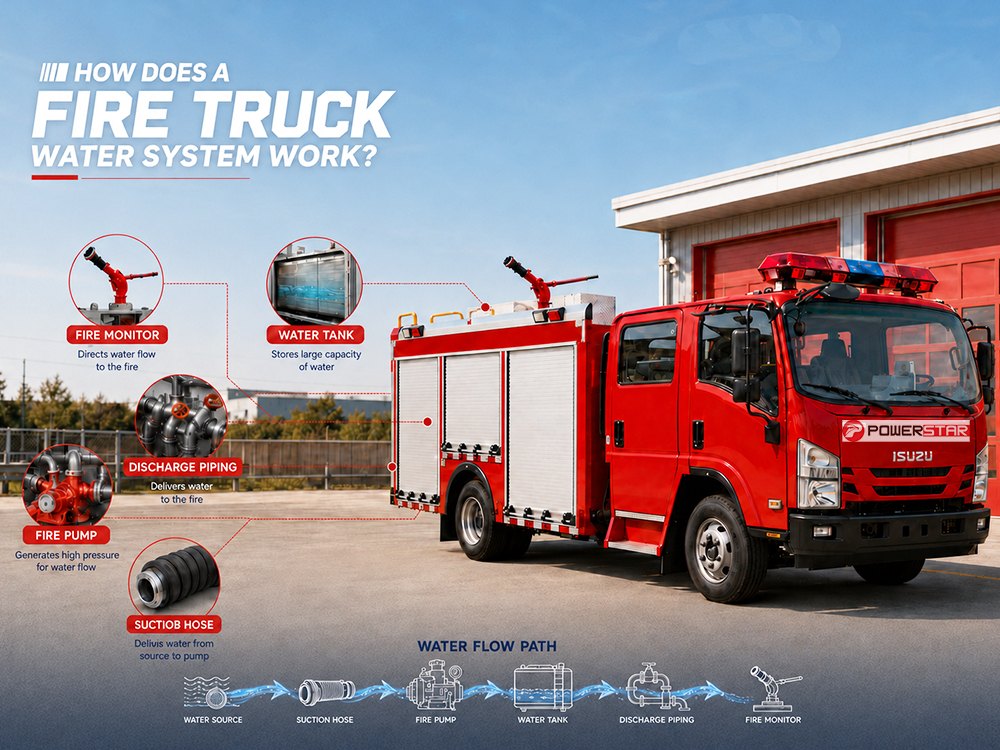
ระบบท่อส่งน้ำของรถดับเพลิงเป็นแกนหลักของการปฏิบัติการดับเพลิงทุกครั้ง ระบบนี้จะส่งน้ำจากถังหรือแหล่งน้ำภายนอกผ่านปั๊ม วาล์ว และท่ออย่างแม่นยำ เพื่อจ่ายน้ำแรงดันสูงหรือโฟมไปยังจุดเกิดเหตุ ไม่ว่าจะเป็นไฟไหม้อาคารสูงในใจกลางเมืองที่มีความหนาแน่น หรือไฟไหม้ถังเก็บปิโตรเคมีในเขตอุตสาหกรรมรถดับเพลิงระบบท่อส่งน้ำประกอบด้วยส่วนประกอบหลายชิ้นที่ทำงานร่วมกัน ได้แก่ ปั๊มดับเพลิง ถังน้ำ ท่อดูด ท่อจ่ายน้ำ วาล์ว ข้อต่อแยกทางน้ำ ข้อต่อรวมทางน้ำ ตะแกรงกรองน้ำ หัวฉีดน้ำดับเพลิง ข้อต่อสายดับเพลิง และอื่น ๆ เส้นทางการไหลของน้ำทั้งหมดคือ:ถังน้ำ → ท่อดูด → ตะแกรงกรองน้ำ → ปั๊มดับเพลิง → ระบบควบคุมแรงดัน → ท่อร่วมจ่ายน้ำ → วาล์ว → ข้อต่อแยกทางน้ำ → หัวฉีดน้ำดับเพลิง / ข้อต่อสายดับเพลิง → หัวฉีด บทความนี้อธิบายส่วนประกอบแต่ละส่วนของระบบท่อส่งน้ำ และวิธีที่ส่วนประกอบเหล่านี้ทำงานร่วมกันเพื่อจ่ายน้ำด้วยแรงดันและอัตราการไหลที่เหมาะสม I. ส่วนประกอบหลักของระบบท่อส่งน้ำ ถังน้ำ จัดเก็บแหล่งน้ำสำรองบนรถ ● ความจุ:โดยทั่วไป 2,000–12,000 ลิตร ● การจ่ายน้ำ:ส่งน้ำเข้าสู่ปั๊มผ่านท่อรับน้ำ ● คุณสมบัติ:มีแผ่นกั้นป้องกันน้ำกระเพื่อมเพื่อเพิ่มเสถียรภาพของรถ มีตะแกรงกรองเพื่อกรองสิ่งสกปรก และมีระบบเติมน้ำเพื่อดูดน้ำจากแหล่งน้ำธรรมชาติ ปั๊มดับเพลิง ปั๊มหอยโข่งที่ขับเคลื่อนโดยเครื่องยนต์ของรถผ่านระบบ PTO มีทั้งแบบขั้นเดียว/หลายขั้น ผลิตจากเหล็กหล่อหรือบรอนซ์ ●ระดับแรงดันมีค่ามาตรฐานให้เลือก 0.8 MPa, 1.0 MPa, 1.2 MPa และ 1.4 MPa ซึ่งสอดคล้องกับข้อกำหนดทั่วไปของงานดับเพลิง ●อัตราการไหลอยู่ในช่วง 1,200 ถึง 6,000 L/min โดยมีกราฟสมรรถนะที่ปรับให้เหมาะกับทั้งการทำงานแรงดันสูงและการจ่ายน้ำปริมาณมาก วาล์วและท่อ เครือข่ายท่อและวาล์วที่ควบคุมทิศทางและปริมาณการไหลของน้ำ ●วาล์วรับน้ำเชื่อมต่อปั๊มกับแหล่งน้ำภายนอก (หัวจ่ายน้ำดับเพลิงหรือจุดดูดน้ำ) ● วาล์วจากถังสู่ปั๊มช่วยให้ปั๊มดูดน้ำโดยตรงจากถังน้ำบนรถ ● วาล์วจ่ายน้ำควบคุมการไหลของน้ำไปยังสายดับเพลิงและหัวฉีด II. วิธีการทำงานของระบบท่อส่งน้ำของรถดับเพลิง ขั้นตอนที่ 1: การรับน้ำและการเติมน้ำเข้าระบบ น้ำจะเข้าสู่ระบบจากถังน้ำบนรถ หัวจ่ายน้ำดับเพลิง หรือแหล่งน้ำธรรมชาติ (ทะเลสาบ แม่น้ำ บ่อน้ำ) เมื่อต้องดูดน้ำจากแหล่งน้ำธรรมชาติ ระบบเติมน้ำ (ปั๊มสุญญากาศ) จะกำจัดอากาศออกจากท่อดูด ทำให้เกิดสุญญากาศซึ่งช่วยให้แรงดันบรรยากาศดันน้ำเข้าสู่ปั๊ม ตะแกรงกรองจะกรองสิ่งสกปรกเพื่อป้องกันปั๊ม และวาล์วกันกลับจะป้องกันการไหลย้อนกลับ ขั้นตอนที่ 2: การเพิ่มแรงดันของปั๊ม ปั๊มแรงเหวี่ยงขับเคลื่อนโดยเครื่องยนต์รถบรรทุกผ่านชุดส่งกำลัง (PTO) เมื่อน้ำเติมเต็มปั๊มแล้ว ใบพัดจะหมุนด้วยความเร็วสูง (1,500–2,500 RPM) แรงเหวี่ยงจะผลักน้ำออกด้านนอก ทำให้ความเร็วของน้ำเพิ่มขึ้น ตัวเรือนปั๊มจะเปลี่ยนความเร็วนี้ให้เป็นแรงดัน (โดยทั่วไป 0.8–1.2 MPa) ตัวควบคุมแรงดันแบบอิเล็กทรอนิกส์จะรักษาแรงดันที่ตั้งไว้โดยอัตโนมัติ ขณะที่วาล์วระบายแรงดันจะป้องกันแรงดันสูงเกินไป ขั้นตอนที่ 3: การจ่ายและการกระจายน้ำ น้ำที่มีแรงดันจะไหลจากปั๊มผ่านท่อร่วมจ่าย ซึ่งกระจายน้ำไปยังช่องทางออกหลายจุด วาล์วจะควบคุมการไหลไปยังแต่ละช่องทางออก ข้อต่อแยกทางน้ำจะแบ่งการไหลของน้ำออกเป็นสายท่อหลายสาย ทำให้นักดับเพลิงหลายคนสามารถเข้าดับไฟพร้อมกันได้ ข้อต่อรวมทางน้ำจะรวมน้ำจากสายส่งหลายสายเมื่อจำเป็นต้องเพิ่มอัตราการไหล น้ำจะถูกส่งผ่านหัวฉีดน้ำดับเพลิง (การดับเพลิงระยะไกลแบบปริมาณน้ำสูง) สายฉีดน้ำแบบมือถือ (การเข้าดับไฟโดยต...
รายละเอียด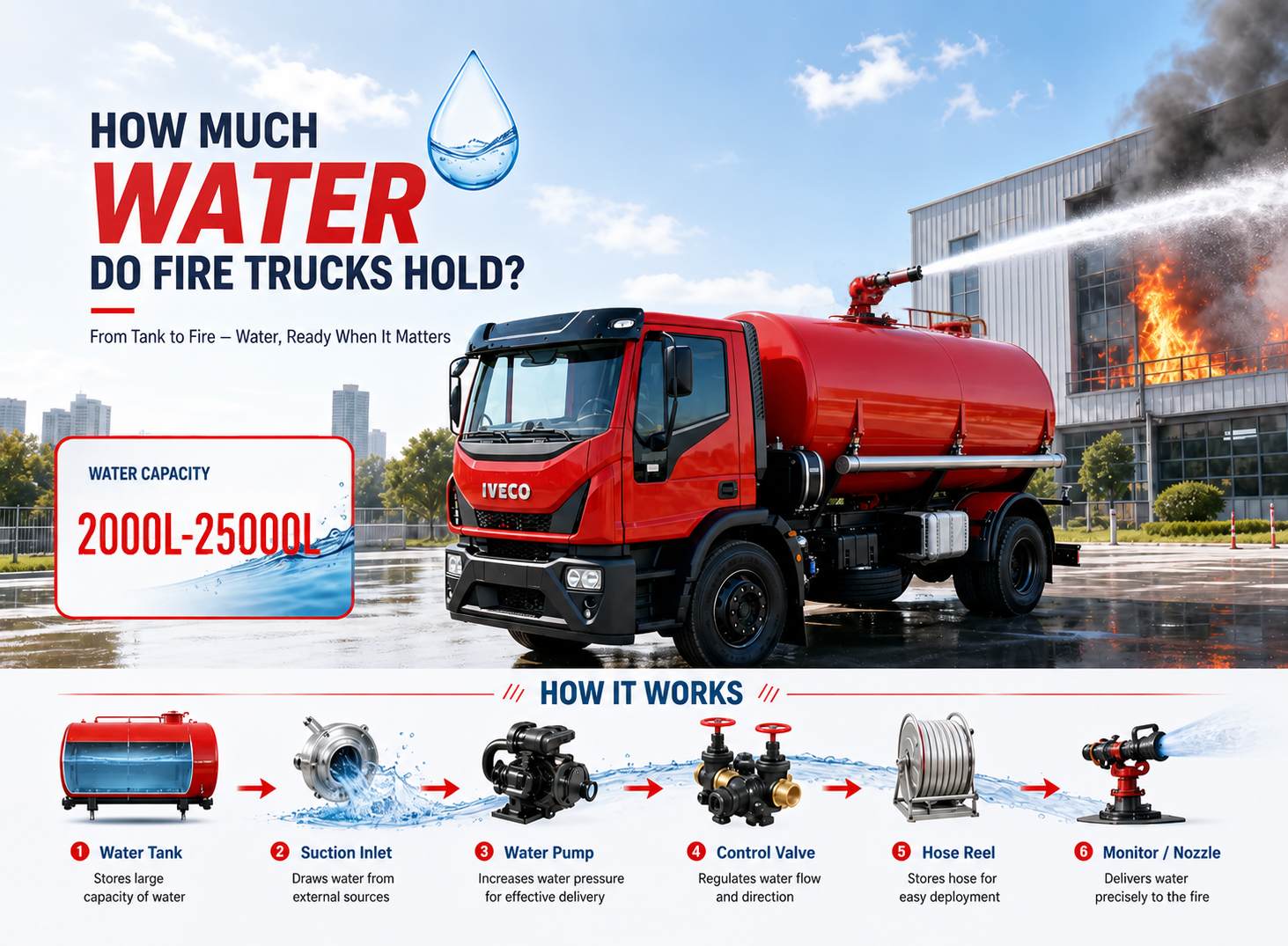
รถดับเพลิงสามารถบรรทุกน้ำได้เท่าไหร่? นี่เป็นหนึ่งในคำถามแรก ๆ ที่ลูกค้าของเราต้องพิจารณาเมื่อเลือกซื้อรถดับเพลิง ไม่มีตัวเลขตายตัวเพียงค่าเดียว — ขึ้นอยู่กับประเภทของรถ ความจุของแชสซี วัตถุประสงค์ในการออกแบบ และข้อกำหนดของแต่ละภูมิภาค โดยมีตั้งแต่รถขนาดเบาที่บรรจุน้ำได้ 2,000 ลิตร ไปจนถึงรถดับเพลิงอุตสาหกรรมที่บรรจุน้ำได้ 25,000 ลิตร แต่ถังน้ำที่ใหญ่กว่าไม่ได้หมายถึงประสิทธิภาพที่ดีกว่าเสมอไป;รถดับเพลิง ความจุถังน้ำของรถดับเพลิงต้องได้รับการจับคู่ให้เหมาะสมกับอัตราการไหลของปั๊ม อัตราการจ่ายน้ำของหัวฉีดน้ำ และความสามารถของแชสซี เพื่อให้ได้ผลลัพธ์ในการดับเพลิงที่มีประสิทธิภาพ บทความนี้เริ่มต้นด้วยพื้นฐานของความจุถังน้ำรถดับเพลิง วิเคราะห์ช่วงความจุที่ใช้เก็บน้ำทั่วไปสำหรับรถแต่ละประเภท ตรวจสอบปัจจัยสำคัญที่มีอิทธิพลต่อการออกแบบถัง และให้คำแนะนำในการเลือกซื้อที่นำไปใช้งานได้จริง ประเด็นสำคัญ: ความจุถังน้ำของรถดับเพลิงโดยทั่วไปอยู่ในช่วง 2,000 ถึง 25,000 ลิตร รถดับเพลิงแต่ละประเภทมีความจุถังน้ำแตกต่างกัน ถังน้ำที่ใหญ่กว่าไม่ได้หมายถึงความสามารถในการดับเพลิงที่ดีกว่า ความจุถังต้องเหมาะสมกับอัตราการไหลของปั๊ม อัตราการไหลของหัวฉีดน้ำ และความสามารถของแชสซี การดับเพลิงในภาคอุตสาหกรรมโดยทั่วไปต้องใช้ถังขนาดใหญ่ ขณะที่การดับเพลิงของเทศบาลให้ความสำคัญกับความคล่องตัว » I. รถดับเพลิงประเภทถังน้ำพื้นฐานสามประเภท รถดับเพลิงแบบสูบน้ำ:รถเหล่านี้เป็นรถดับเพลิงเทศบาลที่พบได้บ่อยที่สุด โดยหลักจะพึ่งพาหัวจ่ายน้ำดับเพลิงสำหรับแหล่งจ่ายน้ำ และบรรทุกน้ำบนรถประมาณ 1,900–3,800 ลิตรสำหรับการเข้าดับเพลิงระยะแรก หัวใจหลักของรถประเภทนี้คือปั๊ม ไม่ใช่ถังน้ำ — รถเหล่านี้ได้รับการออกแบบเพื่อจ่ายน้ำแรงดันสูงเมื่อเชื่อมต่อกับหัวจ่ายน้ำดับเพลิง รถบรรทุกน้ำ (รถส่งน้ำ):รถเหล่านี้ออกแบบมาเพื่อขนส่งน้ำปริมาณมากโดยเฉพาะ โดยมีความจุถังโดยทั่วไปมากกว่า 11,400 ลิตร มีบทบาทสำคัญในพื้นที่ชนบทและพื้นที่ห่างไกลซึ่งไม่มีหัวจ่ายน้ำดับเพลิง โดยขนส่งน้ำจากแหล่งน้ำไปยังจุดเกิดเหตุเพื่อให้รถสูบน้ำนำไปใช้งาน รถดับเพลิงแบบสูบน้ำ-บรรทุกน้ำ:รถเหล่านี้รวมฟังก์ชันการสูบน้ำและการขนส่งน้ำไว้ในคันเดียว สามารถทั้งจ่ายน้ำเพื่อดับเพลิงและจ่ายน้ำให้รถคันอื่นได้ ความจุถังโดยทั่วไปอยู่ในช่วง 5,700 ถึง 11,400 ลิตร ทำให้เป็นทางเลือกที่ยืดหยุ่นสำหรับหน่วยดับเพลิง » II. รถดับเพลิงประเภทต่าง ๆ สามารถบรรทุกน้ำได้เท่าไหร่? ประเภทรถดับเพลิง ความจุถังโดยทั่วไป การใช้งานหลัก รถดับเพลิงขนาดเบา 2,000–3,000 ลิตร การตอบสนองอย่างรวดเร็วในเมือง การเข้าดับเพลิงระยะแรก รถดับเพลิงสูบน้ำของเทศบาล 3,000–6,000 ลิตร การดับเพลิงของเทศบาล เพลิงไหม้อาคารโครงสร้าง รถดับเพลิงสูบน้ำขนาดกลาง 6,000–10,000 ลิตร งานผสมผสานระหว่างเขตเมืองและภาคอุตสาหกรรม รถดับเพลิงสูบน้ำขนาดหนัก 10,000–15,000 ลิตร การปฏิบัติการต่อเนื่อง การตอบสนองระยะไกล รถดับเพลิงอุตสาหกรรม 15,000–25,000 ลิตร การดับเพลิงในอุตสาหกรรมน้ำมัน เคมี และเหมืองแร่ » III. ระบบน้ำของรถดับเพลิงทำงานอย่างไร? รถดับเพลิงไม่ใช่เพียงถังเก็บน้ำเคลื่อนที่เท่านั้น — แต่เป็นระบบส่งน้ำครบวงจร น้ำที่เก็บอยู่ในถังต้องผ่านส่วนประกอบสำคัญหลายส่วนก่อนที่จะไปถึงจุดเกิดเหตุเพลิงไหม้ เส้นทางการไหลของน้ำทั้งหมดคือ: ถังน้ำ → ท่อรับน้ำ → ปั๊มดับเพลิง → ระบบควบคุมแรงดัน → ชุดท่อจ่ายน้ำ → หัวฉีดน้ำดับเพลิง/หัวฉีด/สายดับเพลิง ถังน้ำ ถังน้ำเป็นภาชนะจัดเก็บหลัก การออกแบบส่งผลโดยตรงต่อปริมาณน้ำที่ใช้งานได้และอายุ...
รายละเอียด
โปรดอ่านต่อ ติดตามข่าวสาร สมัครรับข้อมูล และเรายินดีรับฟังความคิดเห็นของคุณ

 รองรับเครือข่าย IPv6

 ไทย
 English
 français
 Deutsch
 русский
 italiano
 español
 português
 Nederlands
 العربية
 日本語
 한국의
 Türkçe
 Melayu
 Tiếng Việt
 Indonesia
 中文
 қазақ
 Filipino
 မြန်မာ
 српски